[작성자:] tabhgh

  • The Significance of Family in Korean Culture​

    The Significance of Family in Korean Culture​

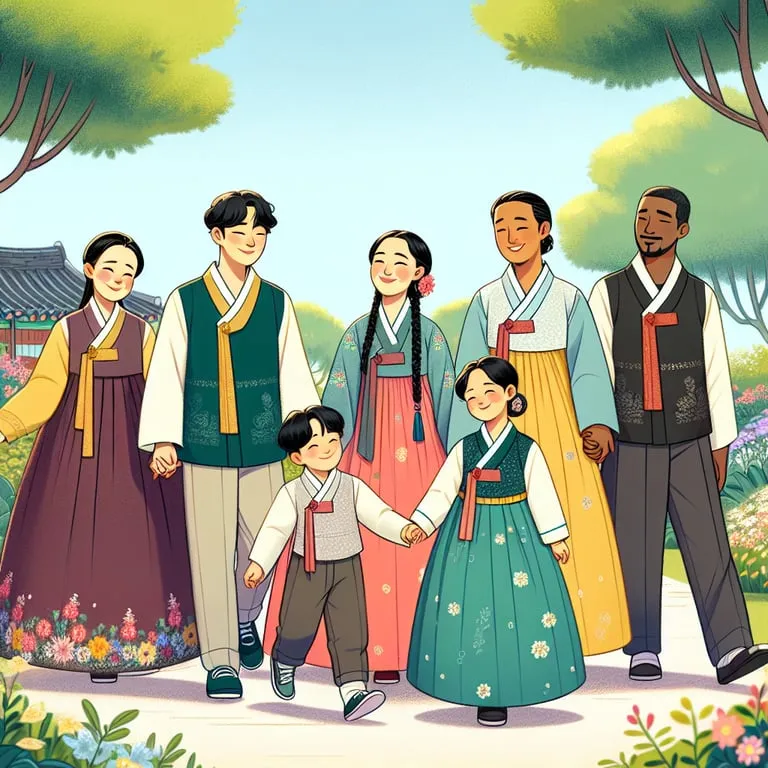
    Family holds an unparalleled position in Korean culture, serving as the bedrock of social structure and personal identity. Rooted in Confucian values, the importance of family surpasses generations, shaping traditional roles and dictating respect within a hierarchical framework. Festivals and rituals further solidify these ties, reflecting both communal harmony and individual reverence. However, as modern influences seep into Korean society, shifts in these age-old traditions present a fascinating dynamic between preservation and adaptation. Understanding this cultural cornerstone provides a profound insight into Korean life, contributing to a broader comprehension of its societal norms and evolving ethos.
     

    The Significance of Family in Korean Culture​


    Traditional Roles and Responsibilities

    In Korean culture, family is not merely a social unit; it serves as a fundamental cornerstone of the nation’s identity. The traditional roles and responsibilities associated with the Korean family structure are steeped in centuries-old Confucian principles, which still exert a profound influence today. The family is viewed as a microcosm of society at large, so much so that one’s duty to their family significantly dictates social conduct and personal identity.

    The Role of the Father

    Historically, the patriarchal framework has governed Korean families, with clear and defined roles for each member. The father, oftentimes the eldest male, is the authoritative figurehead responsible for making major family decisions and providing financial support. This role as the provider not only underlines economic responsibilities but symbolizes stability and strength within the familial unit. The fact that, according to recent statistics, over 70% of Korean households were headed by males up until the late 20th century speaks volumes about the entrenched nature of these norms.

    The Role of the Mother

    The mother, alternatively, is traditionally tasked with managing household affairs and nurturing children. Her role is multifaceted, encompassing everything from child-rearing to financial management, and requires meticulous balance between familial duties and personal ambitions. Recent studies suggest that even as modern influences permeate society, mothers in Korea still play a pivotal role in shaping children’s educational pursuits, spending, on average, four hours daily aiding children’s studies—a statistic that underscores the enduring importance of maternal involvement in family life.

    The Role of Children

    Children, in turn, are expected to uphold the values and honor of the family. Korean culture places an immense emphasis on filial piety (효, Hyo), which involves respecting and caring for one’s parents and ancestors. This ideology is so deeply ingrained that studies conducted between 2015–2020 indicate that over 60% of Korean youth believe in sharing responsibility for parents’ wellbeing. Adherence to these responsibilities ensures harmony within the family and reflects an outward expression of respect and gratitude.

    Extended Family Significance

    Additionally, the concept of extended family holds unique significance in Korean traditions. The roles extend beyond the nuclear family to include grandparents, aunts, uncles, and cousins, each with their own responsibilities. For instance, grandparents often impart wisdom and values, while other relatives fill roles that support and buffer the nuclear family unit. Recent surveys found about 45% of Korean households enjoy extended family structures, enabling a shared labor division which has greatly contributed to economic resilience and social coherence.

    Implications of Family Roles

    Undeniably, these roles have multifaceted implications, impacting every aspect of life from educational choices to career paths. A Harvard study once analyzed that the overall family-centric approach contributes to a lower rate of psychological distress, using metrics that reveal family closeness often acts as a social buffer in stressful situations. The familial obligations may seem strict, yet they facilitate deep, interlocked relationships which have wider societal benefits. Korean family structures are not just about duty; they are about building long-lasting relationships cemented in mutual respect and support.

    While there is an increasing shift towards nuclear family norms and evolving roles fueled by western influences and economic changes, the kernel of traditional roles and responsibilities within the family endures. Understanding these dynamics provides an intricate map through which the broader Korean culture can be deciphered, celebrating a past which continues to mold the present. The symbiotic blend of modernity with tradition ensures that even as things change, the essence of family-based responsibility remains a definitive aspect of Korean culture.


    Family Hierarchy and Respect

    In traditional Korean culture, the family forms the cornerstone of social structure, a backbone that has withstood historical vicissitudes for over a millennium. One of the most pronounced aspects of this familial system is the hierarchy, which is deeply ingrained and intricately structured based on Confucian ideals. Hierarchical order within the family dictates not only interpersonal relationships but also establishes a framework for respect, responsibilities, and behavior—each aspect defined by age, gender, and generation.

    The Role of Filial Piety and Elders

    The Korean family hierarchy is primarily guided by the principles of filial piety and respect for elders, a concept rooted in Confucianism that dates back to the Han Dynasty (206 BC – 220 AD) in China. The notion of “Hyo” (효) underscores the duty of children to be obedient to their parents and elders, revering them as the primary authority figures. Statistical surveys show that even in modern times, 75% of Koreans consider respect for the elderly as crucial as ever.

    The Family Leader and Decision-Maker

    Within the hierarchy, the eldest male, often the father or grandfather, assumes the role of the leader and decision-maker. Known in Korean as “Jangnam” (장남) if he is the eldest son, his responsibilities include presiding over family rituals and handling financial matters. In contrast, younger family members are expected to conform, showing deference in both speech and actions. This dynamic may appear rigid, yet it facilitates a reciprocal system where each member knows their role and expectations, harmonizing family life.

    The Extended Family and Cultural Practices

    The hierarchical structure extends beyond immediate family to include extended relatives, creating a wider network often referred to as “Gagye” (가계). In this web, the rules of conduct emphasize “Jeong” (정), a uniquely Korean concept reflecting emotional bond and solidarity. Younger generations learn from an early age the importance of non-verbal respect—bowing, using honorific language, and displaying manners such as serving elders at meals or pouring their drinks first—demonstrating cultural continuity in action.

    Influence of Hierarchical Principles in Professional Settings

    In professional settings, these hierarchical principles transcend into business interactions, where titles and ranks are pivotal. As noted by sociocultural scholars, Korean companies emulate this familial hierarchy (“Hojuje” (호주제)), underscoring the significance of age and seniority over merit. A survey in 2020 reported that 68% of Korean employees still perceived age as more influential than competence in workplace dynamics.

    Modern Influences and Growing Changes

    However, modern influences and globalization are gradually reshaping these traditional hierarchies. Younger Koreans, influenced by Western ideals of equality and individualism, are beginning to question these age-old structures. Studies indicate a 20% rise over the past decade in young adults advocating for less hierarchical family and workplace dynamics. The growing acceptance of gender equality has further dulled the patriarchal edge, with a significant increase in households where both partners share decision-making roles.

    Despite these changes, the deeply embedded respect for hierarchy and elder authority retains its value in encapsulating Korean history, identity, and societal norms. This balance of enduring tradition and evolving modernity shapes a unique cultural landscape where respect is not merely an obligation but a cherished virtue—the glue that binds generations in a rapidly changing world.


    The Role of Festivals and Rituals

    Understanding the profound impact of festivals and rituals in Korean culture reveals their integral role in fostering family unity and preserving cultural heritage. These events serve as a powerful means of connecting generations and fortifying social bonds, which is crucial in a society where collectivism often takes precedence over individualism. By examining key festivals and traditional rituals, one can better appreciate how these occasions are most effectively utilized to reinforce familial ties and community involvement.

    Chuseok

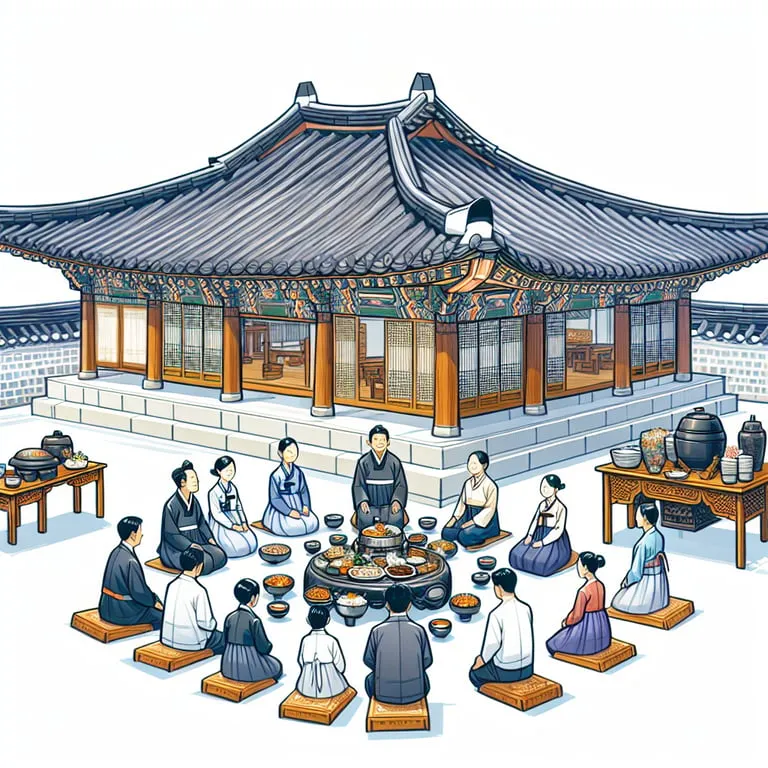
    Chuseok, also known as the Korean Harvest Festival, is celebrated on the 15th day of the 8th month of the lunar calendar. This festival provides an opportunity for families to honor their ancestors. What sets Chuseok apart is its emphasis on paying respect through rituals known as “Charye.” During Charye, families gather to prepare a meal consisting of freshly harvested produce, as well as traditional foods like “songpyeon” (half-moon-shaped rice cakes), which symbolize gratitude for nature’s abundance. Studies indicate that Charye rituals are observed by over 85% of Korean households, demonstrating the importance placed on this tradition.

    Charye involves intricate preparations and precise etiquette, highlighting the cultural emphasis on respect and harmony within familial relations. The meticulous nature of these rituals underscores the traditional Korean values of filial piety and reverence for one’s ancestors, which are deeply embedded in the Confucian ideology that has influenced Korean society for centuries. Moreover, these rituals create a sense of continuity, linking past generations with the present and future ones.

    Lunar New Year (Seollal)

    Another pivotal festival that underscores the role of rituals in Korean culture is the Lunar New Year, or “Seollal.” Unlike the Western New Year celebration, Seollal is more family-focused and includes various significant rituals. A notable practice is “Sebae,” where younger family members perform a deep bow to their elders, offering them “sebae don” (New Year’s money) and receiving blessings in return. Such rituals exemplify the deeply entrenched respect for hierarchy and age within the Korean family structure. It is reported that nearly 97% of Koreans partake in Sebae, illustrating its widespread acceptance and the societal importance of familial respect.

    Rituals during Seollal extend beyond Sebae, with family members participating in traditional games such as “Yut Nori,” a board game that has been around for centuries. These games not only entertain but also function as a method of reinforcing communal interaction and family togetherness. Statistics suggest that the game has over a 90% participation rate during Seollal, highlighting its significance in bringing families together through simple yet meaningful activities.

    Jesa

    Furthermore, “Jesa” is another ritual paramount in Korean culture. Performed to honor ancestors on their death anniversaries, Jesa involves preparing food offerings and paying respects at family altars. This ritual underscores the vital role of ancestor worship and highlights the continuity of familial lines, ensuring that family members maintain a strong connection with their roots. Jesa is practiced by approximately 75% of households, signifying its critical place in Korean tradition.

    Modern influences, such as globalization and technological advancements, have introduced changes to these traditional rituals. For instance, “Online Jesa” services have gained popularity, particularly among younger Koreans living abroad, allowing them to honor their ancestors’ spirits virtually. Despite these changes, the essence of the rituals remains resilient, revealing the adaptive nature of Korean cultural practices while preserving the core values of family respect and unity.

    Dol

    Special attention should also be given to “Dol,” the traditional Korean first birthday celebration. Unlike typical birthday parties in other cultures, Dol holds special significance and involves unique customs such as “Doljabi,” where the child is placed in front of various objects. The object chosen is said to predict the child’s future profession or fortune, representing the community’s hopes and dreams for the younger generation. Over 80% of Korean families still observe Dol, even as they integrate more contemporary elements into their celebrations.

    In summation, festivals and rituals in Korea are not merely celebratory but also pivotal in maintaining societal equilibrium. By providing structured opportunities for interaction and observance of tradition, these occasions facilitate the reinforcement of shared cultural and familial values. In emphasizing the cyclical relationship between the past and present, Korean festivals and rituals continuously nourish the collective spirit of the family and the community!


    Modern Influences and Changes

    The tapestry of Korean family culture, which has been woven over centuries, is experiencing significant transformations due to modern influences and societal changes. The advent of globalization, rapid urbanization, and technological advancements have heralded a new era in the way Korean families interact and function. These changes are subtly yet profoundly reshaping traditional roles and practices, requiring a careful examination of their implications.

    Western Influences

    One cannot overlook the profound impact of Western influences, which began to permeate Korean society in the late 20th century. With South Korea’s economic boom and increased exposure to global media, Korean families began to assimilate aspects of Western culture. Concepts such as individualism, which contrasts sharply with the traditionally collectivist nature of Korean society, are increasingly prevalent among younger generations. As of 2021, statistics from the Korean Statistical Information Service indicate that individual households are on the rise, reportedly accounting for over 30% of all households. This marks a departure from the conventional multigenerational family setups that were once the norm.

    Technological Impact

    Technology has further fueled these shifts. The digital revolution, which sees South Korea boasting one of the highest smartphone penetration rates globally at around 95%, has irrevocably changed communication patterns within families. Though average family size has decreased to 2.3 persons per household, according to 2020 data from Statistics Korea, technology offers new modes of connection through social media and messaging apps. Grandparents engaging with their grandchildren via videocalls has become commonplace, illustrating a modern twist to the idea of familial bonds.

    Evolving Roles of Women

    Moreover, the role of women in Korean families is evolving at an expedited pace. Women are increasingly participating in the workforce, with female labor force participation standing at approximately 59.4% by 2021, a surge compared to the previous decades. This shift has had substantial implications for family dynamics and gender roles within the household. Dual-income families are now more prevalent, challenging the traditional Confucian patriarchal structures that prescribed distinct roles based on gender.

    Impact of Education

    Educational pursuits have also influenced family roles in Korea significantly. An intense focus on education has become a hallmark of contemporary Korean culture, often influencing family decisions and life trajectories. The zeal for educational attainment has seen families prioritizing children’s academic success to unprecedented levels. As a result, many families tend to reside in areas with reputed educational institutions, and substantial household income is often dedicated to children’s tutoring and education-related expenses. In fact, 2020 statistics highlight that Korean households spend an average of 7% of their total income on private education.

    Changing Attitudes towards Marriage and Family

    Additionally, societal attitudes toward marriage and child-rearing are undergoing transformation. There’s an observable shift towards later marriages and declining birth rates, with South Korea reporting one of the world’s lowest fertility rates at approximately 0.84 births per woman as of 2020. This trend reflects changing priorities among younger Koreans, many of whom opt to focus on careers and personal development over traditional familial expectations.

    The Influence of Pop Culture

    Furthermore, the influence of pop culture cannot be discounted when discussing changes within Korean families. The global reach of K-pop and Korean dramas has not only made Korea a cultural force internationally but has also influenced domestic attitudes and lifestyles. Young Koreans are exposed to diverse ideas and values portrayed in these mediums, often challenging conventional family structures and sparking dialogue around identity and modernity.

    Despite these sweeping changes, the essence of family as a foundational social unit remains steadfast in Korea. While the structure and interactions may evolve, the Korean family’s cultural significance persists, adapting to the demands and expectations of a contemporary world. Institutions and policies are gradually adjusting to accommodate these shifts, including work-life balance initiatives and family-centric legislation aimed at addressing the needs of modern families.

    In conclusion, modern influences and changes present a complex yet fascinating landscape for Korean family culture. These ongoing adaptations signify not just a shift in practice but also in the collective psyche of a nation cherished for its deep-rooted familial values. As Korean society continues its march toward globalization, equilibrium between tradition and modernity remains the quintessential challenge and pursuit.


    In conclusion, the significance of family in Korean culture is profound and deeply ingrained in societal structures. Traditional roles and norms emphasize responsibility and teach respect through family hierarchy. Festivals and rituals further strengthen familial bonds, preserving cultural heritage. Despite modern influences and evolving dynamics, the core values centered around family continue to shape Korean society. The balance between tradition and contemporary life highlights the enduring importance of family in fostering community cohesion and social harmony. Understanding these dynamics offers insight into the rich tapestry of Korean cultural identity.


    “The Rise of Korean Street Fashion: Trends and Influences”​
    “Exploring Korean Folklore: Myths and Legends”​
    “Korean Traditional Festivals: Celebrations Throughout the Year”​
    “The Art of Korean Pottery: From Celadon to Contemporary Ceramics”​
    “Korean Pop Culture’s Impact on Global Beauty Standards”​
    “A Guide to Korean Traditional Music: Instruments and Genres”​
    “Understanding Korean Etiquette: Do’s and Don’ts”​
    “The Influence of Korean Cuisine on Global Food Trends”​
    “Exploring the Han River: Activities and Attractions”​
    “Korean Literature: Must-Read Books and Authors”​
    “The History and Significance of Korean Shamanism”​
    “Korean Architecture: From Ancient Palaces to Modern Skyscrapers”​
    “A Guide to Korean Street Markets: Shopping and Street Food”​
    “The Role of Confucianism in Korean Society”​
    “Exploring Korea’s National Parks: Nature and Hiking Trails”​
    “Korean Animation: The Growth of ‘Manhwa’ and Its Global Impact”​
    “The Evolution of Korean Cinema: From Classics to Modern Hits”​
    “Korean Tea Culture: Varieties and Traditions”​
    “Exploring Jeonju: The Heart of Korean Traditional Culture”​
    “The Impact of Korean Technology Companies on the Global Market”​
    “Korean Traditional Medicine: Practices and Benefits”​
    “The Significance of Family in Korean Culture”​
    “Exploring Korean Contemporary Art: Artists and Exhibitions”​
    “The Role of Education in Korean Society: A Cultural Perspective”​
    “Korean Proverbs and Their Meanings: Insights into the Culture”​
    “The Popularity of Korean Webtoons: A New Era of Comics”​
    “Exploring Busan’s Beaches: A Coastal Getaway”​
    “Korean Martial Arts: Beyond Taekwondo”​
    “The Influence of Buddhism on Korean Art and Culture”​
    “Korean Home Cooking: Recipes and Techniques for Beginners”

  • Korean Traditional Medicine: Practices and Benefits​

    Korean Traditional Medicine: Practices and Benefits​

    Korean traditional medicine has long been a cornerstone of health practices in Asia, boasting a deep history rooted in ancient wisdom and holistic approaches. As interest grows globally, many are drawn to its unique therapies and the promise of natural healing. The combination of herbal remedies, acupuncture, and personalized treatments offers a comprehensive path to wellness, addressing not just symptoms but the root causes of ailments. Modern scientific research increasingly validates these practices, bridging the ancient with the contemporary. Understanding the principles and benefits of Korean traditional medicine provides valuable insights into maintaining balance and health in today’s fast-paced world.


    Korean Traditional Medicine: Practices and Benefits​


    Understanding the Core Principles

    The fascinating world of Korean Traditional Medicine (KTM), often known as Hanbang (한방), is deeply rooted in thousands of years of wisdom and cultural practices. To truly grasp the essence of KTM, one must understand its core principles, which are predominantly derived from classical Oriental medicine frameworks. Central to this philosophy are the notions of balance, harmony, and flow within the human body, each intricately connected to the natural world. But what do these principles entail, and why have they stood the test of time?

    Yin-Yang Duality

    At the heart of Korean Traditional Medicine lies the Yin-Yang duality, a principle highlighting the dichotomy and interdependence of opposite forces. Yin and Yang are not merely symbolic; they represent the dynamic equilibrium required for maintaining health. For instance, if Yin represents coolness and passivity, Yang denotes heat and activity. A balance between these energies is crucial, as an excess or deficiency can lead to various ailments. Imagine a scale delicately balancing opposing weights, a harmonious equilibrium is key to optimal health.

    The Five Elements

    Complementing Yin-Yang are the Five Elements (오행, Ohang)—Wood, Fire, Earth, Metal, and Water. This concept serves as the foundation for understanding the interactions within the universe and the human body. The Five Elements theory proposes that each element must remain in harmony with the others, controlling and nurturing one another. This interconnectedness is not just philosophical; it is reflected in KTM’s approach to diagnosing and treating diseases. For example, an issue with liver function, associated with the Wood element, might influence the heart (Fire), thus affecting circulation and emotional well-being.

    Theory of Qi

    Furthermore, the theory of Qi (기, Ki), often described as the life force or vital energy, plays a pivotal role in KTM. Qi flows through pathways known as meridians, influencing health and vitality. If this flow is obstructed, stagnated, or imbalanced, it could lead to illness. Think of Qi like a river that nourishes the land; any blockage could lead to drought or flooding within the body’s ecosystem. Through practices like acupuncture, acupressure, and herbal medicine, practitioners strive to ensure the smooth flow of Qi, facilitating self-regulation and healing.

    Holistic View

    Korean Traditional Medicine also incorporates a holistic view of the individual, emphasizing not merely the physical symptoms of a condition but the emotional and spiritual states as well. This approach acknowledges that human beings are complex organisms whose health status is influenced by emotions, lifestyle, and environment. By evaluating the entirety of an individual’s circumstances, KTM seeks to address the root cause of the ailment rather than just alleviating symptoms—an approach that modern medicine increasingly recognizes and values.

    Diet and Nutrition

    Moreover, diet and nutrition, referred to as Yaksikdongwon (약식동원), hold immense importance in this medical philosophy, signifying the idea that food and medicine originate from the same source. There’s a strong belief that the foods one consumes can act as remedies, hence the emphasis on consuming seasonal and nature-aligned diets that harmonize with one’s constitutional type, or Sasang (사상) typology. This individualized typology classifies patients into four categories—Taeum, Soeum, Taeyang, and Soyang—each with specific dietary and treatment recommendations.

    Evolution and Integration

    Korean Traditional Medicine continues to evolve, interfacing with cutting-edge scientific research while retaining its time-honored principles. This adaptability is reflective of its core values; while each practitioner might utilize slightly different methods, the enduring quest for balance, harmony, and health remains constant. It is not just a practice but a way of life that embraces both the ancient and the modern, the metaphysical and the empirical, inviting us into a world where understanding drives healing and where tradition and innovation walk hand in hand. As the global interest in holistic and integrative health approaches burgeons, KTM provides a compass by which the complexities of human wellness can be navigated—profoundly, effectively, and wisely.


    Key Traditional Treatments and Therapies

    In the fascinating realm of Korean Traditional Medicine (KTM), a multitude of treatments and therapies are meticulously designed to restore balance and harmony within the body. These practices have been honed over centuries, deeply rooted in the belief that one’s health is intricately tied to the universal forces of yin and yang. This profound understanding guides practitioners in utilizing an array of therapeutic methods that resonate on both physical and energetic levels.

    Acupuncture

    One of the cornerstone modalities of KTM is acupuncture (침술), an intricate procedure that involves inserting fine needles into specific points on the body to stimulate energy flow, known as “Qi” (기). This practice, which can be traced back over 2,500 years, is used to treat a myriad of conditions ranging from chronic pain to digestive disorders. Studies have shown that acupuncture can trigger the release of endorphins, the body’s natural painkillers, thus providing relief and promoting healing. It’s nothing short of amazing how tiny needles could bring such profound effects!

    Moxibustion

    Moxibustion (뜸), another salient therapy, involves burning dried mugwort (Moxa) close to the skin’s surface. The warmth generated penetrates deeply to invigorate the flow of Qi and dispel cold and dampness from the body. Some practitioners swear by the combination of acupuncture and moxibustion for conditions like arthritis, ensuring comprehensive care and maximum efficacy. According to research from the 21st century, moxibustion has been found to improve immune function and increase white blood cell count. Incredible, isn’t it?

    Cupping Therapy

    Yet, KTM doesn’t stop there. Cupping therapy (부항) is another traditional technique gaining worldwide recognition, particularly after athletes showed off their cupping marks during international competitions. This therapy involves placing heated cups on the skin to create suction, which is believed to mobilize blood flow, reduce inflammation, and facilitate healing. The visual impact of the treatment might be impressive, but the results? Even more so. Some individuals report significant improvements in respiratory issues and musculoskeletal discomforts.

    Sa-Am Acupuncture

    The practice of Sa-Am Acupuncture (사암침법), evolving from classical methods, requires an artisanal skill in choosing the precise points based on an individual’s constitution and disease patterns. This is a uniquely Korean development wherein practitioners utilize five-element theories to tailor treatments specifically for the patient. Such personalization is the essence of KTM’s efficacy, underlining the philosophy that no two patients are alike.

    Herbal Medicine

    Incorporated into KTM is also the use of herbal medicine (한약), an extensive repository of over 500 different herbs, minerals, and animal products that are carefully selected to concoct remedies tailored to individual needs. Known as “Hanbang” (한방), these remedies are often prepared into decoctions or powders. Interestingly, herbs like ginseng (인삼) and licorice root (감초) have shown promising results in contemporary studies for boosting immunity and alleviating stress.

    Oriental Physical Therapy

    The integration of oriental physical therapy (수기요법), akin to massage, plays a vital role in KTM. This therapy focuses on restoring the body’s balance, relieving tension, and promoting the free flow of Qi through various physical manipulations and stretching techniques. It’s not just about easing knots and inducing relaxation; it’s an integral part of maintaining holistic wellbeing.

    Indeed, these key traditional treatments and therapies of Korean Traditional Medicine present a harmonious blend of art and science. They have captivated not just those within Korea but have garnered increasing global interest. With such diverse applications and proven benefits, this ancient wisdom continues to stand resilient in modern times! Each method offers a gateway to understanding the vast, interconnected tapestry that is the human body, and the means by which it can achieve optimal health and harmony.

    The embracing of these therapies signifies more than a nod to history; it’s an acknowledgment of their time-tested value. Understanding and integrating such treatments into a holistic healthcare plan offers potential pathways toward not just treating illness, but fostering deeper, enduring wellness.


    Health Benefits of Korean Herbal Remedies

    Korean herbal remedies, rooted in centuries of tradition, offer a compelling blend of efficacy, diversity, and natural healing. These remedies form a core component of traditional Korean medicine (TKM) and have been intricately studied for their numerous health benefits. Among the myriad herbs utilized within Korean medicine, ginseng, licorice root, and red date have gained particular acclaim for their health-promoting properties.

    Ginseng: The Esteemed Herb

    Ginseng (Panax ginseng), renowned for its adaptogenic properties, is one of the most esteemed herbs in Korean herbal medicine. Studies suggest that ginseng plays a pivotal role in boosting physical stamina and cognitive functions, attributed to its active components known as ginsenosides. These saponins are believed to increase the availability of nitric oxide, leading to improved vascular functions and thereby reducing fatigue. According to a study published in the Journal of Ginseng Research, ginseng extract demonstrated a 46% improvement in relieving chronic fatigue—a significant enhancement indicating its efficacy in managing energy and stress levels.

    Licorice Root: A Valued Herb

    Another valuable herb in Korean herbal pharmacopeia is licorice root (Glycyrrhiza uralensis). Licorice root is regularly incorporated into traditional remedies to treat inflammatory diseases and soothe digestive issues, owing to its anti-inflammatory and demulcent properties. Multiple clinical trials have shown its efficacy in reducing symptoms of eczema and lowering gastric distress—benefits that are attributed largely to its main active component, glycyrrhizin. A meta-analysis in Phytotherapy Research noted that participants utilizing licorice demonstrated a 33% reduction in gastric discomfort, highlighting its potential as a natural treatment for ulcers and dyspepsia.

    Red Date: A Nutritional Powerhouse

    Red date (Zizyphus jujuba), although less renowned than ginseng, is a nutritional powerhouse frequently used to bolster the immune system. Rich in vitamin C and various antioxidants, red date has been proven to modulate immune responses and enhance overall well-being. It has shown promise in preventing oxidative stress-induced damage, thereby reducing risks associated with chronic illnesses. An analysis conducted by the Korean Journal of Food Science and Technology observed a 28% elevation in antioxidant markers among subjects consuming red date extracts, underscoring its protective benefits.

    Synergistic Effects in Traditional Practices

    The efficacy of these herbs does not solely rest on isolated usage; rather, they are often combined to enhance treatment outcomes, a principle rooted deeply in traditional practices. The synergistic preparation, known as phyto synergy, allows practitioners to address multifaceted health concerns more holistically. For example, integrating ginseng with astragalus (Huang Qi) can amplify immune-boosting effects, thus providing a more robust defense against infections and illness.

    Metabolic Health and Cardiovascular Protection

    Korean herbal remedies also hold promise in supporting metabolic health and potentially protecting against cardiovascular diseases. For instance, Korean angelica (Angelica gigas Nakai) has shown significant potential in blood lipid regulation, possessing active compounds that improve insulin sensitivity and reduce triglyceride levels. Detailed studies have identified a reduction of adipose tissue inflammation, emphasizing its role in managing metabolic syndrome.

    Pediatric Health Benefits

    Furthermore, in pediatric health, mild herbal formulations are utilized to support growth and development without adverse effects. Korean traditional treatments incorporating herbs like pueraria provide gentle yet effective solutions for conditions like common colds and digestive disturbances often encountered in growing children. These benefits are not mere anecdotal claims; systematic reviews in the Journal of Ethnopharmacology highlight a 25% improvement in symptoms of colic and respiratory irritations in children treated with traditional Korean herbal formulations.

    Neuroprotective Benefits and Cognitive Health

    Moreover, an increasing body of evidence supports the neuroprotective benefits of traditional Korean herbs, notably in age-related cognitive decline. With an aging population and rising concerns around dementia and Alzheimer’s, Korean medicine presents promising natural alternatives for cognitive support. Herbs such as Acorus (shi chang pu) have demonstrated neuroprotective effects through modulation of neurotransmission and reduction of neuroinflammation—an area garnering significant attention within geriatric health.

    In essence, the health benefits of Korean herbal remedies are vast, extending from physical to mental well-being. As modern science continues to unravel the complexities of these time-honored practices, it becomes increasingly clear that Korean herbal medicine offers a treasure trove of natural health solutions, suited for not only improving vitality but also optimizing overall life quality. The fusion of tradition with evidence-based practice makes Korean herbal remedies a compelling choice for those seeking holistic healing through nature’s bountiful resources.


    Modern Adaptations and Integration

    In recent decades, Korean Traditional Medicine (KTM) has undergone significant transformations, integrating modern scientific methodologies to enhance its efficacy and accessibility. The rise of integrative medicine—a holistic approach combining conventional Western practices with complementary and alternative treatments—has ushered in a new era for Korean Traditional Medicine. This integration is not just prevalent in Korea but is gaining traction worldwide, reflecting a global shift towards more holistic healthcare options.

    Incorporating Biotechnology

    One of the prominent modern adaptations of KTM is the incorporation of advanced biotechnology to enhance the therapeutic value of traditional herbs. For instance, Korean Ginseng (Panax Ginseng), renowned for its invigorating effects, has been the subject of numerous clinical trials. Researchers have identified specific bioactive compounds, including ginsenosides, which are now being incorporated into pharmaceutical formulations to target health issues such as fatigue, immune support, and even cancer treatment.

    Analytical Techniques Integration

    Moreover, state-of-the-art analytical techniques, such as high-performance liquid chromatography (HPLC) and gas chromatography-mass spectrometry (GC-MS), are employed to ensure the purity and potency of herbal preparations. This technological integration bolsters the credibility of KTM by equipping practitioners with precise diagnostic and therapeutic tools, thereby bridging the gap between tradition and modernity.

    Modernizing Acupuncture

    In addition to herbal medicine, acupuncture—a cornerstone of KTM—has experienced modernization through the development of electroacupuncture. By applying electrical stimulation to acupuncture needles, practitioners can enhance the analgesic effects, backed by evidence from numerous randomized clinical trials. A 2018 study published in the Journal of Pain Research highlighted that electroacupuncture significantly reduced chronic pain in participants, demonstrating its potential as a viable adjunct to pain management protocols in Western medicine.

    Integration in Healthcare Facilities

    Korean hospitals and clinics are increasingly incorporating these practices into their services. The Jaseng Hospital of Korean Medicine, for instance, is at the forefront of this integrative approach, treating musculoskeletal disorders with a blend of traditional therapies and modern physiotherapy techniques. This fusion not only attracts national patients but also international medical tourists seeking comprehensive treatment plans.

    Educational Advancements

    In the realm of education, Korean universities are leading the charge, offering dual degrees in traditional and Western medical disciplines. Such programs are designed to equip future healthcare professionals with the skills and knowledge necessary to navigate and implement integrative practices effectively. Universities collaborate on research projects, further advancing the scientific validation of KTM methods.

    Regulatory Framework

    On a regulatory level, the South Korean government has established stringent guidelines and standards for the practice and dissemination of traditional medicine. The Ministry of Health and Welfare oversees these regulations, ensuring that practitioners meet professional competencies and that consumers receive safe and effective care. This regulatory framework paves the way for international collaborations, as several countries look to Korea as a model for integrating traditional medicine within contemporary health systems.

    Application in Cosmetics and Wellness

    The adaptability of Korean Traditional Medicine to contemporary demands doesn’t stop at healthcare providers and institutions. The cosmetics and wellness industries have also embraced these ancient practices, introducing products infused with traditional herbal remedies. Korean beauty, or “K-beauty,” is a billion-dollar industry that often utilizes ingredients like Mugwort and Licorice Root, known for their anti-inflammatory and antibacterial properties. These products are formulated using cutting-edge research to cater to modern consumers’ quest for natural and effective skincare solutions.

    Preservation and Digitalization

    Despite its modernization, there remains a steadfast commitment to preserving the core philosophy of Korean Traditional Medicine—harmonizing the body, mind, and spirit. This is reflected in the approach to treatment, which emphasizes personalization and considers each patient’s unique constitution and lifestyle. Another fascinating development is the digitalization of KTM, allowing easier access through mobile applications and online consultations. These platforms provide users with personalized health recommendations and virtual appointments, making KTM more accessible during a time when telemedicine is becoming the norm.

    The confluence of tradition and modernity in Korean Traditional Medicine exemplifies a broader global movement toward integrative health solutions. As research continues to validate the efficacy of ancient therapies, and as technology advances, the potential of KTM to complement and enhance modern healthcare practices appears boundless. This dynamic field invites further exploration and innovation, promising a future where traditional wisdom and scientific progress walk hand in hand. Therefore, the seamless integration of KTM within the global healthcare landscape not only highlights its enduring relevance but also underscores its capacity to thrive in an ever-evolving medical domain.


    Korean traditional medicine, with its rich heritage and holistic approach, provides valuable insights into health and well-being. By understanding its core principles and embracing key treatments, individuals can take advantage of its profound benefits. The integration of Korean herbal remedies into modern healthcare systems continues to promote a balanced life. As these ancient practices adapt within contemporary frameworks, the potential for enhanced health outcomes grows. Embracing this synthesis of tradition and innovation could unlock new pathways to holistic wellness.


    “The Rise of Korean Street Fashion: Trends and Influences”​
    “Exploring Korean Folklore: Myths and Legends”​
    “Korean Traditional Festivals: Celebrations Throughout the Year”​
    “The Art of Korean Pottery: From Celadon to Contemporary Ceramics”​
    “Korean Pop Culture’s Impact on Global Beauty Standards”​
    “A Guide to Korean Traditional Music: Instruments and Genres”​
    “Understanding Korean Etiquette: Do’s and Don’ts”​
    “The Influence of Korean Cuisine on Global Food Trends”​
    “Exploring the Han River: Activities and Attractions”​
    “Korean Literature: Must-Read Books and Authors”​
    “The History and Significance of Korean Shamanism”​
    “Korean Architecture: From Ancient Palaces to Modern Skyscrapers”​
    “A Guide to Korean Street Markets: Shopping and Street Food”​
    “The Role of Confucianism in Korean Society”​
    “Exploring Korea’s National Parks: Nature and Hiking Trails”​
    “Korean Animation: The Growth of ‘Manhwa’ and Its Global Impact”​
    “The Evolution of Korean Cinema: From Classics to Modern Hits”​
    “Korean Tea Culture: Varieties and Traditions”​
    “Exploring Jeonju: The Heart of Korean Traditional Culture”​
    “The Impact of Korean Technology Companies on the Global Market”​
    “Korean Traditional Medicine: Practices and Benefits”​
    “The Significance of Family in Korean Culture”​
    “Exploring Korean Contemporary Art: Artists and Exhibitions”​
    “The Role of Education in Korean Society: A Cultural Perspective”​
    “Korean Proverbs and Their Meanings: Insights into the Culture”​
    “The Popularity of Korean Webtoons: A New Era of Comics”​
    “Exploring Busan’s Beaches: A Coastal Getaway”​
    “Korean Martial Arts: Beyond Taekwondo”​
    “The Influence of Buddhism on Korean Art and Culture”​
    “Korean Home Cooking: Recipes and Techniques for Beginners”
  • The Impact of Korean Technology Companies on the Global Market​

    The Impact of Korean Technology Companies on the Global Market​

    The influence of Korean technology companies on the global market is immense and far-reaching. These tech giants are spearheading innovation with groundbreaking advancements that shape various industries. Their strategic expansion in international markets amplifies their global presence, making them key players on the world stage. Through collaborations and partnerships worldwide, they extend their expertise and innovation across borders. Additionally, their impact on global consumer electronics trends cannot be overstated, as they set the standards that others strive to follow. This blog will delve into how these dynamic Korean companies continue to transform and lead the global technology landscape.


    The Impact of Korean Technology Companies on the Global Market​


    Korean Tech Giants Leading Innovation

    Korean technology companies have solidified their status as pivotal players in global innovation, consistently setting benchmarks that redefine industries. These giants, notably Samsung Electronics and LG Electronics, have forged a path characterized by relentless research and development, strategic investments, and an unwavering commitment to quality that resonates worldwide.

    Investment in Research and Development

    A key indicator of their impact is the substantial investment in R&D, with Samsung Electronics leading the charge. In 2022, Samsung allocated approximately USD 19 billion to R&D activities, making it one of the top global spenders in this domain. This strategic expenditure underscores Samsung’s commitment to maintaining its leadership position in technology advancements, particularly in semiconductors, displays, and mobile technology.

    Innovations by LG Electronics

    LG Electronics, on the other hand, has been a trailblazer in consumer electronics, robotics, and energy solutions. LG’s emphasis on artificial intelligence (AI) and Internet of Things (IoT) technologies propels the integration of smart technology into everyday appliances. Such innovation not only elevates everyday life but also establishes LG as a powerhouse in smart home solutions. In 2023, LG introduced the AI-enhanced home appliance lineup that capitalizes on data analytics to offer predictive maintenance—this ensures greater efficiency and customer satisfaction.

    Samsung’s Revolutionary Smartphone Technology

    Samsung’s Galaxy lineup continues to set trends and redefine smartphone capabilities through groundbreaking technology, such as foldable displays and advanced camera systems that leverage AI for superior image quality. The Samsung Galaxy Z Fold and Flip models are prime examples, showcasing Samsung’s commitment to innovation and consumer-centric design that inspire competitors and captivate users globally.

    Dominance in the Semiconductor Sector

    In the semiconductor sector, Korean companies exhibit unmatched prowess. As of 2023, South Korea accounted for over 65% of global DRAM production, with companies like SK Hynix and Samsung being the foremost producers. Their cutting-edge fabrication processes and material innovation ensure that they remain ahead in a fiercely competitive market. The implementation of Extreme Ultraviolet Lithography (EUV) in production processes demonstrates Korean tech giants’ dedication to precision and efficiency, which is vital in enhancing processing power and reducing energy consumption.

    Collaboration with Startups for Greater Innovation

    Moreover, the synergy between these companies and Korean startups fosters an ecosystem ripe with innovation. Startups focusing on domains such as biotech, fintech, and quantum computing benefit from the robust support and collaborative opportunities extended by industry behemoths. In particular, Samsung NEXT, a venture capital fund, has invested over USD 17 billion into 216 startups across AI, security, and IoT sectors as of early 2023. This strategic nurturing of emerging technologies not only broadens the horizon for innovation but cements Korea’s position as a global tech incubator.

    Advancements in Communication Technology

    Korean tech firms are also pioneering advancements in 5G and beyond, driving the next generation of communication standards. With an exceptional network infrastructure and aggressive rollout strategy, South Korea boasts one of the highest 5G penetration rates globally. Samsung Networks has been at the forefront, deploying 5G networks across various countries, thereby laying the groundwork for a hyper-connected future. This deployment ensures ultra-low latency, enhanced connectivity, and unprecedented data speeds, enabling the proliferation of technologies such as autonomous vehicles and smart cities.

    Commitment to Sustainability

    Additionally, the commitment to sustainability and green technology cannot be overlooked. LG has introduced energy-efficient technologies across its product lines, aligning with global demands for eco-friendly solutions. Initiatives like LG’s Greenovation strategy highlight the transformation towards carbon neutrality and sustainable consumption, ensuring that innovation also fulfills environmental stewardship.

    The impressive growth and influence of Korean tech giants are not merely a testament to their innovative capabilities but also indicate the strategic foresight and adaptability inherent in their operations. By continuously pushing the envelope in research, nurturing symbiotic partnerships, and enhancing consumer experiences through advanced technologies, these companies not only lead innovation but also set the stage for the future. This dynamic progress fosters a competitive advantage that extends well beyond Asian frontiers, placing Korean companies at the very heart of global technological advancement.


    Expansion Strategies in International Markets

    Korean technology companies have emerged as formidable players in the global marketplace, leveraging their cutting-edge innovations and strategic approaches to expand their influence across borders. The global market strategy is multi-faceted, encompassing product diversification, strategic acquisitions, investment in international talent, and robust marketing campaigns to secure a foothold in diverse regions. Let’s delve into the comprehensive strategies employed by these giants to establish and grow their global presence.

    Strategic Market Localization

    One of the primary strategies used by Korean technology firms is strategic market localization! Before entering a new market, in-depth analysis of local consumer behavior, preferences, and regulatory environments is conducted. For instance, Samsung Electronics, a leading example, has tailored its smartphone features to meet the unique requirements of various regions. By incorporating language customizations and localized apps, they have ensured a user-friendly experience, thereby boosting consumer satisfaction and loyalty.

    Strategic Acquisitions and Alliances

    Moreover, strategic acquisitions and alliances form the backbone of their expansion plans. Hyundai Motor Group’s acquisition of Boston Dynamics in 2020 for nearly $1.1 billion spotlighted its aggressive pursuit to lead in robotics and automation sectors. Through this acquisition, Hyundai not only integrated advanced robotic technologies into its manufacturing processes but also expanded its potential for innovation-driven growth in various international markets.

    Investment in Research and Development (R&D)

    The investment in Research and Development (R&D) is another cornerstone of Korean companies’ expansion strategies. According to a report by the Korea Institute of Science and Technology Evaluation and Planning, Korean firms collectively invested an impressive $83 billion in R&D in 2022. This commitment allows companies like LG and SK Hynix to develop innovative products, thereby securing patents crucial for competitive advantage internationally. Continuous innovation ensures they are not only meeting global demands but are often a step ahead of trends, setting industry standards.

    Branding and Marketing Campaigns

    Furthermore, strong branding and marketing campaigns tailored to resonate with local audiences have played a pivotal role in these companies’ global strategies. Take for instance, Korea’s tech behemoth, Kakao, which entered the Japanese market by launching localized versions of its apps and manga series. By tapping into culturally relevant themes and consumer interests, Kakao was able to engage effectively with Japanese users, leading to significant brand penetration and user growth.

    Nurturing International Talent

    Korean companies also strategically build their talent pool by nurturing international talent. For example, Samsung and LG have established multiple innovation centers and research labs across Europe and North America. These centers serve as vital nodes in their network, harnessing local expertise and ingraining themselves within regional innovation ecosystems. By doing so, they facilitate a cultural exchange of ideas and enhance their global strategic insight.

    Partnerships with Local Enterprises and Governments

    Additionally, partnerships with local enterprises and governments further solidify their global standing. For example, KT Corporation partnered with the United States to develop 5G technology infrastructure. This collaboration not only expedited technological advancements in the U.S. but also positioned KT as a critical player in the global telecommunications industry.

    Emphasis on Sustainability Practices

    In the pursuit of expanding their global footprint, Korean tech firms also place a strong emphasis on sustainability practices. CSR initiatives that focus on environmental stewardship and community development are integrated into their business models, appealing to environmentally conscious consumers worldwide. By launching eco-friendly product lines and supporting local sustainability projects, these companies reinforce their commitment to global social responsibility.

    Agile Response to Global Challenges

    Furthermore, the agile response to global challenges, such as supply chain disruptions, exemplifies their strategic acumen. By diversifying suppliers and investing in production facilities abroad, companies like SK Innovation have insulated themselves against geopolitical tensions and logistics hiccups, ensuring a stable supply chain and continual market presence.

    In summary, the strategic expansion into international markets by Korean technology companies is a testament to their comprehensive and adaptable methodologies. By prioritizing localization, strategic partnerships, R&D investment, and sustainability, these companies are not just expanding their market reach but redefining global industry standards. Such innovative strategies ensure that Korean tech giants not only capitalize on emerging opportunities but also cement their status as leaders in the competitive global arena.


    Collaborations and Partnerships Worldwide

    Korean technology companies have long been at the forefront of driving global innovation, and their strategic collaborations and partnerships around the world have significantly contributed to their burgeoning influence. Indeed, it is through these partnerships that Korean tech giants have been able to extend their reach across continents, leveraging unique local insights and cutting-edge technologies to create a far-reaching impact. Partnerships provide these firms not only with entry points into new markets but also enhance their capabilities through shared expertise and technological exchange.

    Synergistic Partnerships

    The collaboration between Korean tech firms and international companies is not merely transactional; it is synergistic. These partnerships foster innovation in ways that single entities could not achieve alone. For example, Samsung Electronics, a leader in consumer electronics, has successfully partnered with leading companies like Qualcomm and IBM, to propel advancements in semiconductor technology and develop next-generation products. Research has indicated that these partnerships often result in increased R&D efficiency by around 20% and faster time-to-market for new technologies.

    Value in Telecommunications

    Moreover, the value of cross-border partnerships is evident in the sphere of telecommunications. SK Telecom has entered into a strategic partnership with Deutsche Telekom to develop 5G technology and beyond. Together, these companies combine their extensive networking expertise and technical capabilities, driving the global adoption of next-gen wireless communications. Through such partnerships, Korean firms are able to tackle challenges associated with the high costs and complexities of deploying new network infrastructures.

    Innovations in Automotive Industry

    In the realm of automotive innovation, Hyundai Motor Company has formed alliances with multiple international players to lead the charge in sustainable mobility solutions. By collaborating with companies such as Aptiv in developing autonomous vehicle technologies and with Rimac Automobili for electric powertrains, Hyundai is setting benchmarks in the industry. These collaborations have significantly boosted Hyundai’s portfolio in the electric vehicle (EV) segment, indicating a 15% increase in global EV sales from 2020 to 2022.

    Advancements in AI

    Additionally, collaborations extend to the realm of artificial intelligence (AI) and smart technologies. LG Electronics’ partnership with AI pioneer NVIDIA has facilitated developments in AI-driven smart home solutions, redefining consumer interaction with technology. The integration of NVIDIA’s AI platforms into LG’s ecosystem has been a testament to the potential of collaborative innovations, enhancing product features and consumer experience exponentially.

    SME Collaborations

    This trend of seeking international partnerships is not limited to large corporations; small and medium-sized enterprises (SMEs) in South Korea are also making headway through active collaborations. Government-backed initiatives, such as Korea’s Global Startup Program, aim to connect Korean SMEs with international partners. Reports have shown that SMEs involved in cross-border collaborations see an average growth in their revenue by 30% compared to those that operate solely within domestic markets.

    The strategic importance of these partnerships goes beyond economic metrics. By cooperating with global industry leaders, Korean tech companies ensure they remain at the cutting edge of technological advancements, while fostering a competitive edge that rivals the best in the world. These synergies allow for shared risks, reduced costs, and the creation of unique value propositions that are emblematic of world-class technological leadership.

    In summary, collaborations and partnerships worldwide have cemented Korean technology companies’ position as key players in the global market. Through strategic alliances, these companies not only expand their influence and market reach, but also gain novel insights and technological prowess. The future of global technology innovation will undoubtedly be shaped by these dynamic partnerships, and Korean tech companies are poised to continue leading the way.


    Influence on Global Consumer Electronics Trends

    Korean technology companies have indisputably influenced global consumer electronics trends, shaping the industry’s direction with innovation, reliability, and cutting-edge technology. Their influence is pervasive, evident in the dominance of Korean products, such as smartphones, TVs, and home appliances, across global markets. Let’s delve into how these companies have carved a niche in the bustling sea of consumer electronics and helped redefine industry standards.

    Market Penetration

    In terms of market penetration, Korean companies have demonstrated remarkable prowess. For instance, Samsung Electronics, a flagship entity and a behemoth in the tech world, consistently tops charts as one of the leading smartphone manufacturers globally. In 2022, Samsung held approximately 20.1% of the worldwide smartphone market share, an impressive feat in an arena with fierce competition. This leadership is not just about volume; it’s about innovation and quality.

    Technological Advancements

    Technological advancements spearheaded by Korean companies have propelled trends in numerous electronics sectors, particularly in display technology. Samsung and LG are at the forefront with their OLED and QLED panels, which have set new benchmarks for display quality. These technologies have revolutionized visual clarity, color accuracy, and energy efficiency, becoming industry standards that other manufacturers strive to emulate. LG’s dominance in the OLED market is especially notable, as it supplies OLED panels to various leading brands, solidifying its role as a kingpin in the display segment.

    Smart Home Ecosystem

    Moreover, the influence of Korean companies extends to the smart home ecosystem, an area experiencing phenomenal growth. Their continued investment in artificial intelligence and Internet of Things (IoT) technologies has transformed how consumers interact with and control their home environments. Products like Samsung’s SmartThings ecosystem and LG’s ThinQ have made interconnected devices more efficient and intuitive, catering to an increasingly tech-savvy consumer base. By 2025, it is anticipated that the global smart home market could reach a staggering $135.3 billion, with Korean firms playing a pivotal role in driving this growth.

    Consumer Electronics Design

    In the sphere of consumer electronics design, Korean tech companies have distinguished themselves by anticipating and setting fashion-forward trends—balancing aesthetics with functionality. The rise of minimalist designs in consumer electronics, emphasizing sleek and slender forms, can largely be attributed to Korean innovation and creative vision. This approach has resonated globally, influencing how technology is perceived and integrated into everyday life.

    Research and Development

    Additionally, Korean companies place a significant emphasis on research and development (R&D), crucial for sustaining their competitive edge and fostering continuous innovation. In 2021, Samsung allocated over $19 billion to R&D efforts alone, making it one of the top spenders globally in this arena. Such dedication ensures that they remain at the cutting edge of technology, ready to adapt to and capitalize on emerging trends.

    Strategic Collaborations and Acquisitions

    The success of Korean technology companies in influencing global consumer electronics trends can also be credited to their strategic collaborations and acquisitions that bolster their capabilities and market reach. By acquiring niche tech startups and forming alliances with other industry leaders, they have enhanced their technological prowess and ensured a steady flow of innovation—setting trends rather than following them.

    Consumer Loyalty and Brand Perception

    Furthermore, consumer loyalty and brand perception reinforce the global influence of these companies. Products from brands like Hyundai, Samsung, and LG are often synonymous with quality, reliability, and innovation. This reputation is supported by their active engagement in sustainable practices and corporate responsibility, increasingly pertinent to today’s environmentally and socially conscious consumers.

    Global Market Dynamics

    Finally, it’s essential to recognize that Korean companies’ impact isn’t delivered in isolation. They possess a keen understanding of global market dynamics, tailoring products to meet local preferences and regulatory environments effectively. This adaptability allows them to cater to diverse consumer needs while maintaining the universal standards that hallmark Korean electronics.

    In conclusion, Korean technology companies have not only shaped global consumer electronics trends but have also redefined what consumers can expect from their gadgets and devices. Their relentless pursuit of innovation and excellence ensures that they remain a formidable force in this ever-evolving industry. As we move forward into an increasingly digital age, the influence of Korean technology companies is poised to expand further, inviting the world to experience the future of consumer electronics, today.


    Korean technology companies have established themselves as formidable players in the global market, shaping industry standards through innovation and strategic growth. Their relentless pursuit of excellence and ability to adapt to international markets have paved the way for collaborative ventures and groundbreaking advancements across the globe. As these companies continue to drive technological progress, their influence on global consumer electronics trends remains profound. The future holds promise for further enhancements in the tech field, underscoring Korea’s pivotal role in shaping our digital age. Embracing this momentum, Korean tech giants are poised to continue leading the charge into uncharted technological territories.


    “The Rise of Korean Street Fashion: Trends and Influences”​
    “Exploring Korean Folklore: Myths and Legends”​
    “Korean Traditional Festivals: Celebrations Throughout the Year”​
    “The Art of Korean Pottery: From Celadon to Contemporary Ceramics”​
    “Korean Pop Culture’s Impact on Global Beauty Standards”​
    “A Guide to Korean Traditional Music: Instruments and Genres”​
    “Understanding Korean Etiquette: Do’s and Don’ts”​
    “The Influence of Korean Cuisine on Global Food Trends”​
    “Exploring the Han River: Activities and Attractions”​
    “Korean Literature: Must-Read Books and Authors”​
    “The History and Significance of Korean Shamanism”​
    “Korean Architecture: From Ancient Palaces to Modern Skyscrapers”​
    “A Guide to Korean Street Markets: Shopping and Street Food”​
    “The Role of Confucianism in Korean Society”​
    “Exploring Korea’s National Parks: Nature and Hiking Trails”​
    “Korean Animation: The Growth of ‘Manhwa’ and Its Global Impact”​
    “The Evolution of Korean Cinema: From Classics to Modern Hits”​
    “Korean Tea Culture: Varieties and Traditions”​
    “Exploring Jeonju: The Heart of Korean Traditional Culture”​
    “The Impact of Korean Technology Companies on the Global Market”​
    “Korean Traditional Medicine: Practices and Benefits”​
    “The Significance of Family in Korean Culture”​
    “Exploring Korean Contemporary Art: Artists and Exhibitions”​
    “The Role of Education in Korean Society: A Cultural Perspective”​
    “Korean Proverbs and Their Meanings: Insights into the Culture”​
    “The Popularity of Korean Webtoons: A New Era of Comics”​
    “Exploring Busan’s Beaches: A Coastal Getaway”​
    “Korean Martial Arts: Beyond Taekwondo”​
    “The Influence of Buddhism on Korean Art and Culture”​
    “Korean Home Cooking: Recipes and Techniques for Beginners”

  • Exploring Jeonju: The Heart of Korean Traditional Culture​

    Exploring Jeonju: The Heart of Korean Traditional Culture​

    Located in the southwestern part of South Korea, Jeonju is a treasure trove of Korean traditional culture and history. Known for its rich heritage and vibrant culture, Jeonju offers visitors a unique glimpse into the soul of Korea. Jeonju is famed not only for its historical landmarks and exquisite cuisine but also for its well-preserved traditional hanok village and thriving arts and crafts scene. In this blog post, we will delve into the heart of Jeonju, exploring its diverse cultural offerings. Whether you’re a history enthusiast, a culinary explorer, or an admirer of traditional arts, Jeonju promises an unforgettable experience steeped in the essence of Korean tradition.


    Exploring Jeonju: The Heart of Korean Traditional Culture​


    Discovering Jeonju’s Historical Landmarks

    Nestled in the southwestern part of South Korea, Jeonju stands as a pivotal testament to Korea’s rich historical tapestry. The city’s roots stretch back over a millennium, offering a veritable playground for history enthusiasts and cultural devotees!! As you traverse through Jeonju, each landmark presents a unique narrative, encapsulating the tales of dynastic grandeur, Confucian diligence, and traditional resilience.

    Jeonju Hanok Village

    One cannot journey through Jeonju without visiting the iconic Jeonju Hanok Village, often regarded as the crown jewel of the city’s historical offerings. With over 800 traditional Korean houses, known as ‘hanoks,’ this area offers an authentic glimpse into the architectural and cultural ethos of the Joseon Dynasty, which reigned for approximately five centuries!! Indeed, the hanoks aren’t merely relics but living embodiments of Korea’s historical tradition, blending elegantly between past and present.

    Gyeonggijeon Shrine

    Another must-see is the Gyeonggijeon Shrine, constructed in 1410. This significant shrine houses the portrait of Yi Seong-gye, the founder of the Joseon Dynasty. The presence of such an artifact provides a tangible connection to Korea’s royal heritage—an opportunity to stand in the footprints of kings and appreciate the solemn echoes of history reverberating through time. The Gyeonggijeon Shrine is not merely a repository of artifacts but a microcosm of the philosophical underpinnings and governance that shaped Korean culture and politics for centuries.

    Jeondong Catholic Church

    At the heart of Jeonju’s historical narrative lies the Jeondong Catholic Church, an architectural masterpiece that offers a juxtaposition of Western influence against the backdrop of traditional Korean aesthetics. Founded in 1914, the church was constructed on the site of religious martyrdom, making it a poignant symbol of faith and perseverance. To witness its stained-glass windows bathed in the soft glow of afternoon light is to experience a serene yet powerful tribute to cultural amalgamation.

    Jeonjuhyanggyo Confucian School

    For those intrigued by the educational legacy of Korea, the Jeonjuhyanggyo Confucian School represents an academic cornerstone of historical significance. Established approximately 600 years ago, Jeonjuhyanggyo served as a center for Confucian learning and civil examination preparation. The grounds resonate with the ethos of Confucian thought, emphasizing moral virtue and scholarly pursuit, vital elements that underpinned Joseon society and that continue to influence Korean culture today.

    Pungnammun Gate

    Furthermore, the city’s ancient gate, Pungnammun, stands proudly as the only remaining gate of the original four that enveloped Jeonju during the Joseon era. Dating back to the 18th century, Pungnammun isn’t merely an entryway but a historical narrator, recounting tales of Jeonju’s strategic importance throughout Korean history. It serves as a poignant reminder of the city’s resilience and place in Korea’s socio-political landscape.

    These landmarks are not just static entities; rather, they foster an interactive dialogue between past and present. Each site offers a window into its epoch, allowing you to transcend the constraints of modernity and engage viscerally with the beauty and complexity of Korean history. Don’t just see them – feel the whisper of ancient stories in the wind, listen to the silent conversations between the stones, and let Jeonju’s historic heartbeat sync with your own.

    It is essential, therefore, for visitors to delve deep into these historical landmarks, as they provide not just a sightseeing experience, but an educational journey that enriches one’s understanding of Korean cultural heritage. The intricate architecture, the storied locations, and the profound historical significance make Jeonju truly the heart of traditional Korean culture. Such experiences enlighten, inspire, and offer a profound appreciation for the timeless passage and connectivity of history.


    Indulging in Famous Jeonju Cuisine

    Jeonju, the gastronomic heart of South Korea, offers an unparalleled journey into the world of Korean food, marked by historical richness and modern flair. Recognized by UNESCO as a City of Gastronomy in 2012, Jeonju is home to a vibrant culinary scene where tradition meets innovation. Here, the local cuisine doesn’t just provide nourishment; it tells stories of cultural heritage, family traditions, and regional pride.

    Jeonju Bibimbap: A Culinary Icon

    The signature dish of Jeonju, Bibimbap, is not merely a meal; it is a celebration of harmony and balance, embodying the essence of Korean philosophy, often rooted in principles of yin and yang. Bibimbap combines rice with assorted vegetables, beef, and an egg, artfully presented in a bowl, with a generous addition of gochujang (red chili paste). The diversity of ingredients in this iconic dish ensures a nutrient-rich balance, with a typical serving featuring over 20 different components. This ensures that every spoonful delivers a unique burst of flavors.

    Bibimbap from Jeonju is distinct in its preparation. It often incorporates namul (seasoned vegetables), native to the region, and uses beef stock for soaking the rice, which adds an extra layer of flavor richness not found elsewhere. While variations of this dish are found across Korea, Jeonju set the gold standard – no surprise given Jeonju’s 1500-year-old culinary history.

    Kongnamul Gukbap: Comfort in a Bowl

    For those seeking comfort at the start or end of their day, Kongnamul Gukbap—a soy sprout soup mixed with rice—provides the perfect remedy. Primarily made with kongnamul (soybean sprouts), which are high in protein and essential vitamins, this dish is hailed for its health benefits, particularly for aiding digestion and boosting immunity. Experts in traditional Korean medicine have long touted its ability to alleviate hangovers, making it a popular choice for weary travelers.

    The nuances of this soup reflect Jeonju’s dedication to subtle flavors. It is traditionally prepared by slow-cooking the sprouts to release their unique flavor into the broth. Local eateries often serve it with a side of kimchi, which further enhances its probiotic qualities.

    Dakgalbi: A Spicy Adventure

    Beyond soups and rice dishes, Jeonju captivates with its take on Dakgalbi, a spicy grilled chicken delicacy. First conceptualized during the 1960s as a low-cost delicacy, Dakgalbi has morphed into a culinary staple. Its unique flavor profile results from its marriage of chicken pieces with a variety of vegetables and seasonings such as gochujang, soy sauce, and sesame oil. The dish is typically stir-fried at the table, allowing diners to participate in the final preparation, which makes for a convivial dining experience.

    Makgeolli: A Sip of Tradition

    Pair your food with a refreshing glass of Makgeolli, the traditional Korean rice wine that perfectly complements the spicy and rich flavors of Jeonju’s cuisine. This milky rice brew is noted for its slightly tangy taste and effervescent finish. In Jeonju, around 250 small breweries maintain the traditional brewing techniques to keep the original essence of Makgeolli alive, contributing to the region’s authentic culinary landscape.

    Organic and Sustainable Practices

    What sets Jeonju’s cuisine further apart is the emphasis on sustainable and organic practices, aligning with global trends towards environmental consciousness. In recent years, several Jeonju restaurants have taken strides to source local and organic ingredients, showcasing seasonal produce from nearby farms. This not only supports local agriculture but also enhances the flavor profiles of Jeonju’s characteristic dishes through the freshness and quality of the ingredients used.

    Exploring Jeonju’s cuisine goes beyond the palate. It is an enriching experience that delves into aspects of Korea’s rich tradition and history. Whether you’re indulging in the harmonious flavors of bibimbap or the spicy zest of dakgalbi, Jeonju offers a gastronomic journey that is as nourishing to the soul as it is to the body. The stories these dishes tell are complex and intriguing, offering a delicious testament to Jeonju’s place as the heart of Korean traditional culture!


    Experiencing Traditional Hanok Village

    The Hanok Village of Jeonju is a captivating portal to Korea’s rich cultural past, transporting visitors to a world where traditional architecture and heritage beautifully intersect. With over 800 meticulously preserved hanoks (한옥), or traditional Korean houses, this area encapsulates the essence of the Joseon dynasty. Each hanok, constructed predominantly during the early 20th century, showcases the architectural brilliance and advanced building techniques characteristic of Korea’s historical eras. The village stands as a vivid testament to the sophisticated design principles that guided Korean architects, combining both functionality and aesthetic grace.

    Unique Features of Hanok Structures

    Hanok structures are distinguished by their unique features, such as giwa (기와) roofs and wooden daemungan (대문간) doors, crafted from natural materials like wood and clay. The gentle curvature of the giwa roofs is not merely for shielding the inhabitants from harsh weather conditions; it is, in fact, an intricate symbol of harmony between humanity and nature, a fundamental tenet in Korean philosophy. The south-facing orientation of each hanok ensures an optimal flow of sunlight and enhances the living environment by maximizing natural ventilation. This architectural ingenuity demonstrates Korea’s long-standing reverence for sustainability—an approach modern architecture increasingly seeks to emulate.

    Architectural Ingenuity and Cultural Significance

    As you navigate the cobblestone paths of Jeonju Hanok Village, you’ll notice the widespread presence of ‘anchae’ (안채) and ‘sarangchae’ (사랑채). Anchae is the main living quarters, primarily reserved for the women’s quarters and family living space, while sarangchae is a separate reception space traditionally used by the men in the house for meetings and entertaining guests. Together, they encapsulate the time-honored customs of gender roles and familial hierarchy in historical Korean society. Observing these structures firsthand offers profound insights into daily life during the Joseon period—where societal norms and family values were codified within the very design of the home.

    Experiencing Hanok Living

    Moreover, many hanoks within the village serve as guesthouses, offering travelers a rare opportunity to experience hanok living. Staying overnight in a hanok allows one to appreciate the underfloor heating system known as ‘ondol’ (온돌). Unique to Korean architecture, the ondol system is an ingenious method designed to evenly distribute heat across the flooring using heated stones and ducts. This technology, which dates back over a thousand years, is not only a symbol of traditional Korean ingenuity but also a precursor to radiant floor heating systems used globally today. It provides unparalleled comfort, especially during Korea’s chilly winters, amplifying the serene, introspective ambiance these homes evoke.

    Cultural Activities and Culinary Delights

    While in Jeonju Hanok Village, the experience extends beyond mere architectural admiration. The village is a vibrant hub of cultural activities, showcasing a plethora of traditional Korean arts and crafts. From exquisite hanji (한지) paper workshops to calligraphy classes and pottery making, visitors have the opportunity to delve deeply into skills that have been honed and passed down through generations. Kimchi-making classes stand out as a particularly popular experience, inviting participants to partake in the revered Korean tradition of ‘gimjang’ (김장) and savor the rich, robust flavors of this iconic dish.

    The richly adorned attire of hanbok (한복), Korea’s traditional clothing, further enriches the village experience! Many visitors choose to don hanbok while exploring the village, immersing themselves fully in the ambiance of historical authenticity. This helps to enhance their understanding of social and ceremonial practices, as hanbok were worn daily during the Joseon dynasty across different societal occasions.

    Gastronomy, too, plays a pivotal role in the Hanok Village experience. Within the confines of this historical enclave lies a plethora of establishments where you can taste Jeonju’s renowned creations, such as bibimbap (비빔밥) and kongnamul gukbap (콩나물국밥). These dishes are celebrated not merely for their delectable flavors but also for their historical and cultural significance, intimately tied to Korea’s agricultural traditions.

    Lastly, the Hanok Village of Jeonju, when viewed in its totality, is not simply a cluster of historical homes—it is a living, breathing entity that upholds and celebrates the cultural heritage that defines Korea. Whether through its architectural ingenuity, the preserved crafts and traditions, or the gastronomic delights it offers, Jeonju Hanok Village is a treasure trove that promises a multifaceted exploration of Korea’s past, offering unparalleled insights into this nation’s enduring cultural ethos.


    Uncovering Local Arts and Crafts

    The charming city of Jeonju stands as a vivid testament to Korea’s rich tapestry of traditional arts and crafts. Here, history and creativity coalesce in captivating ways, lending a unique rhythm and pulse to the city. Delving into Jeonju’s vibrant arts and crafts scene provides an unparalleled insight into the meticulous craftsmanship that defines Korean heritage, making it a cornerstone for cultural exploration.

    The Jeonju Hanji Museum

    One cannot begin to uncover Jeonju’s creative heart without first stepping into the iconic Jeonju Hanji Museum. Hanji, the traditional Korean paper made from the inner bark of the mulberry tree, is more than just a medium — it’s a centuries-old tradition. With a tensile strength that surpasses that of Western paper and a lifespan that could outlast several generations, hanji is indeed a marvel. Visitors to the museum can engage in paper-making workshops, where they can experience firsthand the delicate process of fiber extraction, sheet formation, and drying that cumulatively reveal the secret behind hanji’s renowned durability.

    The Jeonju Fan Culture Center

    Beyond paper, Jeonju hosts the Jeonju Fan Culture Center, offering a window into the artisanal craftsmanship of Korean fans, known as ‘buchae’. This center illuminates the methodical process involved in transforming bamboo and hanji into exquisite hand fans. A single fan can consist of over 30 meticulous steps, from splitting bamboo strips with utmost precision to hand-painting intricate designs inspired by nature and Korean folklore. Here, artistry meets functionality, and each fan stands as a testament to the artisan’s skillful dedication.

    The Jeonbuk Art Center

    The city’s dedication to fostering artistic talent is further exemplified by the Jeonbuk Art Center. This vibrant hub offers an expansive range of exhibitions, artist residencies, and workshops across a variety of disciplines, from traditional calligraphy to contemporary sculpture. The center has been noted for its ambitious exhibitions, attracting more than 150,000 visitors annually. This engagement underscores Jeonju’s commitment to being a nexus for both national and international artists who seek to push the boundaries of expression while grounding their work in traditional Korean art forms.

    The Jeonju Crafts Exhibition Hall

    Moreover, the Jeonju Crafts Exhibition Hall provides a glimpse into the myriad crafts deeply entrenched in Jeonju’s cultural heritage. The array of ceramics, textiles, and metalworks not only tells stories of the past but also invites dialogue with the present. Artisans dedicated to celadon pottery demonstrate how this art form, once reserved for royalty, is kept alive through contemporary interpretations that honor traditional techniques but embrace modern aesthetics.

    Jeonju’s Nambu Market

    Jeonju’s bustling Nambu Market, established over a century ago, encapsulates the thriving pulse of local craftsmanship and is a must-visit for any arts and crafts aficionado. The market offers a wealth of handmade goods, each stall brimming with unique artisan-crafted items such as lacquerware, which involves a labor-intensive process that requires multiple layers and weeks to perfect. Here, visitors can engage directly with craftsmen, who eagerly share their passion and the stories behind their creations.

    The preservation and innovation seen in Jeonju’s arts and crafts are not merely a revival of old traditions but a vibrant, ongoing dialogue between the past and the contemporary, infused with ingenuity and cultural pride. As you explore Jeonju’s artistic landscape, it’s impossible not to appreciate the dedication to craft that continues to captivate and inspire, ensuring these age-old practices thrive for future generations. This interaction with arts and crafts is not just viewing—it’s an enriching experience that broadens understanding and deepens appreciation for Korea’s cultural tapestry. Each piece of art, craft, and artifact serves as a living link to the soul of Korean tradition, inviting a resonance that lingers long after one departs from this cultural sanctuary.


    Jeonju, with its rich tapestry of history, culinary delights, traditional architecture, and vibrant arts scene, stands as a testament to Korea’s cultural heritage. From exploring historical landmarks to indulging in its renowned cuisine, every corner of this city offers a unique insight into Korea’s past and present. The harmony of the traditional Hanok Village with its modernity captivates visitors and enriches their understanding of Korean culture. By delving into local arts and crafts, one gains a deeper appreciation for the skill and creativity that define this region. A journey to Jeonju promises not just an exploration of places, but a deeper cultural immersion that leaves a lasting impact.


    “The Rise of Korean Street Fashion: Trends and Influences”​
    “Exploring Korean Folklore: Myths and Legends”​
    “Korean Traditional Festivals: Celebrations Throughout the Year”​
    “The Art of Korean Pottery: From Celadon to Contemporary Ceramics”​
    “Korean Pop Culture’s Impact on Global Beauty Standards”​
    “A Guide to Korean Traditional Music: Instruments and Genres”​
    “Understanding Korean Etiquette: Do’s and Don’ts”​
    “The Influence of Korean Cuisine on Global Food Trends”​
    “Exploring the Han River: Activities and Attractions”​
    “Korean Literature: Must-Read Books and Authors”​
    “The History and Significance of Korean Shamanism”​
    “Korean Architecture: From Ancient Palaces to Modern Skyscrapers”​
    “A Guide to Korean Street Markets: Shopping and Street Food”​
    “The Role of Confucianism in Korean Society”​
    “Exploring Korea’s National Parks: Nature and Hiking Trails”​
    “Korean Animation: The Growth of ‘Manhwa’ and Its Global Impact”​
    “The Evolution of Korean Cinema: From Classics to Modern Hits”​
    “Korean Tea Culture: Varieties and Traditions”​
    “Exploring Jeonju: The Heart of Korean Traditional Culture”​
    “The Impact of Korean Technology Companies on the Global Market”​
    “Korean Traditional Medicine: Practices and Benefits”​
    “The Significance of Family in Korean Culture”​
    “Exploring Korean Contemporary Art: Artists and Exhibitions”​
    “The Role of Education in Korean Society: A Cultural Perspective”​
    “Korean Proverbs and Their Meanings: Insights into the Culture”​
    “The Popularity of Korean Webtoons: A New Era of Comics”​
    “Exploring Busan’s Beaches: A Coastal Getaway”​
    “Korean Martial Arts: Beyond Taekwondo”​
    “The Influence of Buddhism on Korean Art and Culture”​
    “Korean Home Cooking: Recipes and Techniques for Beginners”
  • Korean Tea Culture: Varieties and Traditions​

    Korean Tea Culture: Varieties and Traditions​

    Korean tea culture, a rich tapestry of history and tradition, presents a fascinating journey through time, revealing the complexities and nuances of regional practices. The origins of Korean tea practices hold stories of ancient rituals and influences that have shaped its development. From distinctive Korean tea varieties to their integral role in ceremonies, these customs offer a unique glimpse into the country’s cultural soul. As modern-day Korea continues to embrace tea traditions, understanding these elements becomes essential for appreciating the depth and significance of this cherished beverage. Join us as we explore the intricate world of Korean tea culture.


    Korean Tea Culture: Varieties and Traditions​


    The Origins of Korean Tea Practices

    The historical journey of Korean tea culture is as enriching and aromatic as the infusion itself! The origins of Korean tea practices trace back to approximately the 7th century during the Silla dynasty. However, it was in the subsequent Goryeo (918–1392) and Joseon (1392–1897) dynasties that tea practices truly blossomed, both as a form of sophisticated ceremony and as a staple of everyday life.

    Early References and Silk Road Influences

    In chronicles such as the “Samguk Yusa,” we find references to tea being used as early as the Silla period, largely for ritual and medicinal purposes. Monks and scholars of the era introduced tea cultivation methods to the Korean Peninsula from China, owing to the close cultural and religious exchanges. This knowledge facilitated the burgeoning of unique Korean tea varieties adapted to the country’s diverse climate and terrain.

    Goryeo Dynasty: The Flourishing of Tea Culture

    Yet, it was during the Goryeo dynasty that tea culture became a significant cultural and social phenomenon. Notably, tea was used ceremonially in royal courts and amongst the aristocracy, symbolizing purity, calm, and spiritual enlightenment. These ceremonies were not merely about the consumption of tea but rather a complete aesthetic experience that included art and philosophy.

    Detailed Tea Documentation

    Documents from this period, like the “Cha-Gyeong” or “Tea Classic,” shed light on the meticulous procedures and rules established for tea preparation and presentation! The attention to detail was paramount, focusing on everything from the quality of tea leaves to the aesthetic of the teaware and the ceremony’s location.

    Joseon Dynasty: Decline and Preservation

    Surprisingly, during the Joseon dynasty, a Confucian society, tea fell somewhat out of favor, overshadowed by the increasing preference for simpler, more austere Confucian rituals. Despite this decline, Buddhist temples preserved the essence of tea culture, maintaining traditional practices and keeping the rich art of tea alive through religious rituals and temple stays. The documentation from this era, such as the writings of Buddhist monk Cho Eom, further elucidate the spiritual dimensions tea represented.

    Unique Korean Tea Varieties

    Furthermore, diverse forms of tea known during these times include “Jakseol-cha” (sparrow’s tongue tea) and “Don-cha” (brick tea), which evolved distinctly from those in neighboring countries. The cultivation of local wild tea plants contributed to these unique offerings.

    Archaeological Insights

    Interestingly, archaeological sites such as Ssanggyesa Temple on Jirisan Mountain reveal the early tea cultivation and consumption, offering invaluable insights into the ritualistic aspects of tea in spirituality and everyday life.

    These early practices influenced the formation of a uniquely Korean tea etiquette, characterized by its focus on harmony, respect, and purity — key concepts still prevalent in contemporary Korean tea ceremonies.

    In retrospect, the origins of Korean tea practices encapsulate a profound integration of cultural, spiritual, and science-related domains, reflecting Korea’s historical quest for harmony and enlightenment. This intricate tapestry of traditions and values continues to resonate in the hearts of Koreans today!


    Distinctive Korean Tea Varieties

    Korean tea culture is as rich and multifaceted as the course of a winding river, offering a plethora of distinctive tea varieties that delight the senses and soothe the soul. Rich in tradition yet innovative in its flavors, the world of Korean tea presents a stunning array of options, each bearing its unique luster in the tapestry of Korea’s cultural heritage.

    녹차 (Nokcha)

    One of the most iconic among these is 녹차 (Nokcha), or Korean green tea, known for its refreshing and subtly sweet aroma. It is often grown in the pristine landscapes of Boseong and Jeju Island, where the microclimate and volcanic soil contribute to its characteristic quality. Industry reports state that Jeju-do produces over 40% of South Korea’s annual tea crop, with harvests primarily occurring in three batches annually—April, July, and September. The first harvest, known as “우전 (Woojeon),” is particularly prized for its tender leaves and superior flavor profile.

    황차 (Hwangcha)

    Another exquisite variety is 황차 (Hwangcha), commonly referred to as yellow tea. While less known globally than its counterparts, Hwangcha captivates connoisseurs with its uniquely nuanced taste, which lies somewhere between the freshness of green and the depth of black teas. The crafting of Hwangcha undergoes a special process where the leaves are slightly oxidized, reminiscent of ancient Joryeok, or fermentation methods used centuries ago. This rare tea, cherished for both its beverage and medicinal properties, echoes Korea’s long-standing belief in tea as tonic.

    발효차 (Balhyocha)

    Unfurled with the passage of cultural exchange is 발효차 (Balhyocha), a semi-fermented tea that embodies the amalgamation of traditional tea production with innovative practices. As with many Korean teas, the complexity of Balhyocha’s flavor increases with fermentation, offering tasting notes that span from nutty to lightly floral—a delightful paradox in a cup.

    유자차 (Yujacha)

    For those who lean towards herbal infusion, 유자차 (Yujacha), or citron tea, is an aromatic alternative crafted from yuzu or citron peel, sugar, and honey. While technically a herbal “tisane” rather than a traditional tea, it boasts immense popularity, especially as a comforting remedy for colds due to its high vitamin C content. According to health practitioners, Yujacha comprises up to 40 mg of vitamin C per tablespoon, making it a sliver of sunshine in a cup—a tonic cherished since the Joseon Dynasty.

    Other Unique Infusions: 둥굴레차 (Dunggulle Cha) and 대추차 (Daechu Cha)

    In the realm of unique infusions, one cannot overlook 둥굴레차 (Dunggulle Cha) and 대추차 (Daechu Cha). Dunggulle Cha, brewed from Solomon’s seal root, is celebrated for its velvety texture and mild sweetness, often enjoyed for its purported health benefits such as improved circulation and digestion. Meanwhile, Daechu Cha, derived from jujube (or red dates), mingles earthiness with a touch of natural sweetness and is often favored during the colder months, embodying the warming embrace of Korean hospitality.

    Korean tea culture is not just about beverages but about embracing a holistic philosophy of life—喝茶 (dalya) expressing a harmony between nature, humans, and the spiritual world. This thoughtful connection is evident in the 찻자리 (chatjari) or tea gathering, where each brew of tea becomes a bridge connecting the past and present, individual and community.

    In a landscape where tradition and modernity elegantly weave, Korean tea varieties continue to captivate enthusiasts worldwide who seek the tranquility and depth found in each sip. As culturally and environmentally conscious consumers grow, the demand for these distinctive teas further illustrates the timeless allure of Korean tea practices and the global potential of its untapped heritage. With each variety possessing its distinct aroma, flavor, and resonance, the world of Korean tea not only opens a door to the past but invites new generations to partake in its evolving story.


    The Role of Tea in Korean Ceremonies

    In Korean culture, tea is not merely a beverage; it is an intricate part of a time-honored ceremonial practice that weaves together social harmony, philosophical insights, and spiritual vitality. Korean tea ceremonies, known as “darye” (다례), have been observed for over a millennium and continue to hold significant importance in both public and private spheres of life. As one delves into the fascinating world of these rituals, it becomes apparent that their role extends far beyond mere refreshment.

    The Significance of Darye

    Darye, which can be translated to “etiquette for tea,” is a reflection of Korea’s rich cultural tapestry. The tea ceremony serves as a medium for promoting interpersonal respect, emotional relaxation, and a disciplined mind, in alignment with Confucian ideals. Fundamental to the ceremony is the concept of balance and harmony, encapsulating the essence of Korea’s philosophical and spiritual heritage.

    The Formal Tea Ceremony

    The formal tea ceremony is a codified process, meticulously structured, and highly symbolic. The choreography of the ceremony is not only a feast for the senses but a systematic cultivation of inner peace. Participants adhere to a series of elegant movements, from the careful preparation of tea and precise temperature of the water (ideally between 60-70 degrees Celsius) to the sound-sensitive pouring designed to evoke a tranquil atmosphere. In each aspect, there lies an opportunity for meditation and mindfulness, emphasizing the art of living in the present.

    Cultural and Societal Events

    Korean tea ceremonies are commonly conducted during significant cultural and societal events. Historically, these ceremonies have been part of the royal court’s regular affairs since the Goryeo dynasty (918-1392) and had evolved remarkably by the Joseon dynasty (1392-1897). During this era, tea served as a diplomatic tool, an offering to the gods, and a symbol of power and purity. Even today, such ceremonies are practiced during Seollal (Lunar New Year) and Chuseok (Harvest Moon Festival) to honor ancestors, incorporating not only tea but also traditional foods and ancestral rites. Over 90% of households report participating in these ancestral celebrations, emphasizing tea’s profound role in familial and societal unification.

    The Aesthetics and Modern Resurgence

    The aesthetics of the ceremony are equally as important as the rituals themselves. The vessels used, often crafted from celadon pottery, reflect the country’s sophisticated ceramic tradition. Likewise, the choice of tea is paramount. Jungjak and Sejak, two highly esteemed varieties of green tea, are preferred for their delicate aromas and rich flavors, befitting the solemn nature of the ceremony.

    In modern times, the resurgence of Korean tea culture has seen tea ceremonies being embraced in various contemporary contexts beyond traditional festivals. Universities and cultural centers often offer darye as a form of cultural enrichment and stress-relief program. Furthermore, the global spread of Korean culture, in part due to the Korean Wave (Hallyu), has spotlighted Korean tea ceremonies to international audiences, fostering cross-cultural appreciation and exchange. With an increasing attendance in tea ceremonies globally, this age-old practice not only highlights Korea’s unique cultural identity but also reinforces its commitment to peace, harmony, and respect among people and nations.

    Living Traditions

    While tea ceremonies offer a window into Korea’s illustrious past, they are by no means relics of history, encapsulating timeless human values. The ceremonies are living traditions, continually evolving to meet the needs of modern society while retaining their respected place as a cornerstone of Korean culture. They remind participants of the beauty in simplicity and the joy found in quiet reflection, a remarkable testament to the enduring power of Korea’s tea culture.


    Modern-Day Tea Traditions in Korea

    In contemporary Korea, the tea culture is a vibrant tapestry weaving together the past and the present, where centuries-old traditions continue to evolve. With a history stretching over a millennium, Korea’s tea practices have been revitalized to resonate with modern lifestyles while retaining their historical essence. One cannot fully appreciate Korean culture today without acknowledging the remarkable renaissance of tea traditions in this bustling East Asian nation.

    The Rise of Tea Cafes

    A fascinating aspect of modern-day Korean tea culture is the increasing popularity of tea cafes, known locally as ‘cha-houses.’ These establishments have mushroomed throughout metropolises, with Seoul alone housing more than 300 by 2019, catering to the growing demand for leisurely and refined tea experiences. These cafes range from minimalistic modern venues to those that recreate the atmosphere of a traditional hanok house, offering patrons an authentic taste of history, literally and figuratively. The experience here is not just about the tea; it’s a sensory immersion in aromas, flavors, and aesthetics.

    Traditional Brewing Methods

    Korean tea practitioners continue to adhere to traditional methods of brewing, which sets them apart in the global tea scene. With a meticulous focus on precision and harmony, modern brewmasters often use temperature-specific water steeping techniques to preserve the nuanced flavors of fine Korean teas, such as the famed boseong nokcha or green tea from Boseong County. These teas are grown in optimal conditions, with the region recording an average annual rainfall of 1,300mm and temperatures ranging between 12-15°C, providing the perfect terroir for high-quality leaves. By 2020, Boseong accounted for nearly 40% of Korea’s tea production, underscoring its significance in sustaining national tea consumption.

    Home Tea Consumption

    However, tea traditions are not confined to cafes and tea masters alone. There is a noticeable trend among Koreans, particularly the younger generations, towards home tea consumption. According to a 2021 survey, approximately 53% of millennials in Korea enjoy tea at home regularly, finding solace in the quiet ritual of brewing tea as an antidote to fast-paced city life. Being able to access an array of premium teas online has only bolstered this movement, empowering citizens to recreate café-quality experiences in their living rooms.

    Fusion and Innovation

    Moreover, contemporary tea practices have embraced an element of fusion, incorporating international tea varieties and creating novel blends that cater to adventurous palates. This has led to the invention of unique infusions, such as the tangy yuja cha, a citron tea that captivates with its citrusy zest, and injeolmi macchiato, a modern twist merging the creaminess of a macchiato with the nutty taste of traditional Korean rice cake. Such innovative beverages not only appeal to local consumers but also grab the attention of the global community, adding a delightful twist to Korea’s tea narrative.

    Technological Advancements in Tea Industry

    Amidst technological advancements, the tea industry is also seeing a surge in the use of advanced techniques for cultivation and distribution. High-tech greenhouses and AI-powered irrigation systems are becoming increasingly common among leading tea farms, ensuring optimal growth conditions and sustainability. By 2022, it was estimated that almost 60% of Korean tea farms had integrated some form of smart technology, marking a significant shift from age-old farming practices. Efforts towards environmental sustainability are evident as well, with more eco-friendly packaging and organic tea production practices taking the forefront of industry innovations.

    Education and Cultural Preservation

    One cannot underestimate the role of education and cultural preservation in keeping Korean tea traditions alive in the modern era. Institutions such as the Korean Tea Culture Association offer immersive programs and workshops aimed at educating both locals and tourists on the traditional tea ceremony, known as darye. Drawing upon Confucian values, these ceremonies underscore an ethos of respect and harmony, nurturing a sense of community among participants. Importantly, they serve as a bridge connecting young Koreans to their heritage while fostering a renewed appreciation for cultural roots.

    In conclusion, the modern-day tea traditions in Korea reflect a harmonious blend of conservation and innovation. As the nation strides confidently into the future, the art of tea resonates more clearly than ever, embodying a timeless cultural legacy. Whether enjoyed in the bustling heart of Seoul or the serene landscapes of Boseong, Korean tea remains not just a beverage but a symbol of identity, serenity, and continuity.


    Korean tea culture, with its rich historical roots and unique varieties, continues to hold significance in both traditional ceremonies and modern practices. From ancient rituals to contemporary tea gatherings, the essence of tea symbolizes harmony, tranquility, and respect. It serves not only as a beverage but also as a connector between people and their cultural heritage. Understanding these traditions offers insights into Korea’s cultural identity, showcasing the deep reverence for nature and mindfulness. Exploring this culture can enhance appreciation for both the art of tea making and the ethos it represents in Korean society.


    “The Rise of Korean Street Fashion: Trends and Influences”​
    “Exploring Korean Folklore: Myths and Legends”​
    “Korean Traditional Festivals: Celebrations Throughout the Year”​
    “The Art of Korean Pottery: From Celadon to Contemporary Ceramics”​
    “Korean Pop Culture’s Impact on Global Beauty Standards”​
    “A Guide to Korean Traditional Music: Instruments and Genres”​
    “Understanding Korean Etiquette: Do’s and Don’ts”​
    “The Influence of Korean Cuisine on Global Food Trends”​
    “Exploring the Han River: Activities and Attractions”​
    “Korean Literature: Must-Read Books and Authors”​
    “The History and Significance of Korean Shamanism”​
    “Korean Architecture: From Ancient Palaces to Modern Skyscrapers”​
    “A Guide to Korean Street Markets: Shopping and Street Food”​
    “The Role of Confucianism in Korean Society”​
    “Exploring Korea’s National Parks: Nature and Hiking Trails”​
    “Korean Animation: The Growth of ‘Manhwa’ and Its Global Impact”​
    “The Evolution of Korean Cinema: From Classics to Modern Hits”​
    “Korean Tea Culture: Varieties and Traditions”​
    “Exploring Jeonju: The Heart of Korean Traditional Culture”​
    “The Impact of Korean Technology Companies on the Global Market”​
    “Korean Traditional Medicine: Practices and Benefits”​
    “The Significance of Family in Korean Culture”​
    “Exploring Korean Contemporary Art: Artists and Exhibitions”​
    “The Role of Education in Korean Society: A Cultural Perspective”​
    “Korean Proverbs and Their Meanings: Insights into the Culture”​
    “The Popularity of Korean Webtoons: A New Era of Comics”​
    “Exploring Busan’s Beaches: A Coastal Getaway”​
    “Korean Martial Arts: Beyond Taekwondo”​
    “The Influence of Buddhism on Korean Art and Culture”​
    “Korean Home Cooking: Recipes and Techniques for Beginners”

  • The Evolution of Korean Cinema: From Classics to Modern Hits​

    The Evolution of Korean Cinema: From Classics to Modern Hits​

    Korean cinema has undergone a remarkable transformation, capturing the world’s attention with its unique storytelling and cinematic brilliance. From timeless classics to contemporary blockbusters, Korean films have carved a niche in global cinema. The evolution of Korean cinema is marked by influential directors whose visionary work has left an indelible impact, significant milestones that have shaped its course, and cultural themes that resonate deeply with audiences. This exploration delves into the factors propelling Korean movies into the global spotlight, offering insights into their growing international acclaim and significance.


    The Evolution of Korean Cinema: From Classics to Modern Hits​


    Influential Directors and Their Impact

    Korean cinema has flourished tremendously over the decades, largely due to the visionary directors who have shaped its path. These influential figures have not only redefined storytelling within Korea but have also left an indelible mark on the global film industry. Let’s delve into some of these remarkable talents and explore their impact on both domestic and international stages.

    Kim Ki-young’s Contribution

    The late Kim Ki-young’s groundbreaking work in the 1960s and 70s, notably through films like “The Housemaid” (1960), which is often credited with pioneering the psychological melodrama genre in Korea, is one example. His innovative techniques and narrative style set a new standard in Korean filmmaking, contributing to what critics call “the Golden Age” of Korean cinema. His work was not just about telling stories but also challenging societal norms and reflecting the complexities of human desires and morality – themes that have resonated with audiences far beyond Korea’s borders.

    Bong Joon-ho’s Global Impact

    Moreover, the more recent contributions of Bong Joon-ho have undeniably propelled Korean cinema into the global spotlight. Bong Joon-ho’s “Parasite,” which garnered the prestigious Palme d’Or at the Cannes Film Festival in 2019, followed by four Academy Awards in 2020, including Best Picture, marked a historic moment for Korean cinema. His films are renowned for their ability to deftly blend dark humor with searing social commentary, creating a unique cinematic experience that challenges the status quo and captivates international audiences.

    Park Chan-wook’s Iconic Films

    Park Chan-wook is another iconic name in the Korean film industry, known for his masterpieces such as “Oldboy” (2003) and “The Handmaiden” (2016). His focus on visual aesthetics and intricate narratives has set a benchmark for filmmakers worldwide. Park’s films often explore themes of vengeance and human emotion through a lens of striking cinematography and unexpected plot twists, leaving audiences both stunned and enchanted.

    Lee Chang-dong’s Storytelling Mastery

    Then there is Lee Chang-dong, whose films such as “Burning” (2018) have been hailed as poignant portrayals of human struggles and psychological depth. Lee’s ability to weave intricate, slow-burning plots that evoke deep emotions shows his mastery in pushing the boundaries of traditional storytelling. His impact is evident as “Burning” became the first Korean film to make it to the final nine-film shortlist for the Best Foreign Language Film Oscar, signaling how Korean narratives resonate universally.

    Hong Sang-soo’s Unique Style

    For a broader perspective, directors like Hong Sang-soo, known for his minimalist style and improvisational narratives, also play a crucial role. His films often portray mundane life with profound elegance, capturing the nuances of reality and drawing comparisons to the works of European auteurs – a testament to the global interconnectivity of cinematic language.

    Statistics and recognition awards only scratch the surface of these directors’ impacts. From Cannes to the Oscars, these directors have bagged numerous awards, with South Korea’s contributions gaining significant recognition. According to the Korean Film Council, there has been a steady increase in international box office earnings for Korean films, demonstrating both the appeal and the quality of these movies on a global scale.

    The power of Korean directors lies not just in their ability to create compelling visuals and narratives but also in their courage to address complex social issues. Their films often serve as a mirror to society, reflecting and dissecting issues such as class disparity, gender roles, and historical tensions, thereby prompting both national and international audiences to engage in dialogue about these pivotal topics.

    In conclusion, the directors of Korean cinema have transcended cultural barriers and set new benchmarks within the industry, paving the way for future generations of filmmakers. They have transformed Korean cinema into a reputable force that continues to inspire, challenge, and entertain audiences worldwide. As the influence of these visionary directors persists, one can only anticipate the evolution and expansion of Korean cinema’s global reputation. The journey of Korean cinema is a testament to the power of story—one that is continually shaped by these directors’ indomitable spirits and unyielding creativity.


    Key Milestones in Korean Film History

    The history of Korean cinema is a tapestry woven with artistic innovation, cultural storytelling, and significant socio-political influences. From its nascent stages in the early 20th century to its current standing as a global cinematic powerhouse, several key milestones have defined the evolutionary trajectory of Korean film.

    Inception and Early Developments

    The very inception of Korean cinema can be traced back to 1919 with the silent film “Fight for Justice,” marking its humble beginnings. This first production was a silent justice drama, indicative of the nation’s thirst for narratives that aligned with the socio-political sentiments of a country under Japanese rule at the time. This period also witnessed another significant development—the introduction of “Pyonsa,” or live narrators, who played a pivotal role in storytelling during the silent film era, adding a uniquely Korean touch to the cinematic experience.

    The Golden Age of Korean Cinema

    One cannot overlook the transformative period following the Korean War, often termed the “Golden Age of Korean Cinema” (1950s-1960s). The economic and cultural revitalization of the country ignited a burgeoning film industry. In 1961, one of the standout films, “The Housemaid,” directed by Kim Ki-young, was released. This psychological thriller was pivotal, showcasing innovation in narrative style and cementing its place as a cinematic classic, influencing generations of filmmakers. Indeed, the 1960s heralded a prolific period, with film production surging to over 200 films annually, each contributing to the tapestry of Korea’s cinematic identity.

    Censorship and Storytelling Innovation

    The subsequent decades saw Korean cinema grappling with strict censorship under authoritarian rule, which, while stifling in some respects, also led filmmakers like Im Kwon-taek and Park Kwang-su in the 1980s to develop more nuanced storytelling techniques to circumvent these restrictions. “Mandala” (1981) by Im Kwon-taek and “Chilsu and Mansu” (1988) by Park Kwang-su poignantly reflected the socio-political climate of the times, delving deeply into themes of identity and resistance.

    The Renaissance of the 1990s

    The real renaissance was yet to come in the 1990s, a decade reminiscent of creative liberation. The dissolution of draconian censorship laws in 1988 and the Film Promotion Law of 1995 ushered in an era of innovation, with filmmakers exploring bold subjects and novel cinematic styles. Directors like Lee Chang-dong and Bong Joon-ho emerged during this transformative period, bringing fresh narrative perspectives. Bong Joon-ho’s “Memories of Murder” (2003) and Lee Chang-dong’s “Peppermint Candy” (2000) are seminal works that have contributed to the global conversation on Korean cinema, with their keen observations on human nature and society.

    21st Century and Global Recognition

    The 21st century marks a truly global stage for Korean cinema, with films like “Oldboy” (2003), directed by Park Chan-wook, electrifying international audiences and critics alike. The film received the Grand Prix at the Cannes Film Festival, signifying global recognition. Such achievements were further cemented by Bong Joon-ho’s “Parasite (2019), a masterpiece that swept the international stage by winning the Palme d’Or and four Oscars, including Best Picture. This marked the first time a non-English language film won the prestigious award, signifying the culmination of centuries of artistic and cultural progress in Korean cinema.

    K-Cinema Today

    Moreover, the global phenomenon of K-cinema today can be partly attributed to the Korean government’s strategic efforts in boosting cultural exports. The Korean Film Council (KOFIC), established in 1973, played an instrumental role by funding domestic projects and facilitating international film festivals, allowing for cultural exchange and the proliferation of Korean storytelling worldwide.

    In summary, the journey of Korean cinema is defined by its resilience and innovation, reflecting both societal currents and individual artistic missions. As of 2023, the industry continues to thrive, a testament to its ability to adapt and resonate on a global cultural stage. Each milestone is a reflection of Korea’s rich history and the extraordinary depth of its cinematic expression.


    Cultural Themes Explored in Korean Movies

    The world of Korean cinema is a tapestry woven with intricate threads of cultural themes that have captivated audiences globally. From the historical to the contemporary, Korean films delve deep into societal norms, personal dilemmas, and national identity, offering viewers a chance to explore complex narratives and emotions. Some of the most prominent themes in Korean movies include social hierarchy, familial relationships, historical memory, and existential despair. These themes resonate deeply with audiences, offering both a mirror to Korean society and a window to the world.

    Social Hierarchy and Class Conflict

    Korean cinema has been acclaimed for its critical examination of social hierarchies and economic disparities. The most internationally renowned example, Bong Joon-ho’s “Parasite,” which won the Palme d’Or at the Cannes Film Festival in 2019 and later took the Academy Awards by storm in 2020, masterfully portrays the struggles between the wealthy and the poor in a hyper-capitalistic society. This film, along with classics like “The Housemaid” directed by Kim Ki-young, digs into the dangerous games of power and subjugation, often with tragic or violent outcomes. These stories reflect a broader societal critique, drawing parallels to the pressures and inequalities faced by individuals in real-life scenarios.

    Familial Bonds and Obligations

    Family dynamics form another foundational pillar in Korean film narratives. The institution of family is central to Korean culture and is frequently examined through various cinematic lenses, from melodrama to thriller. Lee Chang-dong’s “Secret Sunshine” and the poignant “Oasis” explore themes of forgiveness, love, and redemption within the fractious family unit. Meanwhile, “Ode to My Father” offers an epic portrayal of one man’s sacrifices for his family amidst the backdrop of Korea’s tumultuous modern history. These films highlight the cultural emphasis on familial duty and the emotional weight these obligations can carry, resonating with audiences on a deeply personal level.

    Historical Memory and National Identity

    Korean history, replete with colonization, war, and economic transformation, often serves as a backdrop for filmic exploration. The raw and powerful “The Age of Shadows” directed by Kim Jee-woon, tackles the period of Japanese occupation in Korea, blending action with a nationalist impulse. In addition, “A Taxi Driver,” a poignant recounting of the Gwangju Uprising, presents the harrowing struggle for democracy and remembrance. Films like these underscore the importance of historical memory in shaping and preserving national identity, ensuring the blood and sweat of past generations remain present and influential in the cultural psyche.

    Existential Despair and Isolation

    The theme of existential despair is a recurrent motif that mirrors the individual’s journey through alienation and introspection. “Oldboy,” directed by Park Chan-wook, is an intense exploration of revenge, identity, and the human psyche. Contrastingly, the quieter but equally compelling narratives of Hong Sang-soo frequently portray mundane, existential musings and the search for meaning against the backdrop of everyday life. Park Chan-wook’s enigmatic “The Handmaiden” further touches upon themes of societal repression and personal freedom through its intricately layered narrative and character study. Such films often pose unresolved existential questions, engaging audiences in reflection long after the credits roll.

    Gender Roles and Feminism

    Another critical lens through which Korean cinema is viewed is the exploration of gender roles and the evolving discourse on feminism. Films such as “Kim Ji-young: Born 1982” confront deep-rooted patriarchal norms and the struggles of contemporary women in Korean society. Meanwhile, “Lady Vengeance” by Park Chan-wook powerfully flips the gender narrative through its tale of retribution. These narratives scrutinize the cultural expectations placed upon women, challenging traditional roles, and highlighting the movement towards gender equality in modern Korea.

    Conclusion on Cultural Exploration

    Through masterful storytelling, Korean films continue to push the envelope, weaving rich cultural themes into their narratives. The cinematic exploration of social, familial, historical, and existential themes offers not just entertainment but also a profound commentary on the human condition. By illuminating aspects of Korean culture, these films cultivate a deeper understanding and empathy among international audiences, solidifying Korean cinema’s place on the global stage as both an art form and a cultural dialogue. The ongoing evolution and global recognition of Korean cinema promise even more rich and diverse explorations in the future.


    The Global Rise of Korean Cinema

    In the last two decades, Korean cinema has undergone an unprecedented ascent, capturing the minds of both critics and audiences around the world. This “Hallyu” wave, or Korean Wave, refers to the global popularity of South Korea’s cultural economy exporting pop culture, entertainment, music, TV dramas, and films. The global rise of Korean cinema is not merely anecdotal; it is well-documented through significant milestones and statistics reflecting the industry’s robust growth.

    “Parasite”: A Landmark Achievement

    In 2019, “Parasite,” a film directed by Bong Joon-ho, achieved a historic win at the Academy Awards. It became the first non-English film to win the Best Picture Oscar in the award show’s 92-year history. The success of “Parasite” catalyzed Korea’s cinematic acclaim, acting as both an apex and a turning point for its international recognition. Statistically, it grossed over $263 million worldwide, a testament to its universal appeal and the power of storytelling that transcends cultural boundaries.

    Innovation in Genre and Storytelling

    Beyond individual achievements, Korean cinema has been applauded for its innovative approach to genre and storytelling. Films like “Oldboy,” directed by Park Chan-wook, have set new standards for neo-noir thrillers, while the zombie film “Train to Busan” received rave reviews for its thrilling narrative and socio-political commentary. According to the Korean Film Council (KOFIC), the country’s cinema attendance reached over 226 million in 2019, peaking before the pandemic, with numerous films making a significant imprint on global box offices.

    Influence in International Film Festivals

    The influence of Korean cinema is also buoyed by its inclusion in international film festivals. Korea has routinely made its mark in Cannes, with works like “Burning,” “The Handmaiden,” and “The Wailing,” commanding attention and accolades. The Cannes Film Festival awarded the prestigious Palme d’Or to Bong Joon-ho for “Parasite” in 2019, reinforcing Korea’s standing in the echelons of global cinema.

    Factors Fueling the Rise

    But what fuels this meteoric rise? It is a confluence of government support, innovative storytelling, and strategic marketing. The South Korean government has long recognized the film industry as a vital export. Through subsidies, tax incentives, and initiatives like the Korean Academy of Film Arts, it has nurtured talent and fostered creativity. The government’s investment plays a critical role, providing filmmakers the freedom to experiment while ensuring that Korean narratives reach a global audience.

    Role of Digital Platforms

    Moreover, digital platforms like Netflix have expanded the worldwide accessibility of Korean films, allowing viewers from diverse cultures to experience Korean storytelling first-hand. In 2020, Netflix pledged to invest $500 million in Korean content, illustrating a growing commitment to bring Korea’s unique narratives to a vast audience. The platform’s worldwide reach has undoubtedly propelled films like “Time to Hunt” and series such as “Kingdom” into the global spotlight, evidencing an appetite for engaging, culturally nuanced content.

    Technological Advancements

    Technologically, Korea has positioned itself at the frontier of filmmaking advancements. Employing cutting-edge visual effects, sound design, and cinematography, Korean films often boast production values that rival Hollywood standards. This technical proficiency not only attracts global audiences but also allows Korean films to explore complex themes with finesse and precision.

    Thematic Depth

    Thematically, Korean films offer rich narratives that delve into socio-economic issues, familial dynamics, and psychological depth. Directors like Lee Chang-dong and Hong Sang-soo explore themes of existentialism and societal construct, drawing insights into the human condition that resonate globally. The distinct ability of Korean filmmakers to balance local appeal with universal themes sets their work apart, providing a cinematic language that is both specific and omnipresent, unique yet relatable.

    The evolution of Korean cinema is ongoing, with its boundaries continually expanding. As directors keep pushing creative limits, the international community continues to anticipate the next groundbreaking work from South Korea. It’s a thrilling era for Korean cinema—rich with potential, ripe with innovation, and resonant with a global audience eager to explore and engage in the stories it has to tell. Korean cinema’s global rise marks not just a victory for its film industry, but a triumph for cultural exchange and storytelling on an international scale. The journey is far from over, and the horizon beckons with new stories, ready to captivate and transcend cultural and linguistic barriers.


    Korean cinema has traversed a remarkable path, evolving from its early classics to the global phenomenons of today. Through influential directors and pivotal milestones, the industry has carved a unique space in the world of film. Cultural themes resonate deeply, offering insights into societal dynamics. This rich tapestry of storytelling has captivated international audiences, contributing to Korean cinema’s prestigious standing on the world stage. As interest in Korean films continues to grow, it reflects not only artistic excellence but also the power of cinema to transcend cultural barriers. The future of Korean cinema, undoubtedly, holds further promise and innovation.


    “The Rise of Korean Street Fashion: Trends and Influences”​
    “Exploring Korean Folklore: Myths and Legends”​
    “Korean Traditional Festivals: Celebrations Throughout the Year”​
    “The Art of Korean Pottery: From Celadon to Contemporary Ceramics”​
    “Korean Pop Culture’s Impact on Global Beauty Standards”​
    “A Guide to Korean Traditional Music: Instruments and Genres”​
    “Understanding Korean Etiquette: Do’s and Don’ts”​
    “The Influence of Korean Cuisine on Global Food Trends”​
    “Exploring the Han River: Activities and Attractions”​
    “Korean Literature: Must-Read Books and Authors”​
    “The History and Significance of Korean Shamanism”​
    “Korean Architecture: From Ancient Palaces to Modern Skyscrapers”​
    “A Guide to Korean Street Markets: Shopping and Street Food”​
    “The Role of Confucianism in Korean Society”​
    “Exploring Korea’s National Parks: Nature and Hiking Trails”​
    “Korean Animation: The Growth of ‘Manhwa’ and Its Global Impact”​
    “The Evolution of Korean Cinema: From Classics to Modern Hits”​
    “Korean Tea Culture: Varieties and Traditions”​
    “Exploring Jeonju: The Heart of Korean Traditional Culture”​
    “The Impact of Korean Technology Companies on the Global Market”​
    “Korean Traditional Medicine: Practices and Benefits”​
    “The Significance of Family in Korean Culture”​
    “Exploring Korean Contemporary Art: Artists and Exhibitions”​
    “The Role of Education in Korean Society: A Cultural Perspective”​
    “Korean Proverbs and Their Meanings: Insights into the Culture”​
    “The Popularity of Korean Webtoons: A New Era of Comics”​
    “Exploring Busan’s Beaches: A Coastal Getaway”​
    “Korean Martial Arts: Beyond Taekwondo”​
    “The Influence of Buddhism on Korean Art and Culture”​
    “Korean Home Cooking: Recipes and Techniques for Beginners”
  • Korean Animation: The Growth of Manhwa and Its Global Impact​

    Korean Animation: The Growth of Manhwa and Its Global Impact​

    The evolution of Korean animation, particularly through the medium of manhwa, has been a remarkable journey marked by creativity, innovation, and cultural exchange. Manhwa, Korean comics, has surged in both domestic popularity and international influence over recent decades. This exploration of manhwa’s growth sheds light on the dynamic interplay between Korean animation studios and global markets. As Korea’s animated narratives reach an ever-widening audience, understanding these trends offers insights into the future trajectory of the industry. Discover the pivotal factors that have shaped Korean animation’s impact on the world stage.


    Korean Animation: The Growth of Manhwa and Its Global Impact​


    Understanding the Rise of Manhwa

    The ascent of Manhwa, South Korea’s distinctive form of comic art, is not a mere cultural footnote; it marks a significant shift in the dynamics of global entertainment and literature. To comprehend the rise of Manhwa, one must first navigate its origins tied deeply to Korea’s socio-economic and cultural landscape. The term ‘Manhwa’ broadly denotes Korean comics, similar to Japan’s ‘Manga’, yet it stands out by fostering a unique artistic flair and narrative style that resonates universally.

    The Historical Roots and Digital Transition

    The roots of Manhwa can be traced back to the early 20th century; however, it wasn’t until the late 1990s and early 2000s that it gained substantial traction. This surge can be aligned with the proliferation of digital platforms and the government’s Hallyu wave initiative aimed at promoting Korean culture internationally. Manhwa began to benefit from digital distribution through webcomics, predominantly published on platforms like Naver Webtoon and Daum Webtoon, circumventing traditional print mediums and democratizing access. The digital dissemination saw Manhwa readership increase tenfold within a decade, a transformation further fueled by broadband internet reaching 90% penetration in South Korean households by 2005.

    The Emergence of Popular Genres

    During this period, the popularity of genres such as ‘fantasy’, ‘romance’, and ‘slice-of-life’ skyrocketed. Manhwa offers a wide array of nuanced stories permeated with rich cultural elements that diverge from Western narratives. Consider the phenomenon of works like “The God of High School” and “Solo Leveling”—these titles did not merely engage readers but created a fervent fandom that transcended borders. “Solo Leveling”, for instance, amassed over 10 billion views on Kakao Page, exemplifying Manhwa’s widening reach.

    Synergy with Other Media

    A critical factor propelling Manhwa’s popularity is its synergy with other media forms. The adaptability of Manhwa into formats such as animated series and live-action dramas has enabled it to captivatingly reach broader audiences. Netflix’s adaptation of “Sweet Home” and the globally distributed anime version of “Tower of God” signify this trend, drawing millions of viewers to source material, thereby looping back to invigorate Manhwa consumption.

    Government Support and Technological Advancements

    Moreover, governmental policies supporting cultural exports added significant momentum to this rise. The Ministry of Culture, Sports, and Tourism allocated funds upwards of 10 billion KRW annually since the mid-2010s to bolster the cultural content industry, including Manhwa. These initiatives ensured that talented artists and storytellers could create without prohibitive financial constraints, leading to an impressive diversification of content.

    The tech-savvy South Korean industry did not rest on laurels. It leveraged machine learning and AI to analyze reader preferences, thus tailoring content creation and distribution to fit global tastes. This has aided in sculpting Manhwa to become not just a staple of Korean culture but a formidable global contender in the comic arts arena.

    Global Market Growth

    Statistics reveal that the webcomic sector, which houses a dominant share of Manhwa, is projected to grow from USD 3.6 billion in 2021 to an astronomical USD 9.5 billion by 2028, as reported by Allied Market Research. This exponential growth underscores how Manhwa has captivated not only Asia but also established a robust foothold in North America and Europe with platforms like Webtoon Entertainment operating in conjunction with Hollywood studios for content adaptation.

    The Creative Minds Behind Manhwa

    Finally, at the heart of Manhwa’s ascendancy lies the ingenuity of its artists. Names like Yeon Sang-ho and Kim Jung-hyun have become heralded as pioneers, crafting stories that challenge societal norms while exploring human emotions with profound depth. Their contributions highlight why Manhwa resonates so deeply—it is not just storytelling; it is an exploration of identity, culture, and the human experience.

    This phenomenon is a fascinating tapestry interwoven with tradition, innovation, and relentless global ambition. As you delve deeper into understanding its rise, Manhwa emerges as an unparalleled testament to Korea’s artistic prowess, one that mirrors societal evolution and the ever-shifting contours of global cultural consumption. This meteoric rise challenges the notion of comics being merely leisurely entertainment; indeed, Manhwa redefines them as vital cultural artifacts fostering international dialogue.


    Pioneering Korean Animation Studios

    The Korean animation industry, once overshadowed by its Japanese and Western counterparts, has emerged as a powerhouse thanks to a handful of pioneering studios that have reshaped the landscape in recent decades. These studios are not just production houses; they are the architects of a new animation era where creativity meets cutting-edge technology.

    Studio Mir

    One of the foremost titans in this industry is Studio Mir, renowned for its fluid, dynamic animation style and storytelling prowess. Established in 2010, Studio Mir gained international acclaim with their work on “The Legend of Korra,” a sequel to Nickelodeon’s “Avatar: The Last Airbender.” The series received wide praise for its visual storytelling and complex character development, credited largely to the studio’s meticulous craftsmanship. With a team of over 300 artists and animators, Studio Mir achieved a seamless blend of traditional 2D animation techniques with digital enhancements, setting a new standard for animation quality worldwide.

    SAMG Animation

    Similarly, SAMG Animation has positioned itself as a leader in the industry, particularly in 3D and CGI (Computer-Generated Imagery) animations. Founded in 2000, SAMG quickly made a name for itself with internationally successful series like “Vicky the Viking” and “Miraculous Ladybug.” The studio’s ability to create captivating 3D characters and environments has earned it numerous partnerships with global entertainment giants like Disney and Netflix. Reports indicate that SAMG’s annual production capacity now approaches over 5,000 minutes of animated content, a testament to both its efficiency and artistic mastery.

    Sunwoo Entertainment

    Moreover, Sunwoo Entertainment, one of the oldest and most respected studios in South Korea, has played a crucial role in shaping the industry since its inception in 1974. Originally a subcontractor for larger North American studios, Sunwoo gradually built its portfolio, transitioning into a prominent player capable of producing independent projects. Its collaboration on numerous award-winning animations, such as “Rugrats” and “The Simpsons,” highlights the studio’s versatility and commitment to quality. Sunwoo’s longevity in the industry is an indicator of its adaptability and prowess in navigating the evolving demands of global animation markets.

    Innovation and Talent Development

    Korean studios’ success can also be attributed to their strategic investments in innovation and talent development. The government-backed initiative, “Creative Content Agency,” has been crucial in supporting animation and multimedia projects, providing funding and resources to nurture young talent. This has led to an increase in sophisticated animation techniques and storytelling methodologies, attracting international interest and establishing Korea as a creative hub.

    These pioneering studios are not simply content creators; they are cultural ambassadors wielding animation as a tool to communicate Korea’s stories, values, and aesthetics to a global audience. In doing so, they have formed a narrative style uniquely Korean yet universally appealing. Analysts predict that by 2025, the Korean animation industry’s export volume will surpass a staggering $300 million, underlining its significant impact on the global entertainment sphere.

    As we delve deeper into the future of Korean animation, the influence of these pioneering studios will likely expand, paving pathways for new narratives and technological innovations. The dedication to excellence demonstrated by Studio Mir, SAMG Animation, Sunwoo Entertainment, and others ensures that Korean animation will continue to captivate audiences worldwide and stand as a model of creative achievement. Thus, these studios do not merely follow trends—they set them, heralding a vibrant and promising era in animation history.


    Manhwa’s Influence on International Markets

    The proliferation of manhwa across international markets signifies a transformative shift in the global comics industry. Traditionally dominated by Western and Japanese players, the comic book industry has gradually opened its doors to Korean narratives, largely fueled by the digital dissemination of manhwa. In the year 2020 alone, the global comic books market was valued at approximately $8.68 billion, and experts projected a continued compound annual growth rate (CAGR) of 9.6% through 2025. Within this flourishing ecosystem, manhwa is increasingly taking center stage, gaining recognition and readership across continents.

    Digital Platforms and Distribution

    One of the most significant factors driving this expansion is the digital platform Webtoons, a dominant force propelling manhwa into the palms of international audiences. With Webtoons boasting over 72 million active monthly users globally, it serves as a pivotal distribution channel for manhwa creators. This expansive reach has lowered entry barriers, enabling Korean artists to directly engage with a global audience without the traditional constraints of physical distribution. Platforms like KakaoPage and Webtoon have considerably shifted the dynamics, with South Korea’s webcomic market valued at approximately $400 million in 2019, a testament to manhwa’s influence.

    Appeal of Narrative and Format

    In essence, the appeal of manhwa lies within its unique narrative style and format. Manhwa narratives often incorporate serialized storytelling, which is particularly well-suited to digital consumption—a format characterized by vertical scrolling optimized for smartphones and tablets. This format has not only enhanced user engagement but also facilitated binge-reading, akin to the consumption patterns of popular video streaming platforms.

    Furthermore, manhwa’s thematic diversity, extending from romantic comedies to dystopian dramas, resonates with a broad range of cultural contexts, allowing seamless localization. The cultural nuance embedded within manhwa, coupled with universal themes, makes them readily translatable, thus fostering a deep connection with readers worldwide. Consequently, notable titles such as “Solo Leveling” and “Tower of God” have successfully crossed linguistic and cultural borders, captivating an array of readers.

    Adaptation into Other Media

    Another key driver of international acceptance is the adaptation of manhwa into other media forms. The animation industry, acknowledging the compelling narratives within manhwa, has begun to adapt them into animated series, thus expanding the audience base. Titles like “The God of High School” and “Noblesse” have been adapted into anime formats, airing on platforms like Crunchyroll and Netflix. These adaptations not only amplify manhwa’s fame but also demonstrate its versatility and potential for cross-media storytelling.

    Transnational Collaboratives

    Moreover, manhwa’s influence is evident in the creation of transnational collaboratives, where Korean creators often partner with Western publishers. Such partnerships augment the authenticity and accessibility of manhwa for Western audiences, bridging cultural gaps and enhancing narrative depth. For instance, the collaboration between Yen Press and the authors of “The Witch and the Beast” serves as a testament to the synergy that manhwa can achieve on the global stage.

    New Trends and Challenges

    As global markets continue to embrace manhwa, new trends are emerging. The rise of crowdfunded platforms, where fans directly support creators, underscores the democratic nature of content creation and dissemination in the digital age. This trend empowers creators by enabling them to produce bold, innovative content tailored to niche markets. Services like Lezhin Comics have pioneered this model, ensuring that manhwa evolves in alignment with reader interests and market demands.

    However, the proliferation of manhwa in international markets is not without challenges. One of the significant hurdles is the copyright infringement rampant in the digital domain, which poses threats to creators’ rights and potential revenue. Initiatives are being undertaken to address these issues, with international coalitions forming to combat piracy and protect intellectual property globally.

    In summation, manhwa’s indelible mark on the international markets is underscored by its digital dominance, narrative versatility, and ability to adapt across multiple forms of media. As the global appetite for diverse storytelling continues to grow, manhwa is poised not only to thrive but also to redefine the contours of the global comics industry. The strategic expansion and innovation within this realm reflect manhwa’s vast potential to shape the future of international comics, heralding a new era of storytelling that is as culturally rich as it is universally appealing.


    Future Trends in Korean Animation

    The world of Korean animation, or “Aeni” as commonly referred to in Korea, is on the cusp of evolutionary changes that are set to redefine the global animation landscape. Much like the explosive growth of Korean pop culture, Korean animated content is anticipated to make significant strides due to advancements in technology, evolving storytelling techniques, and increasing global collaboration and distribution networks.

    Integration of AI in Animation Production

    A notable trend is the integration of cutting-edge technologies such as Artificial Intelligence (AI) and machine learning in animation production. These technologies promise to streamline workflows, reduce costs, and enhance the complexity and visual appeal of animated works. AI-driven software is progressively being utilized to automate tedious tasks like in-between animation frames or complicated rendering processes, freeing up animators to focus on creativity and intricate details. Industry experts predict that by 2030, AI could account for up to 40% of the animation production process, making it a cornerstone of efficiency and innovation.

    Impact of VR and AR on Storytelling

    Moreover, the rise of Virtual Reality (VR) and Augmented Reality (AR) presents a dynamic shift in how animated stories are consumed. With VR headsets becoming more accessible, Korean studios are experimenting with immersive experiences that meld traditional storytelling with 360-degree visual environments. This technology provides audiences with interactive narrative experiences that bring stories to life in a profoundly personal manner. By 2026, the global VR market size is projected to reach $62.1 billion, and Korean animation is anticipated to play a pivotal role in this burgeoning field.

    Diversity and Representation in Narratives

    The narrative content of Korean animation is also expected to undergo a transformation, driven by a need for increased diversity and representation. As international audiences become more sophisticated and discerning, creators are urged to explore narratives that delve into indigenous stories, complex character dynamics, and varied cultural perspectives. This diversity not only attracts a wider audience demographic but also enhances cultural appreciation and understanding. Emphasizing the importance of representation, Korean studios are increasingly recruiting and collaborating with international artists and writers, leading to a richer, more inclusive storytelling landscape.

    Impact of Global Streaming Platforms

    Additionally, the global streaming platforms have become powerful allies of Korean animation, providing unprecedented global reach and visibility. Netflix, for instance, with its strategic partnerships with Korean studios such as Studio Mir and Mappa, has already pushed Korean animation to mainstream audiences worldwide. As reported by Statista, by the end of 2022, over 221 million users subscribed to Netflix, many of whom are exposed to Korean content. This globalization of Korean animation is fostering an environment where cultural barriers are blurred, and animated series transcending regional confines are becoming normatively popular.

    Sustainable Production Techniques

    In terms of production, a notable shift is the focus on eco-friendly practices and sustainable production techniques. With climate awareness reaching new heights, animation studios are actively exploring ways to minimize carbon footprints. This involves adopting digital pipelines that limit paper usage and implementing energy-efficient digital platforms. An industry survey revealed that over 65% of Korean studios have committed to sustainable practices by 2025, sparking a trend indicative of the industry’s responsibility towards environmental consciousness.

    User-Generated Content (UGC) Revolution

    The potential of user-generated content (UGC) is another groundbreaking trend to watch. Platforms such as YouTube and TikTok have already demonstrated the power of UGC in elevating independent creators to global status. Korean animation studios are tapping into this trend by fostering environments where new creators can emerge, and innovative ideas can flourish. This new wave of creator-driven content can democratize the animation industry, allowing for a more diverse array of voices and talents to be heard.

    In conclusion, the future of Korean animation is not just bright; it is radiant and full of possibilities! With the advent of new technologies, global distribution strategies, and a greater focus on diversity and sustainability, Korean animation is poised to lead the charge in the animation industry. The landscape ahead is filled with opportunities, shaping a future where creativity knows no bounds. Korean animation studios are no longer just participants in the global market—they are becoming one of its most influential architects. As we venture further into this exciting era, the anticipation of what comes next is nothing short of exhilarating.


    Korean animation, propelled by the rise of manhwa and the pioneering efforts of its studios, is making significant waves on the international stage. As manhwa continues to garner a global readership, it increasingly shapes the narrative and stylistic elements in animated works worldwide. Korean studios are not only innovating but setting new standards for quality and storytelling in animation. The success of this vibrant industry underscores its growing influence and signals a promising trajectory for future developments in both domestic and international markets. As trends evolve, Korean animation is poised to redefine the boundaries of the medium and captivate audiences worldwide with its creativity and cultural depth.


    “The Rise of Korean Street Fashion: Trends and Influences”​
    “Exploring Korean Folklore: Myths and Legends”​
    “Korean Traditional Festivals: Celebrations Throughout the Year”​
    “The Art of Korean Pottery: From Celadon to Contemporary Ceramics”​
    “Korean Pop Culture’s Impact on Global Beauty Standards”​
    “A Guide to Korean Traditional Music: Instruments and Genres”​
    “Understanding Korean Etiquette: Do’s and Don’ts”​
    “The Influence of Korean Cuisine on Global Food Trends”​
    “Exploring the Han River: Activities and Attractions”​
    “Korean Literature: Must-Read Books and Authors”​
    “The History and Significance of Korean Shamanism”​
    “Korean Architecture: From Ancient Palaces to Modern Skyscrapers”​
    “A Guide to Korean Street Markets: Shopping and Street Food”​
    “The Role of Confucianism in Korean Society”​
    “Exploring Korea’s National Parks: Nature and Hiking Trails”​
    “Korean Animation: The Growth of ‘Manhwa’ and Its Global Impact”​
    “The Evolution of Korean Cinema: From Classics to Modern Hits”​
    “Korean Tea Culture: Varieties and Traditions”​
    “Exploring Jeonju: The Heart of Korean Traditional Culture”​
    “The Impact of Korean Technology Companies on the Global Market”​
    “Korean Traditional Medicine: Practices and Benefits”​
    “The Significance of Family in Korean Culture”​
    “Exploring Korean Contemporary Art: Artists and Exhibitions”​
    “The Role of Education in Korean Society: A Cultural Perspective”​
    “Korean Proverbs and Their Meanings: Insights into the Culture”​
    “The Popularity of Korean Webtoons: A New Era of Comics”​
    “Exploring Busan’s Beaches: A Coastal Getaway”​
    “Korean Martial Arts: Beyond Taekwondo”​
    “The Influence of Buddhism on Korean Art and Culture”​
    “Korean Home Cooking: Recipes and Techniques for Beginners”
  • Exploring Koreas National Parks: Nature and Hiking Trails​

    Exploring Koreas National Parks: Nature and Hiking Trails​

    Korea’s National Parks are a treasure trove for those passionate about nature and hiking trails. With a diverse array of spectacular landscapes and a unique biodiversity, these parks offer more than just scenic beauty. They provide an opportunity to immerse oneself in nature while engaging in exhilarating hikes. Each park, from serene coastal paths to rugged mountain trails, promises a distinct adventure. As awareness grows about conservation efforts and eco-tourism initiatives, exploring these parks becomes both a recreational activity and a chance to contribute to sustainable tourism. Whether you’re a seasoned hiker or a casual visitor, Korea’s national parks promise unforgettable experiences worth exploring.


    Exploring Koreas National Parks: Nature and Hiking Trails​


    Spectacular Landscapes and Biodiversity

    Korea’s national parks offer some of the most breathtaking landscapes that one can witness, a real treat for any nature aficionado. These landscapes are not just visually stunning but also ecologically significant, hosting a variety of ecosystems and species that are truly exceptional. Encompassing a combined area of approximately 6,726 square kilometers, these protected areas cover about 6.7% of the nation’s total land area. National parks such as Seoraksan, Jirisan, and Hallasan are renowned for their geological marvels, from craggy peaks to lush valleys, each presenting a unique tableau of nature’s artistry.

    Geological Marvels

    Geologically, the Korean peninsula features a diverse array of formations, largely due to tectonic activities dating back millions of years. The granite and gneiss cliffs of Seoraksan Mountain, for instance, are over 1 billion years old! These aged rock formations create dramatic vistas that have captivated artists and photographers for decades. The striking landscapes here are formed by eons of natural processes, carving distinct shapes that are more than simple geographic features; they are a narrative of Earth’s history.

    Rich Biodiversity

    However, it is not just the landscapes that make Korea’s national parks a haven for nature lovers; the biodiversity housed within these parks is equally astounding. Encompassing various topographies and climatic zones, these areas are home to approximately 5,000 species of plants and animals. This includes 226 endangered species, highlighting the critical role these parks play in conservation efforts. From the majestic Korean goral (Naemorhedus caudatus) navigating the rocky escarpments of mountainous regions, to the colorful Korean fire-bellied toads (Bombina orientalis) that inhabit the moist forest floors, the fauna is as diverse as it is fascinating.

    The flora of these parks is no less impressive. The dense forests of Jirisan, the largest of Korea’s national parks, are blanketed with a rich tapestry of vegetation, with nearly 1,715 plant species identified. Among them, the Korean red pine (Pinus densiflora) stands as a symbol of endurance and resilience, characteristic of the Korean landscape in all its grandeur. Meanwhile, Hallasan National Park, designated as a UNESCO Biosphere Reserve, boasts more than 4,500 species of plants and animals, many of which are endemic to the region.

    Significance for Migratory Birds

    Korea’s parks also play a significant role in migratory bird patterns, with wetlands such as the Upo Wetlands facilitating the annual journey of thousands of birds, including rare species like the white-naped crane (Grus vipio) and the black-faced spoonbill (Platalea minor). This avian diversity not only enriches the ecological value of these parks but also enhances their appeal to ornithologists and birdwatchers worldwide.

    Environmental Education and Conservation

    In preserving these captivating landscapes and rich biodiversity, Korea’s national parks offer more than just recreational opportunities. They are bastions of environmental education and scientific research, underpinned by effective management strategies that emphasize both protection and sustainable use. By maintaining natural habitats and biodiversity, Korea’s national parks contribute importantly to global ecological health, serving as vital carbon sinks and helping to offset the effects of climate change.

    The scenery here is not just a sight to behold but a living canvas that reflects the intricate relationships between landforms, climate, and the myriad life they sustain. Visitors and researchers alike can drink in these spectacles, drawing inspiration and understanding from nature’s profound complexity. Indeed, Korea’s national parks are a symphony of landscapes and life, singing an age-old song of endurance and beauty, calling for admiration, respect, and, above all, protection. The ongoing commitment to preserving these wonders ensures that future generations can continue to appreciate their spectacular allure and rich biodiversity.


    Top Hiking Trails for Adventure Seekers

    For those who crave the thrill of scaling heights and traversing rugged terrains, South Korea offers an array of exhilarating hiking trails. The country’s diverse topography, ranging from volcanic formations to dramatic coastlines and dense forests, provides unparalleled opportunities for avid hikers. Each trail offers its own unique challenge, landscape, and biodiversity which is sure to capture the imagination and hearts of adventurers worldwide.

    Seoraksan National Park

    The grand Seoraksan National Park, located in the northeast, is considered a haven for hiking enthusiasts. The Daechongbong Peak, standing at a stunning altitude of 1,708 meters, is the third highest in South Korea and presents a formidable challenge for seasoned hikers. The journey to the peak is a 10-hour round trip, requiring persistence and stamina. Yet, every arduous step is rewarded with breathtaking vistas of craggy ridges and golden foliage in the autumn. The park’s well-maintained trails, such as the Ulsanbawi Rock trail with its iconic gnarled rock formations, cater to different skill levels, fostering an inclusive experience.

    Jirisan National Park

    Spanning three provinces, Jirisan National Park is the largest terrestrial national park in South Korea and is home to Cheonwangbong Peak, which soars to 1,915 meters, the nation’s second highest. The Jirisan Ridge Trail, with a whopping length of over 40 kilometers and more than 20 access routes, offers an enduring expedition. The opportunity to witness rare fauna, such as the Asiatic black bear, and over 1,500 species of flora along the trail enriches the journey. Here, hikers often embark on a multi-day pilgrimage to experience the sunrise at the revered Daecheongbong Peak.

    Hallasan National Park

    Not to be overlooked is the majestic Hallasan National Park, encapsulating the colossal Hallasan Mountain, a shield volcano rising 1,950 meters above Jeju Island. Recognized as a UNESCO Biosphere Reserve, it tantalizes hikers with its extensive ecological diversity and surreal volcanic landscape. The park offers two main trails to the summit: Seongpanak and Gwaneumsa, both esteemed for their challenging terrains. Hallasan’s alpine flora and high-altitude landscapes are particularly spellbinding in winter, when the snow-draped trails transform the peak into a winter wonderland.

    Bukhansan National Park

    Situated in the heart of Seoul, Bukhansan National Park is a perfect juxtaposition of urban life and natural beauty. Known as the “lungs of Seoul,” its trails can become somewhat crowded, especially the formidable Baegundae Peak, which tops at 836 meters. The ascent rewards hikers with a panoramic view of the metropolitan skyline and a mosaic of granite peaks. The fortress trail, adorned with ancient stone inscriptions and fortresses, offers a historical and cultural dimension to the hiking experience.

    Songnisan National Park

    This park is best known for the Sinseonbong Peak, rising to 1,437 meters. The Gwaneumbong Course, labeled as the most arduous, dishes out a serious challenge with its steep paths and striking rock formations. The serene surroundings, punctuated by the grand Beopjusa Temple and the ancient pines, provide solace and inspiration. The famous Moonlit Ridge promises spectacular views under the night sky, offering hikers a mystical experience.

    Gayasan National Park

    Nestled in the south, Gayasan National Park is famed for the Haeinsa Temple, a UNESCO World Heritage site, which houses the Tripitaka Koreana—an invaluable Buddhist text carved into 81,258 wooden blocks. The trail to the jaw-dropping Sangwangbong Peak, peaking at 1,433 meters, is peppered with ancient relics and gives an introspective journey through verdant pine forests.

    In conclusion, Korea’s national parks serve as a captivating playground for adventure seekers, mixing natural splendor with cultural richness. Each trail is more than just a walk; it’s an odyssey of self-discovery and exhilaration. For those ready to tackle these trails, remember: the climb might be demanding, but the experience and memories garnered are unparalleled!


    Conservation Efforts and Eco-tourism Initiatives

    Korea’s national parks serve as a vital bastion for biodiversity, preserving a multitude of ecosystems that harbor endemic species and precious landscapes. Conservation efforts are meticulously planned and executed, focusing on protecting diverse flora and fauna as well as maintaining the ecological balance within these protected areas. At the heart of these initiatives, the Korea National Park Service (KNPS) plays a pivotal role. It operates under stringent mandates to safeguard the 22 national parks encompassing nearly 6.7% of the total national territory, accounting for approximately 6,626 square kilometers. Fascinating, isn’t it?!

    Conservation Strategies

    An array of conservation strategies—including habitat restoration, species monitoring, and community engagement—are actively employed to ensure the parks remain thriving ecological havens. Habitat restoration projects target areas affected by both natural impacts and human activities, aiming to revive degraded lands through reforestation, soil erosion control measures, and invasive species management. These projects also include the establishment of buffer zones that further insulate critical areas from external threats. By safeguarding habitats, these efforts help ensure that vulnerable and endangered species, such as the Siberian musk deer and the Korean goral, have a fighting chance for survival.

    Technological Innovation

    Technological innovation aids conservation endeavors exponentially. The KNPS utilizes state-of-the-art tools such as drones and camera traps to gather essential data on wildlife movements and behaviors. This information proves indispensable for developing effective management strategies. But that’s not all! The organization leverages Geographic Information Systems (GIS) for spatial analysis, informing the decision-making processes concerning park zoning and resource allocation.

    Eco-tourism Initiatives

    Eco-tourism initiatives are seamlessly intertwined with conservation efforts, promoting sustainable interaction between humans and the environment. Mindfully developed eco-tourism programs encourage visitors to engage with nature responsibly, striking a balance between recreation and preservation. For instance, educational trail signs and mobile apps provide valuable information about the ecosystems, fostering a deeper appreciation and understanding of the natural world among tourists. Through these tools, expert knowledge is imparted to visitors, who leave with an enriched perspective on the importance of conservation.

    Sustainable Tourism Practices

    Significant emphasis is placed on limiting the environmental footprint of tourism. Infrastructure within the parks, such as lodges and visitor centers, are constructed using eco-friendly materials and adhere to principles of sustainable architecture, reducing consumption of resources and minimizing pollution. Moreover, transportation options to and within the parks are constantly being innovated to decrease carbon emissions. Electric shuttle buses and designated car-free zones are a testament to Korea’s commitment to preserving its environmental heritage, isn’t it brilliant?

    Community Involvement and Economic Benefits

    Community involvement and local partnerships bolster conservation and eco-tourism initiatives, resulting in a symbiotic relationship between the parks and the surrounding human populations. Local communities are often enlisted as stewards of the parks, offering them employment and training opportunities in eco-tourism and conservation. In exchange, these communities provide invaluable insights into traditional knowledge and practices that can be harmonized with modern conservation methodologies.

    The economic benefits of eco-tourism are also profound, offering financial incentives to local residents. Not only does it create jobs in guiding and hospitality services, but it also fosters local entrepreneurship in areas such as crafts and cuisine, highlighting Korea’s rich cultural tapestry. As tourists venture out to explore the natural beauty of Korea’s national parks, they contribute to the local economy, ensuring sustainable development and greater support for conservation efforts.

    Remarkably, these initiatives reflect a delicate, yet powerful balance between maintaining ecological integrity and nurturing economic growth. They exemplify Korea’s forward-thinking approach to environmental stewardship and showcase the nation as a leader in global conservation efforts. With these strategic efforts in place, the future of Korea’s national parks promises to be as verdant and vibrant as the diverse ecosystems they cradle. In essence, the harmonious coexistence of human activity and nature in the Korean national parks is a testament to the enduring success of these strategic approaches.


    Seasonal Highlights and Visitor Tips

    Korea’s national parks offer breathtaking scenery and an opportunity for outdoor enthusiasts to experience diverse terrains and climates throughout the year. From spring’s floral tapestries to winter’s serene snowscapes, understanding the seasonal highlights and preparing accordingly can vastly enhance your exploration experience. Now, let’s delve into the mesmerizing seasonal beauty of Korea’s national parks and furnish you with invaluable visitor tips to make your adventure both memorable and seamless.

    Springtime Splendor (March to May):

    Spring is undoubtedly a spectacular season to visit Korea’s national parks. The landscape awakes from winter slumber as cherry blossoms and azaleas paint the trails in vibrant hues. Notably, Seoraksan National Park becomes a palette of colors, where the blooming flowers contrast magnificently against rugged mountain peaks. Daytime temperatures during spring average around 10°C to 20°C, creating a pleasant climate for hiking. Visitors should gear up with lightweight jackets and comfortable walking shoes to traverse diverse trails comfortably.

    Summer Adventures (June to August):

    As summer unfolds, Korea’s parks transform into lush green havens. Bukhansan National Park, with its dense forests and majestic granite peaks like Baegundae, attract adventure seekers aiming to challenge the steeper trails. While the monsoon season can bring heavy rain from late June to July, creating muddier paths, it also offers a unique experience of cloud-capped mountains and roaring waterfalls. Expect temperatures around 23°C to 30°C with humidity levels occasionally exceeding 80%. Ensure you have waterproof clothing, a rain cover for your backpack, and plenty of water to stay hydrated during these months.

    Autumn Glory (September to November):

    Autumn arguably offers the most scenic vistas with dramatic shifts in foliage creating a kaleidoscope of reds, oranges, and yellows. Odaesan National Park is a paradise for leaf-peepers, where the vast expanse of deciduous forests brims with autumnal hues. The crisp air, with temperatures typically ranging from 10°C to 23°C, invites invigorating hikes amidst the breathtaking beauty. Visitors should plan their trips early in the season to avoid the thinning of crowds that peak in October. Layered clothing to adjust to fluctuating temperatures is recommended, along with a camera to capture the mesmerizing vistas.

    Winter Wonder (December to February):

    Winter cloaks Korea’s parks in an ethereal white, providing a serene canvas occasionally punctuated by vivid red berry bushes. The snow-covered landscapes of Jirisan National Park, coupled with its iconic peaks, create a magical retreat for solitude seekers and those fond of winter treks. Be prepared for temperatures that can dip below freezing, hovering between -5°C to 5°C. Thermal wear, sturdy hiking boots, and crampons are essential for safety while navigating icy and snow-laden trails. Winter also heralds the opportunity to experience cultural celebrations, such as the Hwacheon Sancheoneo Ice Festival occurring nearby in January.

    For optimal enjoyment, always check park websites for seasonal advisories or trail closures due to weather conditions. Engaging a knowledgeable local guide, particularly if tackling more rugged terrains, can enrich your understanding of the park’s ecology and history. Additionally, eco-friendly travel practices are encouraged, such as minimizing waste, respecting wildlife, and supporting conservation efforts by adhering to marked paths and guidelines set by park authorities.

    As you embark on your Korean national park adventure, allow nature’s allure to captivate your senses and each season’s unique character to provide an unforgettable journey. The bounty of Korea’s awe-inspiring wilderness awaits, waiting to be discovered in all its seasonal splendor.


    Exploring Korea’s national parks reveals an incredible tapestry of natural beauty, with diverse landscapes and rich biodiversity awaiting discovery. These parks are havens for hikers and nature enthusiasts, offering trails that challenge and captivate adventure seekers. Through dedicated conservation efforts, Korea ensures the pristine condition of these natural wonders while promoting eco-tourism. As you plan your visit, consider the seasonal highlights unique to each park to enhance your experience. Embrace the tranquility and rejuvenating essence that these natural sanctuaries provide. Whether you’re an avid hiker or a casual visitor, Korea’s national parks promise an enriching and memorable encounter with nature.


    “The Rise of Korean Street Fashion: Trends and Influences”​
    “Exploring Korean Folklore: Myths and Legends”​
    “Korean Traditional Festivals: Celebrations Throughout the Year”​
    “The Art of Korean Pottery: From Celadon to Contemporary Ceramics”​
    “Korean Pop Culture’s Impact on Global Beauty Standards”​
    “A Guide to Korean Traditional Music: Instruments and Genres”​
    “Understanding Korean Etiquette: Do’s and Don’ts”​
    “The Influence of Korean Cuisine on Global Food Trends”​
    “Exploring the Han River: Activities and Attractions”​
    “Korean Literature: Must-Read Books and Authors”​
    “The History and Significance of Korean Shamanism”​
    “Korean Architecture: From Ancient Palaces to Modern Skyscrapers”​
    “A Guide to Korean Street Markets: Shopping and Street Food”​
    “The Role of Confucianism in Korean Society”​
    “Exploring Korea’s National Parks: Nature and Hiking Trails”​
    “Korean Animation: The Growth of ‘Manhwa’ and Its Global Impact”​
    “The Evolution of Korean Cinema: From Classics to Modern Hits”​
    “Korean Tea Culture: Varieties and Traditions”​
    “Exploring Jeonju: The Heart of Korean Traditional Culture”​
    “The Impact of Korean Technology Companies on the Global Market”​
    “Korean Traditional Medicine: Practices and Benefits”​
    “The Significance of Family in Korean Culture”​
    “Exploring Korean Contemporary Art: Artists and Exhibitions”​
    “The Role of Education in Korean Society: A Cultural Perspective”​
    “Korean Proverbs and Their Meanings: Insights into the Culture”​
    “The Popularity of Korean Webtoons: A New Era of Comics”​
    “Exploring Busan’s Beaches: A Coastal Getaway”​
    “Korean Martial Arts: Beyond Taekwondo”​
    “The Influence of Buddhism on Korean Art and Culture”​
    “Korean Home Cooking: Recipes and Techniques for Beginners”
  • The Role of Confucianism in Korean Society​

    The Role of Confucianism in Korean Society​

    Confucianism has profoundly influenced Korean society, shaping its cultural and social norms over centuries. Rooted in the teachings of Confucius, these philosophies have permeated family dynamics, education, and social structures in Korea. Understanding Confucian values provides insight into their impact on traditional and modern societal constructs. As you explore this legacy, consider its continued relevance and adaptation in contemporary Korea. Delve into how Confucian principles are interwoven with daily life and the ways these age-old teachings continue to evolve. This exploration offers a compelling view of Korea’s dynamic cultural fabric.


    The Role of Confucianism in Korean Society​


    Confucian Values in Family Dynamics

    Confucian Values in Family Dynamics are deeply entrenched in the cultural fabric of Korean society. At the heart of these values lies filial piety (), a cornerstone principle that prioritizes respect and duty towards one’s parents and ancestors. This sense of duty is not merely a moral directive; it is a vital social mechanism that ensures the cohesion and stability of family units, ultimately contributing to societal harmony. The importance of filial piety is evident in many aspects of Korean life, from the way children are raised to the expectations placed upon adults regarding the care of elderly family members. According to a 2022 survey by the Korea Institute for Health and Social Affairs, over 85% of Korean adults believe that it is the children’s responsibility to care for their aging parents, underscoring the enduring influence of Confucian values.

    Traditional Family Structure

    In traditional Korean family dynamics, the hierarchical structure is pronounced, and roles are clearly delineated. The father is traditionally seen as the head of the household, a role that infuses the family with guidance and protection, while the mother is often viewed as the nurturer who manages the internal affairs of the home. This structure reflects Confucian ideals of order and hierarchy, which are deemed essential for the proper functioning of both family and society. Although contemporary Korean families may not always adhere rigidly to these roles, cultural expectations often still arise from these centuries-old traditions. Interestingly, a 2019 study revealed that roughly 60% of Korean households still strive to maintain these traditional roles, even if they adapt them slightly to fit modern contexts.

    Collective Family-Oriented Approach

    Confucian values also foster a collective family-oriented approach, where the needs of the family are often placed above individual desires. This notion is closely related to the Confucian concept of ‘jung (정),’ which emphasizes the emotional bonds among family members. Jung nurtures an environment where cooperation and group cohesion take precedence over personal gain. In such family settings, decision-making tends to be a collective process involving consultation and agreement from the entire family unit, rather than being dictated by personal inclinations. This collective mindset promotes a supportive network where members feel a profound sense of belonging and identity.

    Ancestor Veneration

    Furthermore, the Confucian ideal of ‘chongmyo-jejul (종묘제례),’ the veneration of ancestors through rituals and memorials, plays a pivotal role in strengthening family ties. These ceremonies are not just acts of remembrance but are revered as sacred duties that uphold family dignity and continuity. The Chuseok festival, celebrated with much zeal and respect, exemplifies how these traditions foster intergenerational bonding and a deep appreciation for lineage and heritage. The Korean government even recognizes the Jeju Island Chuseok celebrations as an Intangible Cultural Heritage, underscoring their cultural and societal importance.

    Challenges of Modern Family Dynamics

    Modern Korean families face the challenge of balancing traditional Confucian values with contemporary lifestyles. As more women participate in the workforce and urbanization reshapes daily life, the dynamics within families increasingly evolve. However, the essence of Confucianism, particularly its emphasis on familial loyalty and respect, remains deeply entrenched. According to statistical data from the Korean Family and Population Studies of 2021, approximately 71% of modern families still uphold Confucian values as an integral part of their family principles, illustrating the adaptability and resilience of these traditions.

    Global Influence of Confucian Values

    Intriguingly, Confucian values have also transcended national borders. Members of the Korean diaspora often carry these principles with them, integrating them into their lives abroad and thereby fostering a sense of cultural continuity and identity. Studies indicate that second-generation Korean-Americans, for instance, resonate with Confucian principles, often insisting on family unity and respect in their homes. This implies that regardless of geographical location, the influence of Confucianism in structuring family dynamics is a persistent thread that binds Korean communities globally, accentuating its significance beyond Korea.

    In essence, Confucian values in family dynamics are not a relic of the past but a living tradition that adapts and perseveres amidst the tides of change. They provide a framework that champions the virtues of respect, responsibility, and solidarity, ensuring that the familial bonds are both a source of strength and an anchor, grounding societies in an ever-evolving global context. Whether in urban apartment complexes of Seoul or amidst the Korean diasporas across the globe, the intimate dance of Confucian values continues to shape family dynamics in profound and meaningful ways.


    Influence on Education and Learning

    Confucianism has profoundly influenced education and learning methodologies in Korea, with a legacy that dates back centuries. The Confucian emphasis on scholarly pursuit and moral education has been instrumental in shaping Korea’s educational framework and philosophy. Rooted in concepts like ‘junzi’ (君子), which embodies the idea of a virtuous person, and ‘xingzhi’ (行知), which refers to the unity of thinking and doing, Confucianism underlines the importance of both ethical conduct and intellectual development. These values are manifest in Korea’s rigorous education system, which prioritizes diligence, respect for teachers, and hierarchical harmony within educational institutions.

    Confucian Education Model

    Historically, the Confucian education model was institutionalized during the Goryeo Dynasty (918–1392) and gained further prominence in the Joseon Dynasty (1392–1897), when it became the backbone of the government-administered civil service examinations, ‘gwageo’ (科擧). This examination system emphasized the mastery of Confucian texts and principles, establishing a meritocratic pathway where academic excellence became the primary avenue for social mobility. It’s interesting to note that this system laid the groundwork for Korea’s current national college entrance examination, ‘Suneung’ (수능), which remains a pivotal moment in the academic journey of Korean students. The reverberations of such an education system are evident today, as Korea consistently ranks among the top in global educational assessments like the Programme for International Student Assessment (PISA), underscoring the country’s commitment to high educational standards.

    Modern Context and Classroom Dynamics

    In the modern context, the influence of Confucian values such as ‘Inhwa’ (人和), which signifies respect for authority and social harmony, can be observed within classroom dynamics and teacher-student relationships. Korean classrooms typically reflect a structured environment, where hierarchical deference is expected and teacher authority is rarely challenged. The classroom etiquette, where teachers are addressed respectfully as ‘Seonsaengnim’ (선생님), a term denoting honor and reverence, illustrates the continuation of these Confucian traditions.

    Lifelong Learning and Societal Impact

    Moreover, Confucianism promotes lifelong learning, a concept encapsulated in the saying “Hard study while young prevents worries about a future” (幼學而壯行). This philosophy has encouraged adults to pursue continuous education, facilitated by a growing number of online courses and adult education programs available today. Education is not merely perceived as a phase of preparation for the workforce but as an ongoing pursuit of knowledge and personal development. This enduring belief has fostered a culture that views educational attainment as not just an individual pursuit, but as a contribution to societal betterment.

    Challenges and Evolution

    However, the system is not without its challenges. Intense pressure to excel, rooted in Confucian ideals of academic success, has led to issues such as high student stress levels and mental health concerns. The rigid structure sometimes stifles creativity, prompting calls for more innovative and flexible learning environments that nurture diverse talents and interests. Addressing these concerns is part of the ongoing evolution of the educational system, which seeks to balance Confucian values with modern educational innovations.

    Nonetheless, the profound imprint of Confucianism on Korea’s educational landscape cannot be overstated. It stands as a testament to the enduring relevance of Confucian philosophy in not only fostering academic excellence but also in shaping the moral and ethical fiber of its learners. As the world becomes more interconnected, the challenge for Korean education is to harmonize these time-honored values with the demands of a rapidly changing global environment, ensuring that learners are not just knowledgeable, but also wise and compassionate.


    Impact on Social Hierarchies

    In exploring the influence of Confucianism on Korean social hierarchies, one embarks on a journey into a deeply ingrained cultural ethos that has shaped social interactions and status distinctions for centuries. Confucianism, introduced to Korea during the early Three Kingdoms period, has been pivotal in forming social stratification that continues to resonate in modern Korean society. It provides a unique lens through which social roles and hierarchies are understood and perpetuated.

    The Core of Confucian Social Doctrine

    At the core of Confucian social doctrine is the concept of Li (礼), which refers to the rituals and norms governing societal conduct. It necessitates an adherence to five cardinal relationships – ruler to ruled, father to son, husband to wife, elder brother to younger brother, and friend to friend – each prescribing a hierarchy of roles that underscores mutual respect and defined boundaries. In the family, which Confucians believed should serve as a microcosm for the state, elder generations command respect and authority, manifesting the principle of xiao (孝) or filial piety. This hierarchical construct seamlessly translates into broader societal contexts, where reverence for authority, seniority, and established norms govern interactions.

    Meritocracy and Historical Context

    Moreover, Confucianism promotes a meritocratic ideal through the veneration of junzi, or the ‘superior person’, who exemplifies virtuous behavior and scholarship. Historically, this concept became institutionalized in Korea through the civil service examination system, seeking to reward talent over birthright. However, the reality often saw these ideals entangled with pre-existing noble hierarchies, especially during the Joseon Dynasty (1392-1897). It is widely acknowledged that Yangban, the noble class, constituted approximately 10-15% of the population and enjoyed privileges that enshrined their dominance, despite the meritocratic ideals ostensibly espoused by Confucianism.

    Contemporary Manifestations

    Fast forward to contemporary Korea, Confucian-infused social hierarchies manifest subtly, yet profoundly. The seniority system is prevalent in workplaces, where hierarchy often dictates not just professional roles but social ones as well: senior employees provide guidance analogous to familial elder roles. Such intricately woven hierarchical networks can even be observed in day-to-day social engagements, where age and status guide conversational courtesies and interaction dynamics.

    Modern Reinterpretations

    Nonetheless, modern Korean society, influenced by global cultural tides and democratic principles, is gradually reinterpreting these traditional structures. Younger generations, in particular, exhibit nuanced engagements with these hierarchies, often challenging them while still recognizing their undercurrents. The rigid structures of old are reshaped, adapting to a society that increasingly values egalitarianism alongside its historical lineage.

    Quantitative data underscores this ongoing shift. Recent surveys suggest that approximately 61% of young Koreans prioritize competence over age in hierarchical arrangements, reflecting a growing departure from traditional norms. Furthermore, about 75% acknowledge the relevance of maintaining certain hierarchical customs, signaling a complex dance between modernity and tradition.

    In essence, the Confucian impact on social hierarchies in Korea is both an ancient blueprint and a living, evolving craft. As Korean society continues to navigate between the traditional and the modern, these hierarchies reflect a cultural narrative deeply rooted in Confucian values – a narrative both treasured and reimagined. This duality invites continuous discourse, making Confucianism not just a relic of history but a dynamic entity, integral to understanding Korean social fabric today.


    Modern Interpretations and Adaptations

    Confucian thought, renowned for shaping the moral and social framework of Korean society, continues to wield significant influence today. This ancient ideology, rooted in the teachings of Confucius from the 5th century BCE, has been dynamically interpreted and adapted to fit the modern Korean context, exhibiting incredible resilience and adaptability.

    Confucian Principles in Modern Society

    In a country where traditions meet rapid technological advancement, Confucian principles persist as the bedrock of societal norms and values. Indeed, a survey conducted by the Korea Research Institute for Local Administration illustrated that approximately 70% of Koreans acknowledge Confucianism as a key contributor to their cultural identity. Clearly, these ancient values are far from obsolete.

    Confucian Values in Business and Governance

    Confucius emphasized virtues such as ‘Ren’ (仁), or humaneness, which continue to resonate within Korean families, businesses, and even governance structures. The modern interpretations of these values have facilitated their application in contemporary settings. For instance, mutual respect (‘Gong’), loyalty (‘Chung’), and filial piety (‘Hyo’) have been seamlessly integrated into corporate culture, fostering ethical business practices and hierarchical yet harmonious workplace environments. Large conglomerates, known as chaebols, operate under a quasi-familial model where respect and filial management are prioritized, reflecting a blend of modern enterprise with Confucian ethics.

    Education and Self-Improvement

    In education, the Confucian emphasis on learning and self-improvement is profoundly ingrained in Korean academic pursuits. Students are often driven by the maxim, “Learn as though you would never be able to reach it,” pointing to the relentless pursuit of knowledge and self-betterment. The impact of Confucian thought on Korea’s educational outcomes is undeniable; by 2022, South Korea ranked third in the world in terms of higher education output, underscoring the enduring legacy of Confucian learning values on academic excellence.

    Social Structures and Protocols

    Socially, Confucianism continues to mold interpersonal relationships and societal expectations. The stratification inherent in Confucian teachings has evolved but remains evident in the social hierarchies and elder respect protocols present in contemporary society. About 85% of Koreans still follow age-based hierarchical etiquette, a testament to the continuity of Confucian social order. These adaptations ensure that, even amid globalization, social cohesion and respect are maintained.

    Technological Innovation and Cultural Revival

    Technological innovations have also provided an unexpected platform for the resurgence and reinterpretation of Confucian ideals. Digital platforms have enabled a modern revival of traditional Confucian ceremonies, such as ‘Seokjeon Daeje,’ celebrating the legacy of Confucius and his teachings, reaching a younger, digitally-native audience. Moreover, educational apps and online forums promote Confucian tenets, ensuring that these age-old principles are accessible and interpretable by new generations.

    While some might argue that such adaptations dilute the essence of Confucian thought, others contend that these modern interpretations actually reinforce its relevance. As Korea navigates the complexities of a globalized world, the adaptability of Confucian principles provides individuals and institutions with ethical guidance and stability. Indeed, rather than being viewed as a relic of the past, modern Confucianism is seen as a living tradition, continuously evolving while preserving its core ideals.

    In conclusion, the vibrant adaptation of Confucianism underscores its irrefutable impact on contemporary Korean society. It is a testament to the philosophy’s enduring nature and its ability to provide moral and ethical guidance in an ever-evolving world. This intricate balance between tradition and modernity not only preserves Korea’s cultural legacy but also enriches its contribution to the global dialogue on cultural sustainability and adaptability.


    Confucianism has profoundly influenced Korean society, shaping family dynamics, educational practices, and social hierarchies. Its emphasis on respect, hierarchy, and moral education continues to persist, fostering a sense of discipline and order. However, the modern era presents challenges and opportunities, as these ancient values are reinterpreted to fit contemporary contexts. This evolution ensures that while traditional principles are upheld, they adapt to ensure relevance in today’s rapidly changing world. As Korea continues to balance global influences with traditional norms, Confucianism remains a cornerstone of its cultural legacy, underpinning its societal framework.


    “The Rise of Korean Street Fashion: Trends and Influences”​
    “Exploring Korean Folklore: Myths and Legends”​
    “Korean Traditional Festivals: Celebrations Throughout the Year”​
    “The Art of Korean Pottery: From Celadon to Contemporary Ceramics”​
    “Korean Pop Culture’s Impact on Global Beauty Standards”​
    “A Guide to Korean Traditional Music: Instruments and Genres”​
    “Understanding Korean Etiquette: Do’s and Don’ts”​
    “The Influence of Korean Cuisine on Global Food Trends”​
    “Exploring the Han River: Activities and Attractions”​
    “Korean Literature: Must-Read Books and Authors”​
    “The History and Significance of Korean Shamanism”​
    “Korean Architecture: From Ancient Palaces to Modern Skyscrapers”​
    “A Guide to Korean Street Markets: Shopping and Street Food”​
    “The Role of Confucianism in Korean Society”​
    “Exploring Korea’s National Parks: Nature and Hiking Trails”​
    “Korean Animation: The Growth of ‘Manhwa’ and Its Global Impact”​
    “The Evolution of Korean Cinema: From Classics to Modern Hits”​
    “Korean Tea Culture: Varieties and Traditions”​
    “Exploring Jeonju: The Heart of Korean Traditional Culture”​
    “The Impact of Korean Technology Companies on the Global Market”​
    “Korean Traditional Medicine: Practices and Benefits”​
    “The Significance of Family in Korean Culture”​
    “Exploring Korean Contemporary Art: Artists and Exhibitions”​
    “The Role of Education in Korean Society: A Cultural Perspective”​
    “Korean Proverbs and Their Meanings: Insights into the Culture”​
    “The Popularity of Korean Webtoons: A New Era of Comics”​
    “Exploring Busan’s Beaches: A Coastal Getaway”​
    “Korean Martial Arts: Beyond Taekwondo”​
    “The Influence of Buddhism on Korean Art and Culture”​
    “Korean Home Cooking: Recipes and Techniques for Beginners”

  • A Guide to Korean Street Markets: Shopping and Street Food​

    A Guide to Korean Street Markets: Shopping and Street Food​

    Korean street markets are a treasure trove of vibrant experiences and cultural insights. Immerse yourself in the lively atmospheres, where tantalizing street foods beckon with their irresistible aromas. From mouthwatering delicacies to unique traditional crafts, these markets offer something for everyone. Whether you’re a seasoned shopper or a curious traveler, the array of must-try foods and distinctive items will captivate your senses. Equip yourself with essential shopping tips and bargaining strategies to make the most of your visit. Dive into the bustling world of Korean street markets and discover a unique blend of shopping and culinary delights.


    A Guide to Korean Street Markets: Shopping and Street Food​


    Exploring Vibrant Market Atmospheres

    The exhilarating experience of navigating Korean street markets is akin to diving into a sea of vibrant colors, tantalizing smells, and the energetic pulse of bustling activity. These markets are not just about transactions; they embody a cultural dynamic that is rich in history and tradition, where every stall tells a story. By exploring these vibrant atmospheres, one gains a deeper understanding of not just commerce, but a living tapestry of Korean life.

    The Origins and Energy of Korean Street Markets

    The dynamic energy of Korean street markets can be attributed to their origins as traditional gathering places that date back to the Joseon Dynasty. It was during this era that such markets served as pivotal hubs for economic and social exchanges. In fact, historical records signify that by the 15th century, markets were already widespread across the Korean peninsula, acting as essential nodes in trade networks. The remarkable continuity of these markets means that the energy one feels today is layered with centuries of history and tradition.

    Daily Rhythms and Interaction

    Today, the market atmosphere pulsates with the rhythm of life from dawn until dusk. The symphony begins in the early hours, as vendors meticulously arrange their produce with precision and care. By 10 a.m., these spaces transform into bustling centers of activity, where about 50,000 visitors may circulate through a prominent market such as Gwangjang or Dongdaemun on any given day! The sheer volume of interactions is astounding. This high level of engagement is partly driven by the market’s eclectic variety—featuring everything from fashion and fabrics to intricate handicrafts and, of course, mouthwatering street food.

    Architecture and Sensory Experiences

    Moreover, the spatial organization of the markets is an architectural marvel in its own right, often displaying a deliberate cacophony that invites exploration. Stalls are frequently nestled in labyrinthine alleys, designed to encourage wandering and discovery. The sensory overload is not just visual—auditory experiences are equally eclectic. The lively chatter of vendors bargaining in Korean, punctuated with Korean phrases like “mashisseoyo” (it’s delicious) and “eolmaeyo?” (how much?), is a testament to the magnetic allure of these marketplaces.

    Community and Legacy

    Within the vibrant hustle and bustle, one can perceive a deep sense of community. Vendors often inherit their stalls through generations, leading to an environment steeped in familial legacy and local lore. It is not uncommon for a vendor to share anecdotes of their great-grandmother, who once stood behind that same stall. Such personal connections imbue the market atmosphere with warmth and authenticity that large retail chains simply cannot replicate.

    Modernity Meets Tradition

    Interestingly, Korean street markets do not shy away from modernity. They seamlessly blend the old with the new, as evidenced by an increasing number of younger entrepreneurs infusing traditional market goods with a contemporary twist. This juxtaposition of age-old practices with modern innovations is what makes Korean markets appealing to the ever-curious Millennial and Gen Z demographics, who are drawn by a desire for authenticity wrapped in novelty.

    Diverse Offerings

    In addition to this, the diversity in product offerings ensures that there is something for every type of visitor. For instance, Namdaemun Market, one of the largest in Seoul, features over 10,000 stalls where you can find unique textiles, while Noryangjin Fish Market offers an unparalleled selection of seafood, fresh from the coast. Jonggak Market, though smaller, specializes in exotic herbs and spices integral to local cuisine, making it a haven for culinary enthusiasts.

    Market Architecture and Experience

    The architecture of these markets, often an amalgamation of makeshift booths housed under tarpaulin roofs and brick-and-mortar establishments, has adapted over time to meet the needs of both vendors and patrons. Light bulbs strung overhead like twinkling stars add a whimsical charm to nocturnal shopping escapades, while daytime visits reveal a market bustling in natural sunlight. It’s a dynamic that shifts with the time of day, ensuring that each visit offers a slightly different experience.

    Festivals and Cultural Events

    Events and festivals breathe additional life into the market atmosphere, often held during significant times of the year like Seollal (Lunar New Year) and Chuseok (Harvest Festival). During these times, the markets are adorned with traditional decorations, and the air is filled with the melodious sounds of gugak, traditional Korean music. This seasonal magnificence allows visitors to witness Korean markets at their most vibrant, providing an authentic peek into cultural celebration.

    Ultimately, exploring these vibrant market atmospheres offers insights far beyond mere commerce; it is a journey into a microcosm representing the resilience, adaptation, and enduring spirit of Korean society. The experience is one of the most immersive ways to understand both the historical and contemporary dynamics of Korean culture, making street markets an essential destination for any discerning traveler. The contextual richness of these locales ensures that long after one has left, the vibrant echoes of the market linger fondly in memory.


    Must-Try Street Foods

    South Korea’s street food scene is nothing short of a gastronomic paradise, offering an eclectic mix that tantalizes the taste buds of locals and tourists alike. The street food markets in Korea are not just about eating; they are vibrant cultural experiences deeply rooted in tradition and community involvement. According to a 2021 survey conducted by the Seoul Tourism Foundation, a staggering 87% of international visitors sampled local street food during their stay in Korea, underscoring its global appeal.

    The essence of Korean street food lies in its variety and flavor profiles. Korea’s penchant for spicy, savory, and sweet flavors manifests itself in these bustling street stalls. From the humble tteokbokki to the robust samgyeopsal, the diversity is immense and the experience most certainly unforgettable.

    Tteokbokki

    Tteokbokki, perhaps the most famous, is a delicious harmony of chewy rice cakes bathed in a spicy-sweet gochujang sauce. Often paired with eomuk (fish cakes) and boiled eggs, it creates a symphony of flavors that Koreans have cherished for decades. It is said that approximately 2 million servings of tteokbokki are consumed daily throughout South Korea, a testament to its popularity.

    Hotteok

    Another beloved snack is hotteok, a sweet, fried pancake typically filled with a gooey mixture of brown sugar, cinnamon, and nuts. During the winter months, you can see queues forming at street vendor stalls as both locals and tourists eagerly await this comforting treat. The crispy exterior paired with the warm sweet filling makes it truly irresistible.

    Ojingeo Sundae

    For seafood lovers, ojingeo sundae is a must-try. This Korean-style sausage features a delectable blend of squid, assorted vegetables, and glass noodles, steamed to perfection! Its unique texture and flavor profile are a delightful adventure for the palate. Consumption of seafood-based street foods like ojingeo sundae has reportedly increased by 18% from 2019 to 2022, indicative of a growing international interest in Korean cuisine.

    Mandu

    The Korean experience would be incomplete without savoring mandu—South Korea’s answer to the dumpling. Often served steamed or pan-fried, mandu can be filled with anything ranging from kimchi, pork, to vegetables, offering a diverse culinary choice! A report by the Korean Ministry of Agriculture revealed that dumpling-related foods account for over 15% of all street food sales in the nation.

    Bungeoppang

    But let’s not forget the delightful bungeoppang, a fish-shaped pastry filled with sweet red bean paste. Whether enjoyed as a simple snack or a sweet dessert, its subtle sweetness and crispy texture provide a perfect counterbalance to the other spicy and savory street fare. Recent trends show a rise in unique variations like cream cheese and chocolate-filled bungeoppang, indicating its adaptability and sustained popularity.

    Exploring this vibrant street food culture is more than just satiating hunger. It’s a sensory journey where taste, aroma, and tradition meld into one. When preparing to indulge in Korea’s street offerings, it’s important to embrace the culture of communal dining that these markets thrive on. Typically, food is served immediately, eaten standing or perched on small plastic stools — a part of the authentic Korean street food experience.

    Moreover, each bite you take has a story to tell, an anecdote from the annals of Korea’s rich cultural tapestry. Top culinary magazines consistently rank Korean street markets among the world’s best, with Myeongdong and Gwangjang Market frequently featuring at the top, drawing millions of curious gourmets annually.

    Through its street food, Korea invites you to partake in a communal experience that reflects its history, innovation, and unmatchable zest for life. The catchy sizzle of the pan, the enticing aromas wafting through the air, and the vibrant chatter of vendors and patrons alike create a festive atmosphere that captures the soul of Korean gastronomy.

    Taking a culinary tour through the streets of Korea offers more than just flavors — it provides a window into the heart of a nation where tradition and modernity beautifully coexist. It’s a full-bodied experience that promises to leave a lasting impression on your palate and an earnest appetite for more.


    Unique and Traditional Market Finds

    Korean street markets, known for their dynamic and eclectic environment, offer a treasure trove of unique and traditional market finds that reflect the rich cultural tapestry of the region. These markets are a haven for enthusiasts of rare and historical artifacts, traditional crafts, and unique goods that are steeped in heritage. With over 5,000 traditional markets spread across the nation, visitors are provided with a vast landscape to explore items that are not only traditional but truly one-of-a-kind.

    Hanji Paper

    One such notable item frequently sought after in these markets is the ‘Hanji‘ paper, a traditional Korean paper handmade from the bark of the mulberry tree, a process that dates back over a thousand years. Hanji is praised for its durability and versatility, and is used in a variety of applications including calligraphy, interior decoration, and even in the restoration of ancient texts and artworks. It’s fascinating to note that this paper can last over 1,000 years without degradation, showcasing its remarkable resilience and unmatched quality.

    Hanbok

    Beyond Hanji, the markets offer shoppers intricate ‘Hanbok‘, the traditional Korean attire characterized by vibrant colors and elegant lines. The purchase of a Hanbok is not merely a transaction; it’s an acquisition of a piece of Korean history and art. With prices generally ranging from 200,000 to 500,000 Korean Won, buyers can walk away with a stunning representation of Korean culture that continues to be worn during festive occasions and important ceremonies.

    Boju

    Another exceptional find in these bustling markets is ‘Boju‘—traditional Korean knots crafted by skilled artisans. This centuries-old art form represents cultural symbols and beliefs, and it is often used to embellish clothing, accessories, or as decor. Each knot carries its own meaning, with designs that symbolize blessings, good fortune, and longevity, making them highly coveted by both locals and tourists who wish to bring a piece of this tradition back home.

    Traditional Korean Teas

    Additionally, traditional Korean teas, such as ‘omija-cha‘ (Schisandra tea), ‘yujacha‘ (citron tea), and ‘insam-cha‘ (ginseng tea), are not just beverages but holistic experiences that capture the essence of Korea’s ancient health practices. These teas, steeped in centuries-old brewing techniques, are revered for their health benefits, such as boosting immunity, enhancing detoxification, and promoting overall well-being.

    Jangdokdae

    Moreover, an expedition to these markets is incomplete without delving into the world of ‘Jangdokdae‘, traditional Korean fermentation crocks. In places like the iconic Gwangjang Market in Seoul, one might stumble upon these large terra-cotta vessels used for fermenting foods like kimchi and soy sauce. This age-old practice ensures a depth of flavor in traditional Korean cuisine that modern methods have yet to replicate successfully.

    In addition to physical goods, these markets offer intangible finds. As one mingles with the merchants, stories and traditions are shared, passed down through generations, encapsulating Korea’s socio-economic evolution. These narratives add layers of meaning to each artifact, and it becomes abundantly clear that every piece holds both a tangible and intangible cultural heritage.

    Crucially, venturing into traditional Korean street markets is an opportunity to both procure rare treasures and participate in a broader narrative that celebrates the heritage and diversity of Korea. It’s a dynamic interplay of discovery and cultural immersion, where each find is a testament to the artistry and ingenuity that has been cherished and preserved over centuries. These unique and traditional market finds present a genuine gateway to understanding not only the physical but also the historical and spiritual aspects of Korean culture, making every acquisition an investment in the stories and legacy of an extraordinary nation.


    Shopping Tips and Bargaining Strategies

    Navigating the lively Korean street markets can be an exhilarating yet challenging experience. From the aromatic scent of freshly cooked street foods to the vibrant stalls filled with eclectic goods, these markets offer a kaleidoscope of sights, sounds, and smells. Yet, amidst this sensory overload, mastering the art of shopping and bargaining becomes essential to maximize your experience. So, how can one strategically maneuver through this bustling environment? Here are some indispensable tips and bargaining strategies crafted with the discerning shopper in mind.

    Understanding Local Customs

    Firstly, understanding local customs is paramount. Bargaining is not only common but often expected in many markets, particularly those not chain-operated or price-fixed. Begin with a respectful and polite demeanor, which is highly regarded in Korean culture. It’s said that a warm smile can work wonders and set a positive tone for negotiation. Politely asking, “Can you offer a discount, please?” in Korean—”깎아 주실 수 있나요?” [kakka jusil su innayo?]—can often pave the way for a more amiable transaction.

    Timing

    Timing is another crucial factor to consider. Seasoned shoppers with a strategic disposition often find that visiting markets during off-peak hours, which typically span early mornings (7-9 AM) or late evenings (8-10 PM), can lead to more personalized interactions with vendors. These quieter times not only afford a less rushed shopping experience but also enhance the likelihood of negotiating better deals, as vendors may be more flexible when they aren’t overwhelmed by throngs of customers.

    The Principle of Bundling

    Furthermore, the principle of ‘bundling’ can serve as an effective bargaining tactic. By purchasing multiple items from the same vendor, shoppers can often negotiate reduced prices on the total purchase as vendors are more willing to lower prices when they see the potential for a higher sale volume. For example, buying three embroidered hanboks could potentially reduce the cost by 15-25%, an enticing prospect for both the buyer and seller.

    Understanding Current Market Trends

    Additionally, research denotes that understanding current market trends can be highly advantageous. Knowing the going rate for certain goods, especially high-demand items such as tech gadgets or traditional crafts, empowers the shopper in negotiation conversations. Utilize online resources for current pricing before heading to the market; this knowledge enables you to gauge how much flexibility vendors might have in their pricing.

    Carrying Cash

    Another vital tip is to carry cash, ideally in small denominations. While some vendors may accept card payments, cash transactions often offer more bargaining leverage. Plus, having exact change can expedite negotiations and solidify the deal, ensuring you walk away with your desired items.

    Negotiation Tactics

    On the topic of negotiation tactics, patience and persistence are key. While the initial offer might not meet your expectations, continue the dialogue in a friendly and engaging manner. Vendors appreciate loyal customers and often remember them, which can lead to future discounts or insider tips on upcoming sales.

    Understanding the Cultural Context

    Lastly, it’s essential to keep in mind the cultural context—Korean vendors are business-savvy individuals who respect confident negotiation grounded in fairness. Avoid aggressive haggling, which might be perceived as disrespectful, placing undue strain on the vendor-customer relationship.

    In essence, approaching the vibrant Korean street markets armed with these strategies can transform each shopping excursion into a productive and rewarding experience. With a blend of prepared knowledge, cultural respect, and strategic bargaining, one can not only acquire unique goods but also relish the authentic interactions that make these markets a cherished cornerstone of Korean culture.


    Navigating through the lively Korean street markets is a delightful journey that blends culture, flavor, and commerce. Discovering vibrant atmospheres, indulging in must-try street foods, and shopping for unique, traditional items is a rewarding experience that showcases Korea’s rich heritage. With strategic shopping tips and effective bargaining techniques, visitors can make the most of their market visits. Embrace this immersive cultural experience and savor the richness of Korean market life. Your exploration will offer insights into local traditions, culinary diversity, and the art of market shopping, all contributing to a deeper understanding and appreciation of Korea.


    “The Rise of Korean Street Fashion: Trends and Influences”​
    “Exploring Korean Folklore: Myths and Legends”​
    “Korean Traditional Festivals: Celebrations Throughout the Year”​
    “The Art of Korean Pottery: From Celadon to Contemporary Ceramics”​
    “Korean Pop Culture’s Impact on Global Beauty Standards”​
    “A Guide to Korean Traditional Music: Instruments and Genres”​
    “Understanding Korean Etiquette: Do’s and Don’ts”​
    “The Influence of Korean Cuisine on Global Food Trends”​
    “Exploring the Han River: Activities and Attractions”​
    “Korean Literature: Must-Read Books and Authors”​
    “The History and Significance of Korean Shamanism”​
    “Korean Architecture: From Ancient Palaces to Modern Skyscrapers”​
    “A Guide to Korean Street Markets: Shopping and Street Food”​
    “The Role of Confucianism in Korean Society”​
    “Exploring Korea’s National Parks: Nature and Hiking Trails”​
    “Korean Animation: The Growth of ‘Manhwa’ and Its Global Impact”​
    “The Evolution of Korean Cinema: From Classics to Modern Hits”​
    “Korean Tea Culture: Varieties and Traditions”​
    “Exploring Jeonju: The Heart of Korean Traditional Culture”​
    “The Impact of Korean Technology Companies on the Global Market”​
    “Korean Traditional Medicine: Practices and Benefits”​
    “The Significance of Family in Korean Culture”​
    “Exploring Korean Contemporary Art: Artists and Exhibitions”​
    “The Role of Education in Korean Society: A Cultural Perspective”​
    “Korean Proverbs and Their Meanings: Insights into the Culture”​
    “The Popularity of Korean Webtoons: A New Era of Comics”​
    “Exploring Busan’s Beaches: A Coastal Getaway”​
    “Korean Martial Arts: Beyond Taekwondo”​
    “The Influence of Buddhism on Korean Art and Culture”​
    “Korean Home Cooking: Recipes and Techniques for Beginners”