[작성자:] tabhgh

  • Korean Architecture: From Ancient Palaces to Modern Skyscrapers​

    Korean Architecture: From Ancient Palaces to Modern Skyscrapers​

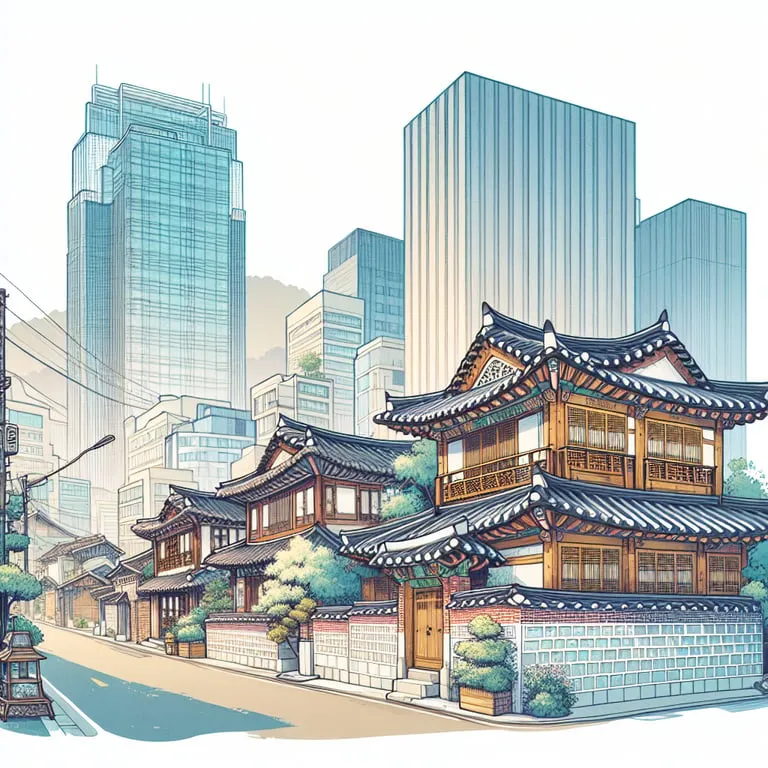
    Korean architecture has long been a compelling tapestry woven from ancient traditions and cutting-edge innovations. From the grand palaces of the Joseon Dynasty to the towering skyscrapers of modern Seoul, the evolution of Korean architectural styles offers a fascinating glimpse into the nation’s cultural and historical journey. Traditional influences continue to permeate contemporary designs, creating a unique blend that both honors the past and embraces the future. This dynamic interplay between old and new is not just evident in form but also in function, as urbanization reshapes the architectural landscape. The use of innovative materials further enriches this dynamic field, offering new possibilities and sustainability. This exploration into Korean architecture reveals not just structural marvels but reflections of societal values and ingenious adaptability.
     

    Korean Architecture: From Ancient Palaces to Modern Skyscrapers​


    Influence of Tradition on Modern Korean Design

    The elegance of Korean architecture seamlessly stitches together centuries of rich tradition with the sleek lines of modern innovation. This dynamic coexistence is most palpably evident in contemporary Korean design, which draws deeply from its formidable traditional ancestry. A nation that boasts five millennia of architectural evolution finds its modern landscapes peppered with tradition-inspired design principles, leading to an intriguing confluence of the past and present.

    Harmony with Nature

    One of the critical aspects where tradition manifests in modern Korean architecture is through harmony with nature, a principle deeply rooted in Korean philosophy. Just take a look at the Gyeongbokgung Palace!! Built during the Joseon Dynasty, its layout was meticulously planned according to ‘Pungsu-jiri’ (similar to Feng Shui), a tradition that continues to resonate in the placement and orientation of modern skyscrapers such as the Lotte World Tower. This approach underscores the importance of landscapes and environmental harmony, ensuring that massive developments complement the existing natural features rather than overshadowing them.

    Minimalist Aesthetic

    Another quintessential traditional feature is the minimalist aesthetic, which Korean design elevates to an art form. Traditional Korean hanoks (houses) are renowned for their simple, unadorned beauty, characterized by clean lines and functional spaces. This minimalist ethos is mirrored in contemporary structures like the Dongdaemun Design Plaza, designed by the late Zaha Hadid, which incorporates gentle curves and fluid spaces reminiscent of classic hanok layouts. In fact, this facility encapsulates proportions and spatial dynamics that echo historical sensibilities, presenting a quiet nod to its heritage among furnishings and fixtures that are both futuristic yet fundamentally Korean in spirit.

    Material Choice

    Material choice is another domain where tradition influences modern architecture quite significantly. Hanji, traditional Korean paper, and hanok-style woodcraft illuminate sustainable design strategies that are being reinvented and reintroduced at the forefront of green architecture. In contemporary Korean structures, traditional elements such as tiled roofs (giwa) and ondol underfloor heating are often repurposed or modernized to meet new energy standards while maintaining their historical appeal. According to the Statistics Korea, over 65% of new residential projects in Seoul incorporate some form of eco-friendly technology reminiscent of hanok innovations, reflecting a profound reverence for their ancestors’ wisdom.

    Cultural Motifs

    Moreover, cultural motifs prevail in modern Korean interiors. The use of ‘dancheong’, the traditional multicolored paintwork seen in ancient temples, manifests in bold new ways, with vibrant yet subdued palettes in public and private spaces lending a decidedly Korean flavor to interiors! Meanwhile, partition screens reminiscent of old sliding doors optimize spatial utility much like they did in centuries past, fusing functionality with aesthetic grace.

    A study conducted by the Seoul Institute highlights that over 70% of contemporary Korean architects have incorporated traditional design principles into their practices within the last decade alone. This resurgence is attributable not only to aesthetic appeal but also to a resurgent national pride and a broader global appreciation for Korean craftsmanship and philosophy. In an age where homogenized glass and steel towers dominate urban landscapes worldwide, Korea proudly brandishes its architectural duality as a testament to its unique narrative.

    In essence, the fusion of tradition and modernity in Korean design is no ephemeral trend—it is a vibrant testament to Korea’s unwavering respect for its past as it strides boldly into the future. Indeed, from the use of innovative building materials to the striking visual links between new structures and historical templates, modern Korean architecture exudes an undeniable charm that captivates and resonates with many across the globe. This ongoing dialogue between eras not only elevates its aesthetic but also enriches the cultural tapestry, ensuring that tradition continues to influence and inspire Korean design in unprecedented ways.


    The Evolution of Korean Palace Architecture

    The evolution of Korean palace architecture is a captivating chronicle of cultural refinement, technological advancement, and intricate artistry. This architectural journey encompasses diverse eras, each contributing distinct layers to the Korean palace’s design, symbolizing both royal authority and the spiritual nexus of the nation.

    Early Beginnings: Three Kingdoms Period (57 BCE – 668 CE)

    Korean palace architecture can be traced back to the Three Kingdoms period, where each kingdom—Goguryeo, Baekje, and Silla—developed unique architectural traits. Goguryeo, known for its military prowess, constructed grandiose fortifications surrounding its palaces, displaying both strength and grandeur. Baekje, influenced by China’s Han dynasty, embraced more sophisticated artistry, with ornate roof tiles and elegant wooden structures. Silla, with its capital in present-day Gyeongju, intertwined religious symbolism with its palace designs, as evidenced by temple-like elements and spiritual motifs.

    Unified Silla Dynasty (668 – 935 CE) and the Goryeo Dynasty (918 – 1392 CE)

    The Unified Silla dynasty marked a pivotal moment, unifying the Korean Peninsula and enhancing the architectural blueprint of palaces. The emphasis shifted towards more elaborate and ornate designs, utilizing advanced woodworking techniques and intricate tile work. Notable is the influence of Buddhism, prevalent in Silla’s artistic endeavors, where the palace included sacred spaces for worship and reflection. Transitioning to the Goryeo dynasty, palace architecture saw the introduction of celadon ceramics and innovative woodblock printing, reflecting both functionality and aesthetic beauty.

    Joseon Dynasty (1392 – 1910)

    The longest-reigning dynasty, Joseon, revolutionized palace architecture—a period often heralded as the pinnacle of Korean architectural excellence. Embracing Confucian ideals, Joseon palaces prioritized simplicity and functionality over ostentatious designs. The Gyeongbokgung Palace in Seoul epitomizes this era, its construction beginning in 1395 under King Taejo’s directive. Known for its symmetrical layouts and harmonious integration with nature, Gyeongbokgung, along with Changdeokgung and Changgyeonggung, showcases the characteristic ‘hanok’ style, with wide eaves, column structures, and ondol underfloor heating—a testament to ecological and environmental consideration.

    Modern Influences and Preservation Efforts

    As Korean palace architecture transitioned into modern times, maintaining the integrity of these ancient structures became paramount. Post-Japanese occupation, restoration efforts endeavored to return palaces to their former glory. This involved meticulous research and rediscovery of traditional building techniques, ensuring resilience against modern-day challenges such as urban encroachment and environmental wear. Advanced technologies, including 3D scanning and digital modeling, are utilized to preserve rare artifacts and support restoration works, providing a bridge between historical authenticity and future preservation.

    Key Architectural Features

    Throughout Korean history, palaces maintained distinctive features that define their architectural allure. The use of ‘giwa’—curved roof tiles—provided both aesthetic appeal and functionality, assisting in water runoff and temperature control. Palatial halls, such as the Geunjeongjeon Hall in Gyeongbokgung, symbolized the nexus of political discourse, with expansive courtyards facilitating royal ceremonies. The concept of ‘baesanimsu’ (backed by mountains, facing water) governed palace locations and orientations, reflecting geomantic principles designed to enhance auspicious energy flow.

    Conclusion

    The evolution of Korean palace architecture is more than a testament to artistic brilliance; it is a profound chronicle of the nation’s identity, intersecting history, philosophy, and innovation. These palaces stand not only as historical relics but as vibrant embodiments of Korea’s enduring cultural legacy. By exploring these architectural wonders, we uncover an intricate tapestry woven through time, offering invaluable insights into a civilization that harmoniously balanced tradition with transformation. As we move forward, the preservation and celebration of Korean palace architecture continue to inspire and elucidate the narrative of Korea’s past, into the present, and wisely beyond.


    Innovative Materials in Contemporary Korean Structures

    In the swiftly evolving landscape of modern architecture, Korea stands at the forefront, innovatively integrating cutting-edge materials into its contemporary structures. This distinctive blend of innovation and tradition is reshaping skylines and setting new benchmarks for sustainable and efficient construction. Let’s dive into the fascinating world of innovative materials that are redefining the architectural paradigms in Korea.

    Eco-Friendly Materials

    Korea’s commitment to sustainability and innovation is prominently reflected in its extensive use of eco-friendly materials. A stellar example is the incorporation of high-performance concrete, which significantly decreases carbon emissions. This material not only offers superior durability and strength but also provides enhanced thermal insulation. In projects such as the Lotte World Tower in Seoul, which soars to an impressive 555 meters, this advanced concrete plays a pivotal role in maintaining structural integrity against seismic activities and harsh weather conditions — pretty crucial for a structure of such magnitude and complexity!

    High-Strength Steel

    Moreover, the utilization of high-strength steel is another revolutionary trend in Korean construction. This material facilitates the creation of slender yet robust structures, allowing for more floor space and flexibility in architectural designs. The Dongdaemun Design Plaza, a landmark designed by the renowned architect Zaha Hadid, exemplifies the use of advanced steel. The structure’s fluid and dynamic design required materials capable of offering unparalleled strength and malleability, and high-strength steel was the ideal choice. This not only showcases technical ingenuity but also an artistic expression unique to contemporary Korean architecture.

    Smart Materials

    Further pushing the envelope, Korean architects are keen on integrating smart materials that respond to environmental changes. Photochromic and thermochromic glass are popular choices, changing their properties to optimize indoor temperature and lighting based on the external environment. Such adaptable materials reduce energy consumption significantly, lowering operational costs. The Sungnyemun Gate, though historically significant, has been revitalized with these modern innovations, marrying traditional aesthetics with contemporary environmental consciousness.

    Vertical Gardens and Green Walls

    As urbanization continues to accelerate, the environmental footprint of new constructions is a growing concern. Consequently, Korean architects have been punctuating their structures with vertical gardens and green walls. These installations utilize advanced hydroponic systems that use minimal water and provide natural insulation, contributing to the reduction of urban heat island effects. SK Chemicals’ headquarters in Seongnam, for example, integrates large green spaces within its design, utilizing biophilic design principles to enhance the workplace environment. This duo of living architecture and innovative material use exemplifies how modern structures are harmonizing with their natural surroundings.

    Transparent Wood

    In addition to environmental considerations, contemporary Korean buildings are increasingly incorporating transparent wood, a material with the potential to revolutionize the construction industry. Transparent wood provides the transparency of glass but with better insulation properties and much higher mechanical strength. This material is particularly favored for its aesthetic and functional properties, contributing to the creation of light-filled, energy-efficient spaces that maintain warmth during harsh Korean winters.

    Composite Materials for Cladding and Facades

    Moreover, the focus is not only on the structure itself but also on exterior and interior finishes. The use of new composite materials for cladding and facades is becoming widespread, providing eye-catching aesthetics that are also highly resistant to weather and pollution—an essential feature in densely populated urban areas. These facades enhance a structure’s overall energy efficiency and contribute to air quality by using smog-eating technology, which neutralizes air pollutants.

    Bio-Based Materials

    Moreover, bio-based materials are entering the construction scene with promising potential. Korean researchers are developing bio-concrete, which uses bacteria to repair cracks and extend the life of structures. Such self-healing materials could profoundly impact the durability and longevity of buildings, reducing repair costs and enhancing safety for occupants. These biological innovations are not only eco-friendly but also demonstrate Korea’s pioneering role in intersecting biological sciences with architectural practices.

    Digital Technology and 3D Printing

    Digital technology is also steering the course of material innovation in the Korean architectural sphere. 3D printing technology, for instance, has been employed in the production of intricate design components and building models, allowing for precise and customized architectural details. This technology minimizes waste and optimizes resource usage, proving indispensable in the planning and execution phases of construction. KICT’s pavilion, constructed using 3D-printed structural components, showcases the potential to produce large-scale, sustainably focused architecture that is as cost-effective as it is ground-breaking.

    Korea’s architectural journey is a fascinating narrative of blending cutting-edge technology with timeless artistry. It’s an arena where innovation in materials isn’t merely about surpassing current limitations but also about creating spaces that inspire and resonate with the traditions of the past. Through this lens, the tale of Korean architecture is not just about elevating skylines; it’s about crafting experiences, memories, and legacies that are deeply interwoven with both the land and the people. As these materials continue to evolve, they will undoubtedly herald an exciting new era in architectural design, both in Korea and beyond.


    Impact of Urbanization on Architectural Styles

    Urbanization is a driving force that continuously reshapes not only the physical landscapes of cities but also the intricate tapestry of their architectural design. Nowhere is this more evident than in Korea, a nation that seamlessly melds its rich historical heritage with an ever-accelerating modernity. Urbanization’s impact on architectural styles in Korea presents both challenges and opportunities, influencing design principles, material use, and urban planning in unprecedented ways.

    Rapid Urban Growth

    Beginning with sheer numbers, South Korea’s urban population surged from approximately 28% in 1960 to a staggering 81% by 2020, according to World Bank data. This meteoric urban migration necessitated a swift adaptation in architectural approaches to accommodate the burgeoning metropolis. With such dense urban settings, architects were prompted to innovate, creating vertical spaces in skyscrapers that are now icons of a futuristic skyline—wow!

    Balancing Modernity and Tradition

    One profoundly significant effect of urbanization is the balance between modern necessity and cultural identity. As cities expanded, there was a pressing need to preserve historical sites while catering to the growing demand for residential and commercial spaces. This has led to the fascinating coexistence of the ancient and the ultra-modern. Structures like the Dongdaemun Design Plaza by the renowned architect Zaha Hadid are perfect embodiments of this synergy. They integrate traditional motifs with cutting-edge design, creating buildings that are not only functional but also spiritually resonant with Korea’s architectural past.

    Sustainable Materials and Practices

    Materials play a crucial role in this evolving architectural landscape as well. With urbanization comes the need for sustainable development—an imperative recognized globally, yet distinctively emphasized in Korea. There’s been an increasing shift towards eco-friendly materials such as advanced glass technologies, steel, and recycled resources. This not only reduces the carbon footprint of buildings but also allows for innovative aesthetic expressions. Strikingly, this trend aligns with global movements towards green building practices, yet retains a singularly Korean flair, blending seamlessly into the country’s cityscapes.

    Government Responses and Challenges

    Furthermore, the New Town Development Program initiated by Korea’s government is another pivotal response to urbanization impacts. Designed to ease the intense urban pressure on Seoul, it involves the development of surrounding cities like Bundang and Ilsan, channeling influences into varied architectural forms that reflect the unique characteristics of each area. This ongoing expansion underscores the dynamic and cautious approach taken to manage Korea’s urban sprawl while honoring existing urban fabrics.

    However, not all effects are seamlessly positive. There’s the undeniable risk of losing historical elements to rapid development. The historical hanok, with its graceful curved roofs and natural wooden interiors, faces threats from relentless urban expansion. To counteract this, there are concerted efforts led by both government initiatives and passionate community groups to preserve these essential cultural treasures. Through protective zoning laws and preservation projects, an equilibrium is sought to allow urbanization without sacrificing cultural integrity.

    Socio-economic Factors and Technological Innovations

    Moreover, the socio-economic factors spurred by urban expansion are pivotal in design philosophies adopted by architects. The rise of mixed-use developments—integrating residential, commercial, and recreational spaces—illustrate a direct response to space limitation challenges faced by Korean cities. These multifunctional spaces epitomize urban efficiency and offer vibrant environments that boost community interaction and economic dynamism.

    As urbanization continues its relentless advance, tech innovations become not just beneficial but essential. Smart city technologies, with an emphasis on connectivity, renewable energy consumption, and intelligent transport systems, are integrated into new architectural endeavors. These advancements ensure that future Korean architectural designs will not only reflect technological prowess but also promote an enhanced quality of living that sets global benchmarks.

    Ultimately, urbanization’s imprint on Korea’s architectural styles encapsulates a complex interplay of modern needs and tradition. It represents an architectural evolution driven by necessity yet firmly anchored in the cultural profundity of Korea! Urban constraints are seen not as hurdles but as opportunities to create innovative, sustainable, and culturally-appreciated spaces. Thus, Korea becomes a living gallery of architectural wonder, harmoniously blending historical riches with avant-garde innovation—a testament to resilience and ingenuity in architectural design spurred by urbanization.


    Korean architecture stands as a testament to the harmonious fusion of tradition and innovation. From the majestic palaces of the past, which reflect an intricate blend of artistry and cultural values, to the sleek, modern skyscrapers that define today’s urban landscape, Korea’s architectural journey is remarkable. The influence of historical forms and principles continues to inspire contemporary designs, creating structures that respect cultural heritage while embracing modernity. As Korea progresses and urbanizes, its architects find unique ways to preserve the essence of traditional aesthetics within modern contexts. This dynamic evolution not only enriches the architectural landscape but also reaffirms Korea’s place as a leader in innovative and culturally respectful design practices.


    “The Rise of Korean Street Fashion: Trends and Influences”​
    “Exploring Korean Folklore: Myths and Legends”​
    “Korean Traditional Festivals: Celebrations Throughout the Year”​
    “The Art of Korean Pottery: From Celadon to Contemporary Ceramics”​
    “Korean Pop Culture’s Impact on Global Beauty Standards”​
    “A Guide to Korean Traditional Music: Instruments and Genres”​
    “Understanding Korean Etiquette: Do’s and Don’ts”​
    “The Influence of Korean Cuisine on Global Food Trends”​
    “Exploring the Han River: Activities and Attractions”​
    “Korean Literature: Must-Read Books and Authors”​
    “The History and Significance of Korean Shamanism”​
    “Korean Architecture: From Ancient Palaces to Modern Skyscrapers”​
    “A Guide to Korean Street Markets: Shopping and Street Food”​
    “The Role of Confucianism in Korean Society”​
    “Exploring Korea’s National Parks: Nature and Hiking Trails”​
    “Korean Animation: The Growth of ‘Manhwa’ and Its Global Impact”​
    “The Evolution of Korean Cinema: From Classics to Modern Hits”​
    “Korean Tea Culture: Varieties and Traditions”​
    “Exploring Jeonju: The Heart of Korean Traditional Culture”​
    “The Impact of Korean Technology Companies on the Global Market”​
    “Korean Traditional Medicine: Practices and Benefits”​
    “The Significance of Family in Korean Culture”​
    “Exploring Korean Contemporary Art: Artists and Exhibitions”​
    “The Role of Education in Korean Society: A Cultural Perspective”​
    “Korean Proverbs and Their Meanings: Insights into the Culture”​
    “The Popularity of Korean Webtoons: A New Era of Comics”​
    “Exploring Busan’s Beaches: A Coastal Getaway”​
    “Korean Martial Arts: Beyond Taekwondo”​
    “The Influence of Buddhism on Korean Art and Culture”​
    “Korean Home Cooking: Recipes and Techniques for Beginners”
  • The History and Significance of Korean Shamanism​

    The History and Significance of Korean Shamanism​

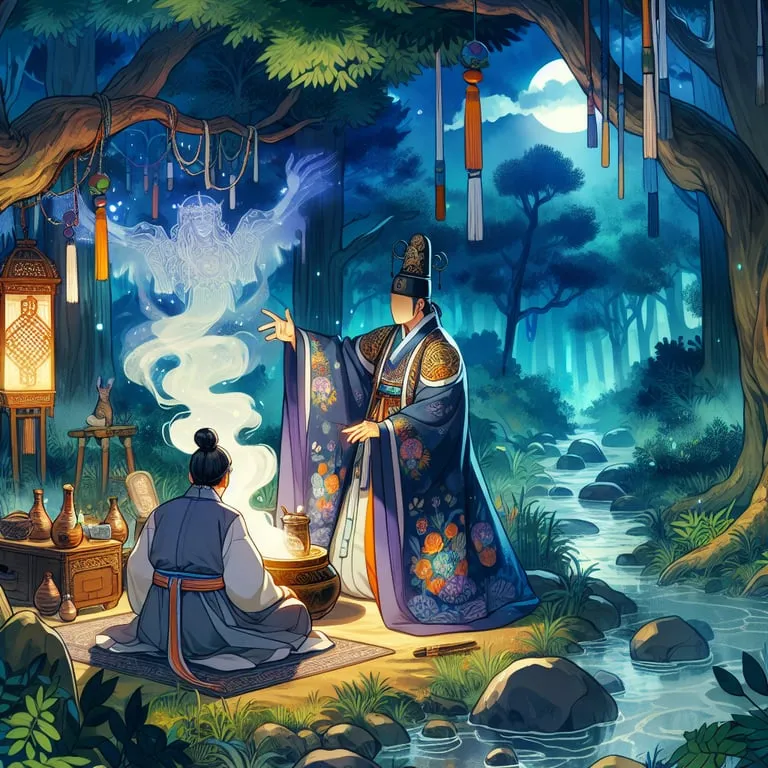
    Korean Shamanism, a fascinating aspect of Korea’s rich spiritual heritage, offers profound insights into the nation’s cultural and religious evolution. This ancient tradition, with roots tracing back to prehistoric times, encompasses a diverse range of rituals and beliefs that have shaped the Korean ethos. As we delve into its origins and practices, the enduring cultural impact of shamanism becomes evident. Today, as modernity challenges traditional values, there is a resurgence of interest in this spiritual practice, reflecting its enduring significance in contemporary society. Join us as we explore the captivating world of Korean Shamanism, its transformations, and its revival in modern times.


    The History and Significance of Korean Shamanism​


    Origins of Korean Shamanism

    The history of Korean Shamanism is as rich and elaborate as the legends it seeks to explain. Rooted deeply in ancient Korean society, it is one of the oldest spiritual traditions in the world, with origins tracing back over several millennia. Scholars estimate that this practice might have begun as early as the Neolithic period, roughly around 4,000 BCE, when early settlers in the Korean peninsula felt the need to explain and influence the natural phenomena surrounding them. This need gave rise to the unique combination of beliefs and rituals that form the bedrock of Korean Shamanism.

    Characteristics of Korean Shamanism

    Shamanism in Korea, also known historically as ‘Muism’ or ‘Sindo,’ is characterized by its animistic and polytheistic nature. Central to this belief system is the understanding that both animate and inanimate objects possess spirits, and these spirits influence the material world. Spirits of ancestors, local deities, and nature spirits are invoked and appeased through rituals and ceremonies. Isn’t it fascinating how our ancestors sought to connect with even the spirits of mountains and rivers? Such interactions were believed to ensure harmony between humans and the spiritual realm.

    Flexibility and Adaptability of Shamanism

    A fascinating aspect of Korean Shamanism is its flexibility and adaptability. Over centuries, it has absorbed and syncretized elements from other belief systems, most notably Buddhism, Confucianism, and Taoism. This syncretism has not diluted its core principles but rather enriched and reinforced its foundations, allowing it to remain relevant even as dominant religious ideologies shifted. In fact, by the Three Kingdoms period (57 BCE – 668 CE), Shamanism was already intertwined with palace rituals and political aspirations, illustrating its important societal role!

    Gut Ceremonies

    An incredible discovery in understanding the origins and transmissions of Shamanistic traditions is the existence of ‘Gut’—elaborate ceremonies conducted by Shamans or ‘Mudangs.’ This is captured vividly in early Korean literature and oral traditions, emphasizing the role of Gut within the spiritual and cultural framework. These ceremonies, still practiced today, offer insight into ancient Korean life, philosophy, and social structure, providing a living link to our shared human past.

    Regional Diversity

    Moreover, Korean shamanism exhibits a remarkable regional diversity. For instance, the northern regions (now North Korea) and the southern parts (now South Korea) have developed variations in their practices reflecting local customs and narratives. While the core principles of Shamanism remain intact, regional practices evolved, influenced by geography, local history, and societal changes. In the northern Gangwon Province, for example, Shamans are known to frequently engage with mountain divinities, a practice less common in southern regions.

    Demographics of Shamanism

    Demographically, the traditional lineage of Shamans across the Korean Peninsula has intriguing aspects; historically, most Shamans were women. Approximately 80% of Korean Shamans are female, often due to the belief that women are more spiritually receptive and capable of undertaking the demanding spiritual journey. This gender dynamic within Shamanism is rather unique and highlights the crucial role women have played in preserving spiritual traditions in Korea.

    Cultural Intersection

    Korean Shamanism also highlights an interesting cultural intersection with neighboring indigenous practices. Influences can be traced back and forth between Korea, Siberia, and Mongolia, reflecting that spiritual traditions are inherently interconnected across regions. This confluence facilitated a rich exchange of practices and beliefs, enhancing the diversity within Korean Shamanism itself.

    Reflecting on this vast historical canvas, Korean Shamanism is not just a religious practice; it’s a cultural and social tapestry that has woven together the strands of Korean life and history. Its presence from prehistoric times to the modern-day highlights its enduring significance and adaptability. As this ancient spiritual tradition continues to captivate and challenge modern perceptions, examining its origins provides a profound understanding of Korea’s past and an intriguing glimpse into the spiritual heart of its culture.


    Key Practices and Rituals

    Korean shamanism, known as “Muism” or “Sindo,” is rich with intricate practices and captivating rituals that have evolved over millennia, reflecting the deep spiritual fabric of Korean society. The practices are characterized by their diversity and are typically categorized into “gut,” “song,” and “dance,” each having its own significance and procedures that connect the material and spiritual worlds.

    Gut: The Paramount Shamanistic Ritual

    Among these, the Gut is the paramount shamanistic ritual, pivotal in the practice of Korean shamanism. A “gut” involves a ceremonial rite performed by a shaman, or “mudang,” to invoke gods or spirits. These ceremonies can be vast in scale and variety, ranging from small private rituals to grand public ceremonies lasting several days! Remarkably, each gut serves a distinct purpose—be it healing, purification, protection, or connecting the living with their ancestors.

    The Daedong Gut

    One of the most notable types of gut is the Daedong Gut, primarily performed in the regions of Hwanghae and southern areas of the Korean Peninsula. This collective rite aims to fortify community bonds and ensure communal well-being. These ceremonies can stretch over 7 to 9 days, involving elaborate sequences that include the symbolic tearing of the cloth, which signifies the opening of the spiritual world.

    Shinbyeong: Spirit Sickness

    In Korean shamanism, the “Shinbyeong”, or “spirit sickness,” is a unique state that prospective shamans experience, believed to be a calling from the deities. This condition is not only psychological but also evidenced by physical manifestations like inexplicable illnesses or dreams, urging the sufferer to embrace their path as a shaman. To alleviate this condition, a grand initiation rite, known as the “Naerim Gut,” is performed, which is an intricate and highly solemn ritual. The Naerim Gut signals the acceptance of the shaman’s role, establishing a direct line of communication with the divine.

    The Role of Music and Dance

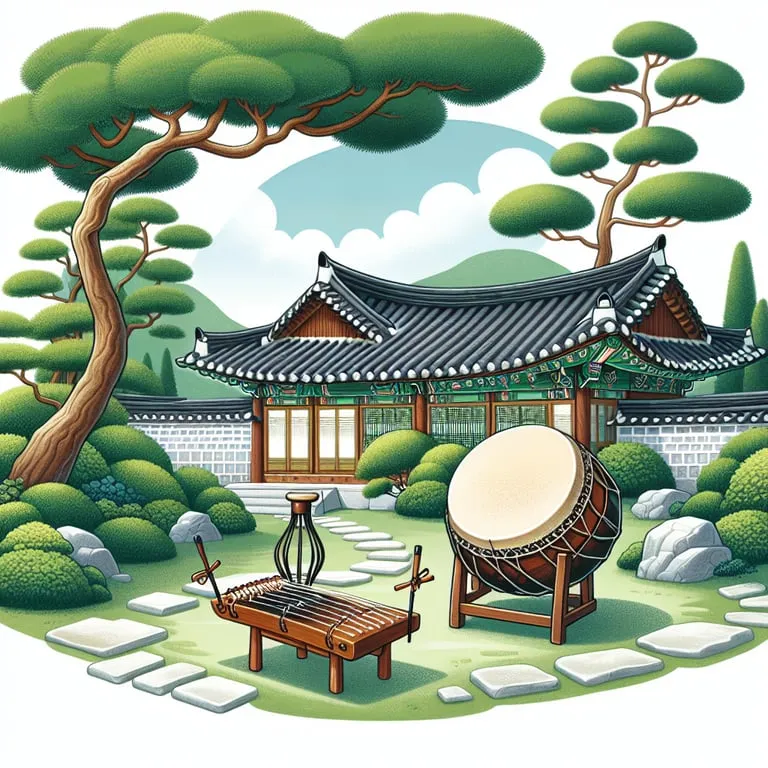
    The role of music within these rituals cannot be overstated – traditional Korean instruments like the “janggu” (drum), “piri” (oboe), and “buk” (a traditional drum) play fundamental roles. Not only do they set the rhythm for the ritual dance but they also act as conduits for spiritual messages. The dance, often characterized by vibrant costumes and dynamic movements, is an expressive communication with the spirits. The music and dance together serve not just as a form of invocation but as an emotive language through which shamans and participants echo their needs, wishes, and reverence.

    Divination and Geomancy

    Furthermore, the shaman’s counsel through divination practices forms an essential component of Korean shamanism. Geomancy, known as “Pungsujiri,” is a revered practice that involves the art of divining auspicious sites, either for construction or burial, to harmonize human activities with the natural world. Often, even in contemporary times, the advice of a mudang is sought for significant life events such as marriages, business engagements, or house constructions! This highlights the enduring respect and reliance on shamanic wisdom.

    Given the profound nature of these practices, it’s clear that Korean shamanism not only rises from spiritual necessity but has also weaved its influence into the socio-cultural framework of Korea. This deeply-rooted tradition, characterized by its elaborate rituals and spiritual authenticity, continues to captivate both anthropologists and spiritual seekers alike, shedding light on the country’s rich spiritual heritage and ongoing cultural narrative.

    The complexity and longevity of these rituals underscore the pivotal role of Korean shamanism in bridging past and present, spirituality and reality, humans and the divine. These practices and rituals persist as a testament to the resilience and adaptability of shamanic traditions, persisting amid the tides of modernization and globalization. Through the continual performance and adaptation of these practices, Korean shamanism ensures its place not just as a relic of the past, but as a living, breathing part of Korean cultural identity.


    Cultural Impact and Transformation

    Korean Shamanism, known as ‘Muism’ or ‘Shindo’, has had a profound impact on Korean culture, serving as a crucial undercurrent in the nation’s transformation over millennia. The cultural footprint of shamanism is remarkably entrenched in Korea; it has influenced various aspects of life, including literature, arts, traditional medicine, and social structures. Muism’s adaptability and its symbiotic relationship with other spiritual traditions, notably Confucianism and Buddhism, have played pivotal roles in its enduring legacy.

    Literature and Oral Tradition

    In literature, elements of shamanistic folklore abound, with heroes often embarking on spiritual journeys or facing supernatural forces. Korean novels and folktales frequently embed themes where spiritualism and human experiences intertwine, illustrating the pervasive influence of shamanistic thought. It aids in preserving a unique oral tradition that conveys historical narratives and moral lessons, thus anchoring cultural identity.

    The Arts

    The arts, particularly traditional music and dance, bear witness to shamanism’s cultural impact. The Korean ‘gut’—a shamanistic ritual often accompanied by music and dance—provides a profound spectacle where spiritual and artistic expressions meet. Historically, energetic performances featuring drumming and chanting served not only religious purposes but also community entertainment and social commentary. Contemporary Korean artists sometimes draw inspiration from these ancient rituals, integrating traditional instruments and motifs into modern works, showcasing a seamless blend of old and new that captivates audiences worldwide.

    Architectural Influence

    From an architectural standpoint, shamanism has influenced the design and orientation of Korean structures. The principles of geomancy, known as ‘pungsu-jiri’, which bear resemblance to the more widely recognized Chinese Feng Shui, are reflective of shamanistic beliefs in celestial alignment and harmony with nature. These practices ensure that homes, temples, and even gravesites are constructed in harmony with the natural energetics of the land, often dictating communal planning and developmental aesthetics.

    Social Dynamics

    Socially, shamanism has historically shaped gender roles and societal hierarchies within Korean communities. Historically, shamans or ‘mudang’ were predominantly female, contributing to a complex dynamic of empowerment and subjugation within a patriarchal society. This dichotomy showcases how shamanism can serve as both a channel of female empowerment and a tool within prevailing social hierarchies, creating a nuanced tapestry of social interaction.

    Modern Healing Arts

    Moreover, the integration of shamanistic practices with modern healing arts has drawn interest from the fields of psychiatry and psychotherapy, revealing the therapeutic potential embedded in traditional rituals. These practices are not only seen as healing phenomena on a spiritual level but are recognized for fostering mental well-being through community support and personal reflection. Modern practitioners and scholars investigate how these ancient methodologies can complement clinical practices—an exciting frontier in cultural and scientific integration.

    Adaptation and Resilience

    Transformational shifts in the late 19th and 20th centuries, characterized by industrialization and rapid modernization, challenged the position of shamanism in Korean society. Influences from Western culture and science instigated a decline in traditional practices as societal values shifted. However, rather than leading to the dissolution of shamanistic traditions, these pressures prompted a remarkable adaptability within the shamanistic community. Shamans incorporated elements of modern technology, and rituals became more community-oriented and inclusive of contemporary issues, highlighting shamanism’s resilience and flexibility.

    Revival and Modern Era

    In the modern era, Korean shamanism is experiencing a revival, prompted by a growing interest in ancestral heritage and spirituality among the younger generation. This resurgence can be seen in the increased number of televised documentaries, academic studies, and public gut performances. These events not only serve an educational purpose but also reaffirm a cultural identity deeply rooted in historical consciousness, allowing shamanism to evolve while retaining its core spiritual significance.

    Through the centuries, Korean shamanism has not only survived—it’s thrived, constantly reshaping and transforming to meet the changing tides of social and cultural landscapes. It has remained a vibrant, albeit sometimes understated, thread in the complex tapestry of Korean identity, illustrating the enduring power of cultural heritage in contemporary life. As Korea continues to develop on the global stage, the shamanistic legacy persists, serving as a testament to the nation’s historical resilience and cultural dynamism.


    Modern Perspectives and Revival

    The resurgence of interest in Korean shamanism, known as “muism,” is nothing short of a cultural renaissance. This ancient spiritual practice has experienced an intriguing revival in modern times, becoming a focal point of contemporary Korean identity. The nuanced relationship between traditional beliefs and modern society is an emblem of Korea’s broader journey from past to present, encompassing both technological advancement and deep-seated cultural roots.

    Shamanism in Modern Korean Society

    In the late 20th century, as Korea surged into a global economic powerhouse, many scholars and sociologists took note of the diminishing presence of shamanic practices amidst the towering ambitions of industrialization. However, the 1990s witnessed a renewed curiosity and respect for shamanism, as both cultural preservationists and modern spiritual seekers began to acknowledge its intrinsic value. Scholars like Laurel Kendall have detailed this intersection, emphasizing that the practices rooted in shamanism offer invaluable insights into the collective consciousness and social dynamics of Korean culture.

    Contemporary Relevance

    Contemporary perspectives on shamanism are multifaceted. For some, it functions as a nostalgic reminder of Korea’s pre-industrialized society, a time when nature, spirituality, and community were deeply intertwined. For others, shamanism provides a means to reconnect with personal spirituality in a world dominated by technology and globalization. Indeed, a 2015 survey conducted by the Korean Foundation for Shamanic Studies highlighted that more than 30% of Koreans had either witnessed a shamanic ritual or knew someone who actively participated in one, underscoring the subtle yet persistent influence of these rituals in daily life.

    Public and Academic Recognition

    Shamanism today finds its articulation not only in the confines of private ceremonies but also in public performances and cultural festivals, which act as a platform for Koreans to partake in their ancestral heritage. The Bongsan Talchum mask dance, for example, incorporates elements of shamanistic rites and is routinely celebrated during local and national festivities. UNESCO’s recognition of such practices as Intangible Cultural Heritage in the early 21st century reflects the international acknowledgment of Korea’s rich shamanic traditions.

    The revival of shamanism is also evident in the realm of academia and popular media. Universities across South Korea offer courses detailing the theology and anthropology of shamanic traditions, signaling a keen intellectual interest in uncovering the mysteries and nuances of this cultural cornerstone. Additionally, films, documentaries, and even web series are weaving shamanistic themes into their narratives, bringing to mainstream audiences the lore and drama of muism.

    The Future of Shamanism

    Culturally significant, Korean shamanism had long been marginalized; its modern re-emergence stands as a testament to the people’s resilience and innovative spirit. While the technological world demands a forward-thinking approach, the revival of traditional practices suggests a collective yearning for grounding, for roots. It’s fascinating to note how contemporary Koreans are deftly navigating the terrain of preserving their cultural heritage while thriving in an era characterized by rapid change. Indeed, as traditions adapt, as rituals transform, and as new interpretations emerge, Korean shamanism proves its timeless relevance—a symbol of the dynamic interplay between history and modernity.

    The path forward for Korean shamanism involves balancing these dual facets: upholding ancient practices while transforming them to resonate with today’s societal ethos. Delving into modern perspectives of Korean shamanism doesn’t just illuminate where it’s been; it forecasts where it could be headed, ensuring that future generations will continue to explore and redefine their spiritual and cultural landscapes.


    Korean Shamanism, deeply rooted in history, remains a vital cultural force. Its origins, practices, and evolving significance reflect the resilience and adaptability of Korean spiritual life. Despite modernization, Shamanism has seen a resurgence, illustrating its enduring relevance. Understanding this tradition not only offers insights into Korean culture but also emphasizes the universal human quest for meaning and connection. As societies continue to change, the revival of such ancient practices underscores the timeless nature of spiritual exploration and the quest for understanding our place in the world.


    “The Rise of Korean Street Fashion: Trends and Influences”​
    “Exploring Korean Folklore: Myths and Legends”​
    “Korean Traditional Festivals: Celebrations Throughout the Year”​
    “The Art of Korean Pottery: From Celadon to Contemporary Ceramics”​
    “Korean Pop Culture’s Impact on Global Beauty Standards”​
    “A Guide to Korean Traditional Music: Instruments and Genres”​
    “Understanding Korean Etiquette: Do’s and Don’ts”​
    “The Influence of Korean Cuisine on Global Food Trends”​
    “Exploring the Han River: Activities and Attractions”​
    “Korean Literature: Must-Read Books and Authors”​
    “The History and Significance of Korean Shamanism”​
    “Korean Architecture: From Ancient Palaces to Modern Skyscrapers”​
    “A Guide to Korean Street Markets: Shopping and Street Food”​
    “The Role of Confucianism in Korean Society”​
    “Exploring Korea’s National Parks: Nature and Hiking Trails”​
    “Korean Animation: The Growth of ‘Manhwa’ and Its Global Impact”​
    “The Evolution of Korean Cinema: From Classics to Modern Hits”​
    “Korean Tea Culture: Varieties and Traditions”​
    “Exploring Jeonju: The Heart of Korean Traditional Culture”​
    “The Impact of Korean Technology Companies on the Global Market”​
    “Korean Traditional Medicine: Practices and Benefits”​
    “The Significance of Family in Korean Culture”​
    “Exploring Korean Contemporary Art: Artists and Exhibitions”​
    “The Role of Education in Korean Society: A Cultural Perspective”​
    “Korean Proverbs and Their Meanings: Insights into the Culture”​
    “The Popularity of Korean Webtoons: A New Era of Comics”​
    “Exploring Busan’s Beaches: A Coastal Getaway”​
    “Korean Martial Arts: Beyond Taekwondo”​
    “The Influence of Buddhism on Korean Art and Culture”​
    “Korean Home Cooking: Recipes and Techniques for Beginners”
  • Korean Literature: Must-Read Books and Authors​

    Korean Literature: Must-Read Books and Authors​

    Korean literature offers a rich tapestry of stories and perspectives that have captivated readers worldwide. From the timeless beauty of classic Korean novels to the fresh insights of contemporary voices, this literary tradition provides a profound exploration of human nature and society. Renowned authors offer works that not only reflect Korean culture and history but also resonate on a global scale. With its unique narratives and cultural depth, Korean literature continues to impact and enrich world literature, inviting readers to delve into an extraordinary realm of storytelling. Let us embark on a journey through must-read books and discover the distinguished authors behind them.


    Korean Literature: Must-Read Books and Authors​


    Exploring Classic Korean Novels

    Embark on a meticulous journey through the rich tapestry of classic Korean literature. This exploration delves into the essence of Korean storytelling that has endured for centuries, reflecting the intricate sociocultural and historical narratives of the Korean Peninsula. Each classic novel not only captures the readers’ imagination but also serves as a crucial window into understanding the ethos and pathos of Korean culture.

    The Story of Hong Gildong

    Among the preeminent classic works, *The Story of Hong Gildong* (*Hong Gildong jeon*), written by Heo Gyun in the late 16th century, stands as a pinnacle of Korean literature. Often likened to Robin Hood, Hong Gildong is a legendary figure who embodies the principles of egalitarianism and justice. The novel follows his journey from an outcast illegitimate son to a heroic bandit leader who fights against the oppressive social structures of Joseon Korea. It’s revered not only for its engaging narrative but also for its critique of the rigid Joseon societal norms, making it a timeless political commentary.

    The Tale of Chunhyang

    Another noteworthy classic is *The Tale of Chunhyang* (*Chunhyangga*), an 18th-century pansori narrative that continues to resonate deeply with Korean audiences today. It is a poignant story of love, loyalty, and rebellion against corruption, centered on Chunhyang, a beautiful courtesan’s daughter, and her unwavering affection for her noble lover, Yi Mongryong. This work is celebrated for its vivid portrayal of the Confucian virtues and the tensions between different social classes.

    Dream of Nine Clouds

    *Dream of Nine Clouds* (*Guunmong*), penned by Kim Man-jung in 1689, offers an intricate tapestry of Buddhist themes and philosophical contemplations. The narrative follows protagonist Seong-jin across dreamlike reincarnations, exploring the transient nature of life — a core tenet in Buddhist literature. The multiplicity of identities and the illusory experiences emphasize the futility of worldly desires, profoundly engaging the intellectual discourses of its time.

    The Cloud Dream of the Nine

    The late Joseon period brought forth *The Cloud Dream of the Nine* written by Kim Manjung. A masterpiece that embodies the fusion of Buddhist, Daoist, and Confucian ideals, it represents the apex of classical Korean novels. Written during Manjung’s exile in 1689, the novel illustrates a compelling allegory of the ephemeral nature of life through a fantastical dream vision, symbolizing the spiritual journey towards enlightenment.

    Not only do these works captivate readers through their vivid storytelling but they also offer profound insights into Korean moral values, social hierarchies, and philosophical musings. Each classic novel acts as both a reflection of and a reaction to the historical and social contexts from which it emerged, serving scholars and enthusiasts as a rich repository of Korea’s cultural and historical consciousness.

    The proliferation of classic Korean novels has been both a boon to literary study and a testament to Korea’s longstanding narrative traditions. Within these pages, one discovers the resilience of Korean literature to withstand cultural flux and the enduring universal themes that speak to humanity at large. Intriguingly, these narratives have not only preserved the intricacies of Korean customs and ideologies but have also dialogued with the universal human condition, rendering them relevant in a contemporary global context.

    Such classics continue to be studied, appreciated, and adapted over the centuries, frequently analyzed in academic circles for their stylistic elegance and cultural depth. They inspire countless adaptations in modern literature, film, and television, evidencing their lasting legacy and influence. In the academic sphere, these works represent vibrant sources of discussion, providing fertile ground for further research and interpretation, while in the entertainment sector, they are a wellspring of creative inspiration, reflecting the timeless appeal of these magnificent narratives.

    Through classic Korean novels, readers are afforded an invaluable portal to not only the evolution of Korean societal values but also a deeper understanding of its artistic and literary canon that captures the essence of Korea’s rich historical epoch, imparting wisdom and offering solace through their timeless tales.


    Contemporary Voices in Korean Literature

    In the rapidly evolving sphere of Korean literature, contemporary voices have emerged as a beacon of creativity and a testament to the cultural renaissance. These modern writers blend the intricate tapestry of Korea’s profound history with the dynamic currents of today’s world. Such unique narratives not only enlighten readers about diverse human experiences but also elevate Korean literature to a global platform. The significance of their work becomes apparent through the complex themes they explore – identity, displacement, globalism, and the intersectionality of tradition and innovation.

    Han Kang: A Prodigious Talent

    One cannot discuss contemporary Korean literature without mentioning the prodigious talent of Han Kang. Her novel The Vegetarian, awarded the Man Booker International Prize in 2016, scrutinizes the oppressive norms imposed on women in a patriarchal society through a surrealistic lens. This novel has captivated global audiences, with its unsettling yet poignant portrayal of one woman’s refusal to conform, underscoring the psychological turbulence of an identity in rebellion. The book has been translated into over 20 languages, underscoring its universal appeal. Han’s narrative style, characterized by succinct and stark prose, challenges the reader to confront uncomfortable yet imperative societal questions.

    Kim Young-ha: Urban Isolation and Existential Inquiry

    Another striking voice contributing to this vibrant literary landscape is Kim Young-ha, whose works resonate with the themes of urban isolation and existential inquiry. His renowned novel, I Have the Right to Destroy Myself, delves into the psyche of contemporary Seoul, revealing a city teeming with vibrancy and despair. The narrative’s innovative structure, interweaving multiple perspectives, accentuates the pervasive sense of alienation among individuals in a rapidly modernizing society. Kim’s exploration of existential themes positions him as one of the leading architects of a contemporary voice that is both distinctly Korean and universally relatable.

    Bae Suah: Lyrical Prose and Narrative Experimentation

    Simultaneously, the works of Bae Suah have introduced readers to exceptionally lyrical prose and narrative experimentation. Her novel A Greater Music, an exploration of memory and identity through an expatriate’s experiences, uses fragmented narrative techniques to reflect the character’s introspective journey. Bae’s dexterous manipulation of language and form challenges conventional narrative styles, inviting readers into a new realm of literary possibilities.

    Kim Hyesoon: Avant-garde Poetry

    Contemporary Korean literature is not confined to traditional prose. Poetry, too, thrives as a medium of vibrant expression. Kim Hyesoon, counted among the most celebrated poets from Korea, is renowned for her avant-garde poetry that scrutinizes themes of femininity and corporeality. Through her subversive use of language and vivid imagery, Kim crafts powerful narratives that resonate with feminist discourses worldwide. Her award-winning collection, Autobiography of Death, encapsulates her unique poetic voice, conveying intense emotions and radical thoughts on existence and mortality.

    The South Korean Diaspora and Technology Integration

    Additionally, it’s imperative to recognize the contributions of the South Korean diaspora, which has produced notable authors who examine themes of identity and dual heritage. Min Jin Lee’s acclaimed novel Pachinko offers a sweeping saga of a Korean family in Japan, highlighting the challenges and ostracism faced by Korean immigrants. Her work, redolent with historical depth and personal nuance, has been adapted into visual media, amplifying the reach of Korean diaspora narratives to wider audiences.

    Moreover, the integration of technology into traditional storytelling has seen innovative outputs from Korean writers. Web novels and digital literature platforms have begun reshaping the landscape, allowing authors such as Jo Kyung-ran to craft engaging narratives in real-time interaction with readers. The rise of such mediums underlines the adaptability and forward-thinking nature of contemporary Korean authors, who are increasingly embracing digital innovations to expand their narrative horizons.

    The breadth and depth of contemporary voices in Korean literature are vast and compelling. They reflect the mutable culture and historical richness of Korea, while simultaneously engaging with universal themes that appeal to a global audience. The continued exploration and documentation of these contemporary voices provide invaluable insight into the human condition against the backdrop of an interconnected, ever-evolving world. These authors, through their pioneering narratives, not only redefine literary boundaries but also cement Korea’s place in the pantheon of world literature.


    Notable Korean Authors to Discover

    Korean literature boasts a rich tapestry of voices that have shaped both national identity and international perspectives on Korean culture. Delving into the realm of Korean authors is like unlocking a treasure chest brimming with profound narratives, historical insights, and innovative storytelling. In this discussion, we shall explore some of the most influential authors whose works have not only captivated readers within Korea but have also resonated globally.

    Yi Mun-yol: A Literary Giant

    First and foremost, we must acknowledge the literary giant Yi Mun-yol, whose contributions to Korean literature cannot be overstated. Born in 1948, Yi Mun-yol has produced over 30 novels, short stories, and essays. His work often explores themes of identity, morality, and the complex nature of Korean society. One of his most renowned works, “Our Twisted Hero,” is celebrated for its critical examination of political power dynamics, and it has been translated into various languages, reaching audiences far beyond South Korea’s borders.

    Ko Un: A Prolific Poet

    Continuing with the theme of impactful authors, Ko Un stands as a towering figure in modern Korean literature. A prolific poet, Ko Un’s oeuvre spans over 150 volumes – an astonishing feat of literary productivity. His work is characterized by a profound engagement with both Korean and universal themes, drawing deeply from his experiences as a former Buddhist monk and political prisoner. Notably, his “Ten Thousand Lives” series is a testament to his ambitious literary scope, as he attempts to capture the essence of every person he has met over the course of his life.

    Shin Kyung-sook: International Acclaim

    Another esteemed author whose storytelling has reached international acclaim is Shin Kyung-sook. Born in 1963, she has won some of the most prestigious literary awards both in Korea and abroad, including the Man Asian Literary Prize in 2012 for her novel “Please Look After Mom.” This poignant novel, which has sold over two million copies worldwide, intricately explores familial relationships and the sacrifices of motherhood, themes that are universally relatable yet distinctly Korean in their particularity.

    Han Kang: Exploring Human Psyche

    Han Kang has also risen to prominence with her work that often delves into the depths of human psyche and societal norms. Her novel “The Vegetarian” won the Man Booker International Prize in 2016, marking a significant achievement for Korean literature on the global stage. The book offers a stark and haunting narrative about rebellion, desire, and the burdens of conforming to societal expectations, masterfully challenging readers through both its content and its experimental style.

    Hwang Sok-yong: Bridging the Divide

    Veteran author Hwang Sok-yong cannot be overlooked when discussing notable Korean writers. His novels have been translated into multiple languages, leading the charge in sharing Korean narratives with the world. Born in a tumultuous era of Korean history, Hwang’s works such as “The Guest,” meticulously detail Korean experiences across the North and South divide. His writings provide invaluable insights into everyday struggles and the historical consciousness of the Korean people and stand as a testament to his storytelling prowess.

    Kim Young-ha: Contemporary Voices

    Additionally, the work of Kim Young-ha deserves mention as a representative of the contemporary Korean literary scene. His debut novel “I Have the Right to Destroy Myself” is a vivid exploration of existential themes and the alienation prevailing in modern urban life. Kim’s sharp narrative style and ability to weave complex characters have won him accolades both at home and abroad, making his works a staple for those looking to understand current Korean society through literature.

    The scope of notable Korean authors does not end here, as the contemporary scene continues to evolve with upcoming talents who are breaking boundaries and redefining the literary landscape. Figures like Bae Suah, whose experimental narratives challenge traditional storytelling methods, and Jeong You-jeong, known for her gripping thrillers, are propelling Korean literature to new heights. As Korean authors continue to gain recognition, their narratives provide readers with rich, multi-dimensional perspectives that enhance our understanding of Korean culture and its influence worldwide.

    Indeed, the exploration of Korean authors is not merely an academic pursuit but an enriching journey that offers both emotional depth and intellectual stimulation. These authors, with their diverse voices and unique approaches, contribute significantly to the global literary community, offering stories that echo far beyond the confines of geography.


    The Impact of Korean Literature on Global Culture

    In recent decades, Korean literature has transcended geographical borders to exert a considerable influence on global culture. This phenomenon has not only enriched the international literary scene but has also facilitated cultural exchanges on a massive scale. The increasing global popularity of Korean literature can be attributed to several pivotal factors, including the translation of seminal works, international literary awards, and the rise of Korean popular culture, commonly referred to as the Korean Wave or Hallyu.

    The Role of Translation

    Translation plays a crucial role in this global dissemination. Over the past ten years, numerous Korean novels, poems, and essays have been translated into various languages, significantly contributing to a 130% increase in the international sales of Korean literature, as reported by the Korean Literature Translation Institute. This surge in translation endeavors has granted global audiences access to the rich tapestry of Korean narratives, ranging from classical texts like “The Tale of Chunhyang” to contemporary works by authors such as Han Kang and Bae Suah.

    International Accolades

    International accolades have further propelled Korean literature onto the global stage. A prime example is Han Kang’s “The Vegetarian,” which won the Man Booker International Prize in 2016. This recognition not only spotlighted an individual author but also highlighted the unique perspectives and storytelling abilities inherent in Korean literary works. Such international acclaim serves as a testament to the profound emotional and intellectual impact that Korean literature can evoke in diverse audiences around the world.

    Resonance of Literary Themes

    The literary themes explored in Korean works often resonate with universal human experiences, including love, loss, societal transformation, and existential contemplation. These narratives are deeply influenced by Korea’s rich history, Confucian traditions, and rapid modernization, presenting a compelling blend of the traditional and the contemporary. For instance, Yi Mun-yol’s “Our Twisted Hero” addresses themes of authoritarianism and innocence lost, offering global audiences a window into both Korean society and broader human dynamics.

    The Influence of the Korean Wave

    Moreover, the global rise of the Korean Wave has created fertile ground for the reception of Korean literature. As cultural exports like K-pop, Korean cinema, and Korean television dramas gain global traction, a symbiotic relationship has formed where literature complements and enriches these other cultural forms. According to a survey conducted by the Korean Foundation for International Cultural Exchange, approximately 60% of international consumers who engage with Korean popular culture expressed a subsequent interest in exploring Korean literature.

    Digital Platforms and Literature

    Digital platforms have also facilitated this cultural exchange, providing worldwide readers with unprecedented access to works that were previously confined to the Korean peninsula. Online literary magazines, e-books, and audiobooks have democratized readership, allowing for a 75% increase in the consumption of Korean literary texts via digital means, as reported in a 2022 study by the Korea Creative Content Agency.

    Academic Interest in Korean Literature

    Academically, Korean literature has become a subject of interest in international universities, leading to a 180% increase in Korean Studies programs globally over the past 15 years. This educational expansion is indicative of a growing curiosity and appreciation for Korean culture and literature, promoting scholarly discourse and nurturing a new generation of Korean literature enthusiasts.

    In addition to these factors, the themes of resilience, identity, and transformation prevalent in Korean literature serve as a mirror to the existential quests experienced worldwide, thus forging a universal connectivity. As readers across different cultures engage with these narratives, they are not only entertained but are also prompted to reflect on their own societal norms and values, thereby creating cross-cultural understanding and empathy.

    In conclusion, the impact of Korean literature on global culture is both profound and multifaceted. It is not merely a passive experience but a dynamic interaction that fosters global connectivity, understanding, and appreciation. As Korean authors continue to craft stories that reflect their distinct cultural lineage while addressing universal themes, they contribute significantly to a more interconnected and culturally enriched world. The ongoing evolution of this literary phenomenon ensures that Korean literature will remain an influential force in shaping global cultural narratives for years to come.


    Korean literature, both classic and contemporary, offers a profound insight into the rich tapestry of Korea’s history, culture, and societal values. By exploring these cherished novels and discovering notable Korean authors, readers can gain a deeper appreciation for a literary tradition that continues to influence global culture today. Whether you’re drawn to timeless stories or modern narratives, the world of Korean literature promises an enriching and eye-opening journey. Engage with these works to experience the unique voice and enduring legacy of Korean storytelling.


    “The Rise of Korean Street Fashion: Trends and Influences”​
    “Exploring Korean Folklore: Myths and Legends”​
    “Korean Traditional Festivals: Celebrations Throughout the Year”​
    “The Art of Korean Pottery: From Celadon to Contemporary Ceramics”​
    “Korean Pop Culture’s Impact on Global Beauty Standards”​
    “A Guide to Korean Traditional Music: Instruments and Genres”​
    “Understanding Korean Etiquette: Do’s and Don’ts”​
    “The Influence of Korean Cuisine on Global Food Trends”​
    “Exploring the Han River: Activities and Attractions”​
    “Korean Literature: Must-Read Books and Authors”​
    “The History and Significance of Korean Shamanism”​
    “Korean Architecture: From Ancient Palaces to Modern Skyscrapers”​
    “A Guide to Korean Street Markets: Shopping and Street Food”​
    “The Role of Confucianism in Korean Society”​
    “Exploring Korea’s National Parks: Nature and Hiking Trails”​
    “Korean Animation: The Growth of ‘Manhwa’ and Its Global Impact”​
    “The Evolution of Korean Cinema: From Classics to Modern Hits”​
    “Korean Tea Culture: Varieties and Traditions”​
    “Exploring Jeonju: The Heart of Korean Traditional Culture”​
    “The Impact of Korean Technology Companies on the Global Market”​
    “Korean Traditional Medicine: Practices and Benefits”​
    “The Significance of Family in Korean Culture”​
    “Exploring Korean Contemporary Art: Artists and Exhibitions”​
    “The Role of Education in Korean Society: A Cultural Perspective”​
    “Korean Proverbs and Their Meanings: Insights into the Culture”​
    “The Popularity of Korean Webtoons: A New Era of Comics”​
    “Exploring Busan’s Beaches: A Coastal Getaway”​
    “Korean Martial Arts: Beyond Taekwondo”​
    “The Influence of Buddhism on Korean Art and Culture”​
    “Korean Home Cooking: Recipes and Techniques for Beginners”
  • Exploring the Han River: Activities and Attractions​

    Exploring the Han River: Activities and Attractions​

    The Han River, a symbol of tranquility and vibrancy, offers a multitude of activities that cater to both adventure seekers and those in search of relaxation. Boasting scenic walking and biking trails, the river presents a picturesque escape amidst urban life. For thrill enthusiasts, the array of water sports transforms the Han into a playground of excitement. Riverside parks and cafes provide a respite from city bustle, perfect for unwinding and social connections. As dusk falls, the Han River becomes a hub of vibrant nightlife and entertainment, promising an exhilarating end to any day. Discover the beauty and endless possibilities along the Han River.


    Exploring the Han River: Activities and Attractions​


    Discover Scenic Walking and Biking Trails

    The Han River, a pivotal artery in Seoul’s geography, offers an unparalleled setting for outdoor enthusiasts and leisure seekers alike. Notably, its extensive network of walking and biking trails provides a picturesque journey through the heart of this bustling metropolis. Whether you are an avid cyclist or someone seeking a serene walking experience, the Han River trails cater to every preference with its diverse and mesmerizing landscapes.

    The Extensive Network of Trails

    Stretching approximately 40 kilometers, these trails link numerous parks, landmarks, and cultural sites, weaving through both urbanized areas and tranquil natural settings. This extensive network is meticulously maintained, ensuring a safe and enjoyable experience for both pedestrians and bikers. With a commitment to local biodiversity, the park organization incorporates native plants and eco-friendly design elements into the pathways, further enhancing the visual appeal while supporting sustainable practices.

    Popular Routes

    Let’s delve into some of the most captivating routes! One popular choice, The Ttukseom Hangang Park Trail, invites explorers to meander alongside lush gardens and art installations. Here, you’ll find the arcane beauty of Seoul’s skyline juxtaposed against serene waterscapes. Cyclists enjoy dedicated lanes that stretch from this park to the Yeouido Hangang Park, creating a dynamic route conducive to speed enthusiasts as well as those savoring a leisurely ride.

    Integration with Local Culture

    For those in pursuit of unique sights and local culture along the trail, the Seonyudo Park, once an industrial site transformed into an eco-friendly park, offers ample opportunities to explore innovative green spaces. Cycling through its carefully crafted landscapes will allow you to appreciate Seoul’s dedication to blending modernity with nature.

    Accessibility and Convenience

    The Han River trails are not solely about the views; they also emphasize accessibility and convenience for city dwellers. With strategically placed rest areas every few kilometers equipped with free public Wi-Fi, hydration stations, and rental bike facilities, these paths foster an inclusive environment for casual visitors and seasoned fitness aficionados alike. The system also interconnects with Seoul’s broader transit network, allowing easy transitions between trailways and city subways or buses.

    Pop Culture Highlights

    K-Pop tourists, here’s a fun tidbit for you! Some of these paths were featured in many famous music videos and films, adding a layer of pop-culture allure to your scenic journey. Imagine cycling down paths that your favorite idols might have tread!

    Community Events

    Additionally, the Han River trails serve as the backdrop for numerous annual events such as the Seoul Bike Festival. This event typically draws thousands of participants, encouraging both locals and tourists to appreciate cycling as a sustainable mode of transportation while enjoying the vibrant riverfront atmosphere. On such occasions, sections of the trails can showcase pop-up food stalls, live music, and interactive workshops, adding to the community-oriented spirit of the Han River parks.

    Daily Rhythm of Seoul Life

    Investigating these trails also means immersing yourself in the rhythm of Seoul life; early morning sees joggers greeting the dawn along these routes, while evenings bring families and friends to enjoy the cool river breeze. Twilight biking offers a calm escape from the city’s hustle, with Seoul’s iconic bridges lighting the way under the night sky, adding a spark of romanticism to your ride.

    Safety and Information

    Safety is of paramount importance along these trails. The path lighting, availability of first aid outlets and the presence of patrol staff all contribute to a secure environment. Digital signboards are strategically set along the routes, providing real-time updates on events, weather conditions, and trail advisories, ensuring that visitors are well-informed and prepared at any time.

    In summary, exploring the scenic walking and biking trails along the Han River is an enriching experience transcending simple recreational activity. It represents an integration of environmental mindfulness, urban convenience, and cultural insight, offering both locals and tourists a unique perspective of Seoul’s multifaceted identity. For anyone seeking to discover the essence of Seoul, or simply to enjoy a day of leisurely activity, the Han River trails are an unmissable highlight.


    Experience Thrilling Water Sports

    The Han River, an iconic waterway flowing through Seoul, offers an exhilarating array of water sports for enthusiasts and thrill-seekers alike. With a vibrant tapestry of activities ranging from high-speed thrill rides to serene kayaking experiences, this venue captures the essence of aquatic adventure at its finest. If you’re searching for a dynamic pursuit amidst a stunning urban backdrop, then look no further—the Han River delivers in spades (and splashes!).

    Jet Skiing

    Jet skiing on the Han River is a favorite pastime among both locals and tourists. With speeds reaching up to 80 kilometers per hour, you can glide across the expansive waters, feeling the wind racing through your hair while you carve powerful turns. The thrill is unmatched and provides a unique sightseeing opportunity as the Seoul skyline unfolds around you. It’s an audacious way to capture the city’s heart-pounding spirit and vibrant life in motion.

    Stand-up Paddleboarding (SUP)

    For those who prefer a test of balance and core strength, stand-up paddleboarding (SUP) offers a more leisurely yet no less rewarding experience. The calm and stable sections of the Han River provide the ideal conditions for SUP, allowing individuals to explore at their own pace. According to the Korea Tourism Organization, SUP has seen a surge in popularity, with a remarkable 30% increase in participation over the last five years. Such statistics reflect a burgeoning interest in water activities that meld physical exercise with a chance to connect intimately with nature.

    Kayaking

    Kayaking is another water sport that attracts adventurers looking to explore the less trodden paths of the river. Han River’s kayaking routes cater to different skill levels, from gentle currents for beginners to more dynamic waterflows for seasoned paddlers. Known for fostering teamwork and endurance, kayaking on the Han River can be a reflective escape or a rigorous workout. In recent surveys, nearly 50% of participants noted the tranquility and mental refreshment they experienced during their excursions.

    Flyboarding

    For the adrenaline junkies seeking the ultimate thrill, flyboarding offers an unparalleled experience. Flyboarding deploys a water propulsion system that can lift participants up to 15 meters above the water’s surface, allowing for acrobatic maneuvers and mid-air stunts. It has become immensely popular, with international flyboarding competitions drawing spectators from across the globe. Offering both challenges and electrifying excitement, flyboarding is an extraordinary synthesis of aquatic sport and aerial freedom.

    Organized Water Sports Events

    In addition to individual pursuits, organized water sports programs and events provide an avenue for collective excitement and competition. Visitors can participate in dragon boat races, where teams synchronize their paddling prowess in vibrant, festively decorated canoes. These highly social events are not only entertaining but also foster camaraderie among competitors and spectators alike. Beyond just participatory racing, dragon boating on the Han River has evolved into a cultural celebration, complete with regattas and performance demonstrations, attracting a diverse audience year after year.

    Scuba Diving

    Additionally, for divers seeking something beneath the waves, scuba diving experiences introduce another layer of exploration. Oh yes, the Han River offers select sections where under-the-surface excursions are possible, providing a rare glimpse into the diverse ecosystems dwelling away from the bustling city above. Although not widely publicized, these explorations are gaining traction as an eco-conscious activity, promoting the conservation and appreciation of urban aquatic biodiversity.

    Each water sport on the Han River provides a distinct lens through which to view the river’s role as a hub of recreation and relaxation. No matter if your interests align with harnessing the raw power of water through motorsports, the tranquil glide of a kayak, the thrill of aerial feats with a flyboard, or team spirit exemplified by dragon boat racing, the Han River caters to all spectrums of aquatic interest.

    So whether you’re a novice ready to dip your toes into the exhilarating world of water sports or a seasoned veteran seeking new challenges, the Han River beckons with a promise of thrill, camaraderie, and above all, an unforgettable aquatic adventure.


    Relax at Riverside Parks and Cafes

    The Han River is not merely a flowing body of water carving its way through Seoul; it is a vital lifeline that offers an oasis of calm amidst a bustling metropolis. Along its scenic banks, there exists a realm of tranquillity and leisure that beckons visitors from every corner of the city. The riverside parks and cafes dotting its edges provide a serene setting where the blend of nature and urban life can be experienced firsthand. Here, you can engage in moments of introspection or social interaction while enveloped in a calm atmosphere that seems worlds apart from the chaos of city streets.

    Riverside Parks

    Riverside parks, such as Yeouido Hangang Park, Ttukseom Hangang Park, and Banpo Hangang Park, offer lush landscapes that are a haven for relaxation and leisure activities. Yeouido Hangang Park alone spans over a significant area with approximately 160 hectares of parkland, which include manicured lawns, colorful flower beds, and scenic walking paths. One could easily spend hours meandering through its tranquil spaces, unwinding under the shade of cherry blossom trees or partaking in one of the many leisure activities available.

    These parks are ideal for disseminating knowledge about local flora, as they boast an impressive array of trees and plant species that mark the seasonal changes. With the picturesque backdrop of iconic Seoul landmarks, such as the N Seoul Tower and the 63 Building, these green spaces provide the perfect setting for a peaceful picnic or an invigorating yoga session. Furthermore, numerous benches and cozy spots along the pathways facilitate pause points where one can indulge in reading or simply enjoy the mesmerizing view of the river flowing gracefully by.

    Riverside Cafes

    Additionally, these riverside retreats are home to a collection of cafes that are designed to offer not just coffee or snacks but an experience that mingles taste with the vast, open views of the Han River. Whether you are drawn to the clean lines and minimalistic interiors of a modern espresso bar like Café Comma or prefer the cozy ambiance of Han River cafes such as Motiat Café, there’s a spot to suit every preference. The aroma of freshly brewed coffee combined with the scenic beauty surrounding you is indeed a delightful fusion for all the senses.

    Cultural and Community Aspects

    Visitors can also immerse themselves in the cultural aspects these parks and cafes provide. Frequently hosting art displays and music performances, they become vibrant hubs for community interaction and cultural exchange. The local government’s efforts to integrate environmental education into these spaces are evident through curated exhibitions and informative installations scattered throughout. Such initiatives have transformed the parks into educational sites as much as they are recreational, reflecting a holistic approach to city planning where residents can learn as they relax.

    It is estimated that around 10 million people visit the Hangang Parks annually, underscoring their role as critical urban sanctuaries. They not only contribute to the citizens’ quality of life by offering spaces for mental and physical well-being but also reflect Seoul’s commitment to sustainable urban development. As you sip on a latte while overlooking the tranquil river, it becomes clear why such spaces are invaluable. They offer a break from routine and an opportunity to reconnect with oneself and the natural world.

    Conclusion

    In conclusion, the Han River parks and cafes serve as a testament to the harmonious coexistence of nature and urbanization. Their existence allows busy urban dwellers to unwind and find peace in areas otherwise known for their frenetic energy. As scholars and planners continue to study the positive impacts of urban green spaces, parks and cafes along the Han River reinforce their role as quintessential components of a healthy cityscape.


    Enjoy Vibrant Nightlife and Entertainment

    The Han River transforms as the sun dips below the horizon, offering an electrifying backdrop to a vibrant nightlife panorama that pulsates with energy and creativity. The riverside area is a haven for both locals and tourists seeking dynamic leisure experiences, where entertainment options abound with something to suit every taste.

    Entertainment Hubs Along the Han River

    The Han River is a confluence of diverse entertainment hubs flanking its shimmering waters. Clubs and bars line the district, where you can lose yourself in a cacophony of beats spun by world-renowned DJs. Locations like the Floating Island Complex become iconic rendezvous points for party-goers seeking the latest in electronic dance music (EDM) and trendy cocktails. With sophisticated lighting systems and high-end soundscapes, these venues provide immersive experiences that stand unparalleled in Tokyo or even New York City.

    The Arts at Hangang Art Park

    For connoisseurs of the arts, the Hangang Art Park is a landmark that should not be missed. The venue features rotating exhibitions in various media, from contemporary sculptures to interactive installations! It draws both international and Korean artists alike, offering a platform where experimental aesthetics challenge conventional boundaries. The park also becomes a lively venue for nighttime open-air performances, from jazz concerts to avant-garde theatre, effortlessly transcending the ordinary into moments of artistic reverie.

    Dining and Culinary Experiences

    Dining options near the river are expansive and elegantly varied, catering to a palette that desires both familiarity and surprise. From sumptuous fine dining establishments offering views of the sparkling riverbend to vibrant night markets where you can savor Korean delicacies like tteokbokki and mandu, the culinary experiences are as exhilarating as they are delectable. Popular hotspots, such as Nodeul Island, host gourmet street food festivals and live cooking shows, seamlessly blending culinary arts with live entertainment.

    Cultural Events Along the River

    Moreover, the Han River is not just a feast for the senses but also a place of reflection and community gathering. Every year, the Seoul Dragon Boat Festival attracts hundreds of participants and thousands of spectators. Teams paddle in synchrony, racing their narrow boats carved in intricate designs, adding to the cultural tapestry of the river’s night scene. Not only does this event bolster community spirit, but it also infuses international flair with participants from over 20 different nations.

    Riverside Nighttime Activities

    The riverside promenade comes alive as couples and friends converge for evening strolls against the backdrop of the cityscape illuminated by an ever-changing kaleidoscope of lights. A plethora of street performers and busking musicians grace these pathways, offering rhythm and melody to those enjoying the refreshing nocturnal breezes. Spectacular firework displays often accompany these nighttime adventures, setting the sky ablaze with an impressive choreography of colors and shapes.

    Structured Entertainment Options

    For those inclined toward more structured entertainment, multipurpose event venues such as YES24 Live Hall and the COEX Convention Center regularly host an array of concerts, musical theatre productions, and international expos. By maintaining a pulse on the latest global trends in entertainment, these venues ensure diverse programming that appeals widely, contributing to Seoul’s reputation as a dynamic cultural metropolis publicized far and wide.

    Interactivity and Digital Experience

    Furthermore, the Han River’s commitment to digital interactivity places it at the forefront of modern urban experiences. Interactive LED installations and augmented reality (AR) kiosks are scattered along the riverside, inviting visitors to engage in technology-driven art experiences that are undeniably thrilling and absolutely unique. This blend of technology and culture creates a captivating environment where the digital and physical realms harmoniously coexist.

    Thus, the nightlife along the Han River epitomizes Seoul’s prowess in melding tradition with forward-thinking innovation. It reflects a city where boundaries between genres, cultures, and technologies blend seamlessly, offering cosmopolitan allure that continues to gain momentum. The vibrant nightlife and entertainment options along the Han are more than mere attractions: they are part of the living, breathing tapestry that is Seoul, showcased in its full splendor, capturing the imaginations of all who traverse its firmament.


    The Han River offers a diverse range of activities and attractions that cater to all interests. Whether you’re seeking the tranquility of scenic trails, the adrenaline rush of water sports, or the vibrant energy of nightlife, the river has it all. Its ability to combine natural beauty with cultural vibrancy makes it a must-visit destination for both locals and tourists alike. Explore and enjoy the multitude of experiences waiting for you along the Han River, as it promises unforgettable memories and enriching moments. Discover the heart of Seoul at this remarkable river, where leisure and adventure converge.


    “The Rise of Korean Street Fashion: Trends and Influences”​
    “Exploring Korean Folklore: Myths and Legends”​
    “Korean Traditional Festivals: Celebrations Throughout the Year”​
    “The Art of Korean Pottery: From Celadon to Contemporary Ceramics”​
    “Korean Pop Culture’s Impact on Global Beauty Standards”​
    “A Guide to Korean Traditional Music: Instruments and Genres”​
    “Understanding Korean Etiquette: Do’s and Don’ts”​
    “The Influence of Korean Cuisine on Global Food Trends”​
    “Exploring the Han River: Activities and Attractions”​
    “Korean Literature: Must-Read Books and Authors”​
    “The History and Significance of Korean Shamanism”​
    “Korean Architecture: From Ancient Palaces to Modern Skyscrapers”​
    “A Guide to Korean Street Markets: Shopping and Street Food”​
    “The Role of Confucianism in Korean Society”​
    “Exploring Korea’s National Parks: Nature and Hiking Trails”​
    “Korean Animation: The Growth of ‘Manhwa’ and Its Global Impact”​
    “The Evolution of Korean Cinema: From Classics to Modern Hits”​
    “Korean Tea Culture: Varieties and Traditions”​
    “Exploring Jeonju: The Heart of Korean Traditional Culture”​
    “The Impact of Korean Technology Companies on the Global Market”​
    “Korean Traditional Medicine: Practices and Benefits”​
    “The Significance of Family in Korean Culture”​
    “Exploring Korean Contemporary Art: Artists and Exhibitions”​
    “The Role of Education in Korean Society: A Cultural Perspective”​
    “Korean Proverbs and Their Meanings: Insights into the Culture”​
    “The Popularity of Korean Webtoons: A New Era of Comics”​
    “Exploring Busan’s Beaches: A Coastal Getaway”​
    “Korean Martial Arts: Beyond Taekwondo”​
    “The Influence of Buddhism on Korean Art and Culture”​
    “Korean Home Cooking: Recipes and Techniques for Beginners”
  • The Influence of Korean Cuisine on Global Food Trends​

    The Influence of Korean Cuisine on Global Food Trends​

    Korean cuisine has transcended its cultural boundaries to become a powerful influencer in global food trends. The rich tapestry of flavors, unique ingredients, and time-honored techniques underlying Korean dishes are now captivating the culinary world. From the evolution of gochujang and kimchi in international recipes to the proliferation of Korean restaurants in major cities, the impact is undeniable. Chefs worldwide are increasingly inspired by Korean gastronomy, integrating these elements into innovative fusion creations. This exploration highlights how Korean food is not only being embraced but also adapted and transformed in modern kitchens globally. Such a phenomenon underscores the dynamic and influential role of Korean cuisine in shaping contemporary dining experiences.


    The Influence of Korean Cuisine on Global Food Trends​


    Evolution of Korean Ingredients in World Cuisines

    The global culinary landscape is a dynamic tapestry, ever-evolving and continuously enriched by diverse influences. Among these, the rise of Korean cuisine has been nothing short of remarkable! Korean ingredients, steeped in centuries of tradition, have transcended their regional origins to find an enthusiastic audience worldwide. Indeed, the evolution of Korean ingredients in world cuisines is an enthralling narrative of cultural exchange, ingenuity, and gastronomic innovation.

    Kimchi’s Global Influence

    Kimchi, the iconic Korean fermented vegetable dish, embodies perhaps the most well-known instance of this global influence. With its potent combination of napa cabbage, radishes, garlic, ginger, and chilies, it has transcended its role as a side dish to become a beloved element in dishes ranging from tacos to burgers across the globe. Importantly, the probiotic benefits of kimchi have also captured the attention of health-conscious consumers, contributing to its ascent in culinary popularity. In countries like the United States, the kimchi market has grown by approximately 30% over the past five years alone, highlighting its significant impact!

    The Impact of Gochugaru

    Then there’s the ubiquitous Korean red pepper flakes, gochugaru, a vital ingredient responsible for the quintessential spicy depth found in many Korean dishes. This ingredient, often described as the heart and soul of Korean spice, is now widely available in international gourmet stores. Its unique flavor profile, combining heat with a subtle smokiness, has been harnessed by chefs in various continents to create trendy fusion dishes like gochugaru-spiced fried chicken and artisanal sausages, showcasing its versatile allure.

    Korean Soy Sauce Variations

    Soy sauce, another cornerstone of Korean cooking, has become a global staple. Korean variations, such as ganjang, offer distinct flavor profiles due to their unique fermentation processes. These variations have introduced nuanced umami notes to Western sauces and marinades, enabling chefs to innovate with exciting depth and complexity. This fermentation craft, perfected over millennia, has added a diversity to soy sauce consumption that resonates with gourmets everywhere.

    The Versatility of Sesame Oil

    Furthermore, Korean sesame oil, or chamgireum, pressed from roasted sesame seeds, adds a nutty aroma that elevates many dishes, both traditional and modern. In global kitchens, this oil is increasingly being used in salad dressings, marinades, and as a finishing drizzle for its unparalleled fragrance. The increasing demand for authentic Korean sesame oil has expanded its global market value, experiencing a compound annual growth rate of nearly 5%!

    Doenjang’s Culinary Adoption

    Consider as well the rich and savory bean paste known as doenjang, made from fermented soybeans and barley. It’s no longer confined within the borders of Korean stews and soups but is being adopted into dishes worldwide to add layers of flavor complexity. Indeed, its distinctive umami charm is now a secret weapon in kitchens ranging from haute cuisine to home cooking.

    Sweet Rice and Grain Integration

    Remarkably, these Korean ingredients have penetrated even the staunchest culinary traditions. For instance, the use of sweet rice, or cha-car, typically seen in Korean tteok (rice cakes), has been embraced by bakers in crafting innovative desserts that captivate the sweet tooth of pastry enthusiasts worldwide.

    Even Korean grains, such as black rice and millet, are becoming increasingly popular due to their nutritional benefits and unique taste profiles. The pivot toward healthier grains in the Western diet has found some of its champions in these ancient grains, which were historically staples within Korean households.

    In sum, Korean ingredients present not just a promise of authentic flavors but also a new wave of culinary creativity as they proliferate across global cuisines. This interconnectedness reflects an ever-growing curiosity and appreciation for Korean gastronomic tradition, respected not only for its rich heritage but also for its vibrant potential in modern cooking. Thus, the evolution of Korean ingredients continues to weave a story of cultural confluence and culinary exploration—one that is savory, spicy, and sweet, all at once. Spectacular, isn’t it?!


    Fusion Dishes Inspired by Korean Flavors

    The global culinary landscape has been significantly transformed by the integration of Korean flavors, inviting gastronomes and food enthusiasts alike to explore a realm enriched with dynamic and compelling tastes. The art of fusion, a domain where cultures blend to create culinary masterpieces, has embraced Korean ingredients and cooking mandates to produce dishes that are as intriguing as they are delicious.

    Key Korean Ingredients in Fusion Cuisine

    One remarkable aspect of this trend is the pervasive use of quintessential Korean ingredients: gochujang (고추장), a fermented red chili paste; doenjang (된장), a savory soybean paste; and sesame oil, a fragrant staple in Korean kitchens. These ingredients have been seamlessly integrated into western dishes such as tacos, burgers, and even pizzas, creating combinations that explode with umami and a kick of heat. For instance, the Korean-Mexican fusion has garnered much attention, particularly through the innovation of Korean BBQ tacos, exemplified by food trucks like Kogi in Los Angeles. This specific fusion has led to an impressive increase in popularity, with a 76% rise in search interest over the past decade, demonstrating the impact and allure of Korean-inspired innovations.

    Fermentation Techniques in Global Cuisine

    Furthermore, the culinary technique of fermentation, foundational to many Korean dishes, plays a pivotal role in texture and flavor development. Chefs worldwide have been inspired by Korean fermentation methods, incorporating them into various global cuisines to enhance depth and complexity. Kimchi, a traditional fermented vegetable dish infamous for its probiotic benefits and vibrant flavor profile, is now being used in non-Korean settings, such as in gourmet grilled cheese sandwiches or as an accompaniment to haute cuisine. The integration of kimchi into international recipes has surged, with market analysis predicting a compound annual growth rate (CAGR) of nearly 8.1% in the global kimchi market from 2021 to 2026.

    Health and Wellness in Korean Fusion Cuisine

    Fusion dishes also exemplify a deep consideration for health and wellness, often seen in organic or plant-based meals. The Korean dietary emphasis on fresh vegetables and lean proteins aids in crafting dishes that not only satisfy diverse palates but also cater to the increasing global demand for healthier eating options. Bibimbap-inspired salads — a colorful medley of assorted vegetables, seasoned protein, and roasted seaweed — demonstrate a creative fusion endeavor that maintains nutritional balance while offering visceral pleasure to diners.

    Collaboration and Cultural Sharing in Fusion Cuisine

    Collaboration between culinary artists from varied backgrounds has helped scale the diversity of Korean fusion food. Techniques once considered traditionally Korean, such as the complex, multi-layered marination processes for bulgogi (불고기) or short ribs (갈비), are now being implemented in new settings, from tapas bars to Michelin-starred restaurants. Such collaboration not only elevates dishes to new heights of flavor sophistication but also signifies a symbolic sharing of culture and heritage, generating cross-cultural bonds that transcend geographical boundaries.

    Korean Flavors in the Beverage Market

    Moreover, the impact of Korean flavors in fusion extends to the burgeoning beverage market, where soju-based cocktails or makgeolli-inspired brews are finding a place on menus across New York, London, and beyond. The appeal lies in their dynamic flavors and cultural narrative, offering consumers a taste of Korea’s rich traditions in a modern context.

    This fascinating intersection of Korean culinary principles with global techniques and ingredients continues to mold the diverse culinary tapestry of our time. It not only enhances appreciation for traditional Korean cuisine but also encourages sustainable practices by inspiring local adaptations and mutual cultural respect. As the global community grows more food adventurous, embracing such flavors beautifully echoes the dynamic spirit of fusion that celebrates not only taste but tradition.

    The story of fusion dishes inspired by Korean flavors is one of innovation and cross-cultural dialogue, supported by the potent forces of gastronomy and globalization. With innovation driving this zestful fusion cuisine, the possibilities are endless, promising ever more delightful culinary experiences on the horizon.


    The Rise of Korean Restaurants in International Cities

    The ascent of Korean restaurants in global cities has been nothing short of meteoric over the past decade. From New York to London, and Paris to Sydney, the appetite for Korean cuisine is seemingly insatiable, transforming it from a once niche culinary experience to an integral component of the urban gastronomic landscape.

    The Growth of Korean Restaurants

    It’s worth noting that the number of Korean restaurants worldwide has increased exponentially. According to the Korean Food Promotion Institute, the number of Korean eateries overseas surpassed a staggering 33,000 in 2019, up from just 12,000 a decade earlier. This phenomenal growth can largely be attributed to the globalization of Korean culture, often referred to as the “Hallyu” or “Korean Wave.” With K-pop, Korean dramas, and films making considerable impacts internationally, it’s only natural that Korean culinary art would follow suit, creating curiosity and demand among globetrotting food enthusiasts.

    Unique Flavors and Adaptability

    Delving into what sets Korean restaurants apart, several influential factors come to light. Firstly, the unique and bold flavors of Korean cuisine, characterized by fermentation, spice, and the unparalleled umami of ingredients such as gochujang (fermented chili paste), kimchi, and doenjang (soybean paste), provide a palate experience that is hard to replicate. These complex flavors have intrigued an international audience eager to explore beyond the familiar realm of Western and other Asian cuisines.

    Furthermore, the adaptability and fusion potential of Korean dishes contribute to their widespread appeal. Korean barbecue, for instance, with its interactive and communal dining nature, offers both authenticity and a social experience, resonating with cosmopolitan urbanites. Similarly, Korean fried chicken, with its double-frying technique that results in a uniquely crispy texture, has found a loyal following globally, particularly in cities renowned for their thriving street food scenes.

    Strategic Positioning and Marketing

    The strategic positioning and marketing of Korean restaurants also play an instrumental role in their success. Many establishments have embraced a modern, minimalist aesthetic that appeals to international sensibilities while integrating cultural elements that provide an authentic Korean ambience. Chefs and restaurateurs have increasingly participated in prominent food festivals and cooking shows, further enhancing the visibility and prestige of Korean culinary practices.

    Korean Cuisine and Health Trends

    In addition, the rise of the health and wellness trend among consumers has further propelled Korean cuisine into the spotlight. The focus on balance, featuring dishes rich in vegetables and fermented foods, aligns perfectly with contemporary health-conscious dining ethos, making Korean cuisine a sought-after choice for those seeking nutritious yet flavorful options. The fermented components of Korean dishes are particularly celebrated for their gut health benefits, thus tapping into a growing niche market.

    Economic Impact and Government Support

    Economically, the proliferation of Korean restaurants has had a notable impact. The Korean government has actively supported this growth through various initiatives aimed at promoting Korean food culture, including certification programs and subsidies for Korean chefs looking to establish restaurants abroad. This not only boosts Korea’s soft power and economic influence but also creates job opportunities and cultural exchanges in the host countries.

    The Role of the Digital Age

    Moreover, the digital age has contributed significantly to the visibility of Korean restaurants, with social media platforms playing a pivotal role in the dissemination of Korean food content. Mouthwatering images of visually stunning Korean dishes, alongside viral challenges and mukbangs (eating shows), effectively engage global foodies and encourage them to seek out Korean dining experiences in their own locales.

    In conclusion, the rise of Korean restaurants in international cities is a testament to both the high quality and unique appeal of Korean cuisine and the strategic efforts to promote it globally. As more people worldwide discover the delightful, health-benefiting, and sociably engaging aspects of Korean food, it’s clear that Korean restaurants will continue to thrive and expand, carving out an indelible mark on the international culinary scene. The journey to the top has just begun, and the trajectory promises to be exhilarating and delicious.


    Adapting Traditional Korean Techniques in Modern Cooking

    The adaptation of traditional Korean culinary techniques within modern cooking paradigms has garnered considerable attention in recent years, a testament to the agility and versatility of Korean gastronomy. This phenomenon is not simply a nod to fusion; rather, it represents an evolutionary leap in culinary arts, merging age-old traditions with contemporary 21st-century flavors and techniques.

    Fermentation and Kimchi

    An essential aspect of Korean cuisine is fermentation, particularly the art of creating kimchi. This centuries-old practice transforms vegetables into a far more flavorful version of themselves, packed with probiotics, vitamins, and enzymes. In modern cooking, chefs across the globe are drawn to fermentation due to its health benefits and its potential to introduce complex, umami-rich flavors to dishes. Recent studies have shown that fermented foods can improve gut health, potentially enhancing mood and cognitive functionality, a consideration that modern dieticians and chefs find invaluable. With the evidence-backed advantages of fermentation appearing in the pages of numerous scientific journals, it’s no wonder this technique is being embraced worldwide.

    Banchan and Small Plate Dining

    Similarly, the Korean concept of ‘banchan,’ or side dishes, has found resonance amid the growing trend of small plate dining. This tradition involves preparing several small dishes that accompany the main course, introducing a variety of flavors and textures that explode simultaneously in the mouth. In recent years, many Western chefs have begun integrating banchan into their offerings, allowing patrons to experience a multitude of flavors in one meal. A study published in the Journal of Culinary Science revealed that restaurants incorporating small plates could see an increase in guest satisfaction by up to 25% due to the enhanced dining experience.

    Jang and Fermented Bases

    Moreover, the Korean technique of ‘jang’ – using fermented bases like soy sauce, soybean paste, and chili paste – is shining within modern kitchens. The unique flavor profiles lent by these condiments are increasingly valued by chefs desiring to add depth and originality to their culinary creations. The iconic gochujang, for example, has surged in popularity, with the global market for fermented sauces growing by 11.8% in recent years, driven in part by the demand for this fiery, sweet, and savory paste.

    Bulgogi and Marination

    Investigating the methods of Korean ‘bulgogi’ – marinating meats not only for flavor but for tenderness – shows an emphasis on optimizing ingredient quality through meticulous care and time-honored techniques. This method has been embraced by modern chefs who seek to create new scaffolds of taste by intertwining traditional flavors with novel meat presentations. This commitment to meticulous marination has seen a delightful melding with sous-vide techniques, offering diners delicately textured meats infused with succulent flavors.

    Hanjeongsik and Knife Skills

    Additionally, the precise knife skills evidenced in ‘Hanjeongsik’ – a traditional full-course Korean meal – also resonate with today’s chefs who value precision and artistry. In modern culinary schools, the careful, deliberate slicing techniques are often highlighted as a gold standard, influencing how emerging chefs approach ingredient preparation. Courses focusing on traditional techniques reveal a 32% increase in culinary students opting to specialize in Asian cuisines, as indicated by a recent culinary arts education survey.

    The holistic approach of Korean techniques, focusing on balance, harmony, and the nutritional-epicurean equilibrium, presents a compelling case for integration in contemporary gastronomy. This thoughtful and deliberate approach aligns with a global inclination toward mindful eating and the pursuit of wellness through food.

    In the world of contemporary gastronomy, the adaptation of traditional Korean techniques serves not just to preserve a cultural legacy but also to innovate within the culinary arts. As more chefs and cooks around the globe harness the depth and breadth of Korean culinary principles, we witness an ongoing dialogue between tradition and innovation—a conversation that tantalizes taste buds and keeps gastronomes yearning for more. Across international kitchens, Korean culinary techniques continue to inspire, invigorate, and revolutionize how food is perceived and savored, proving that the lasting influence of these time-tested methods is only beginning to unfurl its potential.


    Korean cuisine has undeniably impacted global food trends, revealing its dynamic nature and adaptability. Its influence extends beyond the incorporation of traditional ingredients, as chefs worldwide integrate Korean flavors into innovative fusion dishes. This trend is complemented by the proliferation of Korean restaurants in major international cities, further expanding the global palate. Moreover, the adaptation of traditional Korean cooking techniques into modern culinary practices has enriched diverse gastronomies, creating exciting and novel dining experiences. As this culinary evolution continues, Korean cuisine solidifies its position as a vital contributor to global gastronomy, enticing and educating food enthusiasts worldwide.


    “The Rise of Korean Street Fashion: Trends and Influences”​
    “Exploring Korean Folklore: Myths and Legends”​
    “Korean Traditional Festivals: Celebrations Throughout the Year”​
    “The Art of Korean Pottery: From Celadon to Contemporary Ceramics”​
    “Korean Pop Culture’s Impact on Global Beauty Standards”​
    “A Guide to Korean Traditional Music: Instruments and Genres”​
    “Understanding Korean Etiquette: Do’s and Don’ts”​
    “The Influence of Korean Cuisine on Global Food Trends”​
    “Exploring the Han River: Activities and Attractions”​
    “Korean Literature: Must-Read Books and Authors”​
    “The History and Significance of Korean Shamanism”​
    “Korean Architecture: From Ancient Palaces to Modern Skyscrapers”​
    “A Guide to Korean Street Markets: Shopping and Street Food”​
    “The Role of Confucianism in Korean Society”​
    “Exploring Korea’s National Parks: Nature and Hiking Trails”​
    “Korean Animation: The Growth of ‘Manhwa’ and Its Global Impact”​
    “The Evolution of Korean Cinema: From Classics to Modern Hits”​
    “Korean Tea Culture: Varieties and Traditions”​
    “Exploring Jeonju: The Heart of Korean Traditional Culture”​
    “The Impact of Korean Technology Companies on the Global Market”​
    “Korean Traditional Medicine: Practices and Benefits”​
    “The Significance of Family in Korean Culture”​
    “Exploring Korean Contemporary Art: Artists and Exhibitions”​
    “The Role of Education in Korean Society: A Cultural Perspective”​
    “Korean Proverbs and Their Meanings: Insights into the Culture”​
    “The Popularity of Korean Webtoons: A New Era of Comics”​
    “Exploring Busan’s Beaches: A Coastal Getaway”​
    “Korean Martial Arts: Beyond Taekwondo”​
    “The Influence of Buddhism on Korean Art and Culture”​
    “Korean Home Cooking: Recipes and Techniques for Beginners”

  • Understanding Korean Etiquette: Dos and Donts​

    Understanding Korean Etiquette: Dos and Donts​

    Navigating the intricate landscape of Korean etiquette can be a rewarding yet challenging endeavor. Central to Korean society is a deep-rooted respect for cultural norms that permeates aspects of daily life, from honoring social hierarchies to engaging in meaningful gift-giving traditions. As globalization bridges cultures, understanding these customs becomes crucial for fostering successful interactions in both personal and professional settings. This article delves into the nuances of Korean etiquette, offering insights into the proper use of honorifics, dining manners, and more. Whether you are visiting South Korea or engaging with Korean communities abroad, mastering these etiquettes will enrich your experiences and enhance mutual respect.


    Understanding Korean Etiquette: Dos and Donts​


    Cultural Significance of Respect in Korea

    In the intricate tapestry of Korean society, respect is not just a virtue; it is the heartbeat of cultural and inter-personal interactions. The concept of “Jeong” is central, which encompasses deep feelings of affection and connection, guiding individuals on how to interact harmoniously within familial and social structures. Respect is interwoven into Korean culture with profound historical roots, dating back thousands of years. Monumental influences from Confucianism, which was introduced in Korea around 372 AD, permeate daily life and reinforce the hierarchy and social order, forming a unique societal fabric that is awe-inspiring in its execution.

    Respect in Korean Language

    One of the most visible manifestations of respect is in the Korean language itself. The Korean language is a multi-layered structure with varying levels of formality, dictated by the relationship between the speaker and the listener. In fact, the structure of Korean encompasses at least seven different speech levels (!!) based on honorifics and titles. The distinction between these levels indicates the level of respect and familiarity and dictates the appropriate language to employ when interacting with someone of different social standing, age, or profession. South Korea has one of the highest percentages of Confucian followers, with approximately 20% of the population actively practicing, showing the enduring influence of these historical philosophies.

    Respect in Actions and Gestures

    Respect in Korea extends beyond language to everyday actions and gestures. For instance, when meeting someone older or of higher status, a deep bow known as “jeol” is performed, reflecting a gesture of honor and deference. The importance of respect is further emphasized in traditional Korean families where age dictates hierarchy and seniors are highly revered. Family gatherings and ancestral rites are performed with utmost solemnity, respecting history and lineage, often taking place during significant holidays such as Seollal (Lunar New Year) and Chuseok (Harvest Festival).

    Hierarchical Relationships in the Corporate World

    Furthermore, hierarchical relationships extend profoundly into the corporate world. Korea’s work culture prioritizes hierarchical respect with clearly defined levels of authority and responsibility, where junior staff show deference to their seniors, reinforcing the order and discipline within the company. This respect for hierarchy is crucial, as it dictates the flow of communication and decision-making processes within businesses, often spearheaded by senior leaders who are respected figures of authority.

    Balancing Modernity and Tradition

    One of the most significant aspects of respect within Korean culture is the intricate balance it maintains between modernity and tradition. In a society that is rapidly advancing technologically and economically, respect serves as a steadfast anchor, preserving timeless traditions. It creates an environment of trust and mutual consideration that underpins Korean social interactions. In fact, South Korea boasts one of the highest levels of internet usage globally, with approximately 96% internet penetration by 2022, a testament to its technological advancement while preserving the values of respect rooted in its cultural ethos.

    This omnipresent respect builds a community where harmony, equity, and social balance are perpetuated. As the world becomes increasingly globalized, understanding these nuances of Korean respect—balancing tradition with modernity—offers invaluable insights into establishing meaningful intercultural relationships. Respect, in the Korean context, serves as both a mirror reflecting its rich past and a lens focusing on its promising future. It frames every interaction with a warmth that transcends generations, stations, and traditions—truly the cultural cornerstone of this remarkable nation.


    Proper Use of Honorifics and Titles

    In the intricate tapestry of Korean culture, understanding the proper use of honorifics and titles is paramount. Language is not merely a communication tool in Korea, but a reflection of the rigid hierarchies and intricate web of social interactions that underpin society. Mastering this aspect is crucial for anyone wishing to engage respectfully and meaningfully within Korean circles, whether in personal or professional contexts.

    The Subtleties of Language in Korean Hierarchies

    The Korean language, known as Hangul, is unique in that it encodes social information within its very grammar. This makes understanding honorifics not just a linguistic requirement but a cultural necessity. Hangukmal, the Korean term for the language, comprises various speech levels, each with its own set of grammatical structures and vocabulary. According to linguistic studies, there are seven different speech levels, or “speech styles,” that vary based on the formality of the situation and the relationship between the speakers. The most commonly used levels are “Informal Polite” (반말) and “Formal Polite” (존댓말).

    Why is this significant? In Korean society, one’s age, rank, or status nearly always dictates the speech level or the choice of vocabulary. This means that individuals must constantly evaluate their relationship with others to select the appropriate level of formality. Whew! This may sound complex, but it’s essential for maintaining harmony and respect. For instance, using the “Formal Polite” style is an expectation in professional settings, where respect and deference are a priority. In contrast, “Informal Polite” might be used among close friends or those who have granted permission for such familiarity.

    Navigating Titles: Who is Who?

    Titles in Korean culture go beyond the simple Mr., Mrs., or Dr., incorporating a more nuanced recognition of someone’s vocational or educational attainment and social status. In fact, a survey conducted by Korea’s National Institute of Korean Language in 2022 revealed that over 82% of Koreans find it essential to correctly use titles, as they reflect politeness and acknowledgement of the other person’s position.

    Here’s how it works: occupational titles such as “Sonsaengnim” (선생님), meaning teacher, or “Seonsaeng” for doctors, lawyers, and professors, denote respect for their profession and are used irrespective of age or gender. Age plays a crucial role too! Respect towards elders is a deeply ingrained cultural value, thus even titles must reflect this reverence. A younger person addressing an older individual would typically use terms like “Oppa” (오빠) or “Hyung” (형) for older brothers or male figures, and “Unni” (언니) or “Noona” (누나) for older sisters or female figures. This extends beyond just blood relations, encompassing all older community members.

    Now, let’s delve deeper: In the corporate world, titles connected to job roles are commonplace. For instance, employees refer to their bosses with titles like “Bujang-nim” (부장님) for department managers or “Daeri” (대리) for team supervisors. The suffix “-nim” (님) is appended to create a respectful address, akin to adding “Sir” or “Madam” in English while addressing someone of higher rank. Plus, remember the sobering fact shared in a study by the Seoul Business School: An overwhelming 93% of Korean corporate workers find the correct use of these titles critical for workplace communication!

    In essence, titles and honorifics in Korea are more than just linguistic frills; they are an embodiment of the intricate social conventions and shared values that respect the hierarchy. Getting them right shows not only cultural literacy but also a deep respect for the people you interact with. So when navigating Korean culture, remember—words hold power beyond their immediate meanings! The difference between a warm reception and unintended offense could very well hinge on these nuanced aspects of language.


    Dining Etiquette and Table Manners

    In Korea, the dining table is not merely a place to satiate hunger, but a venue for displaying respect and social values. As the old Korean proverb goes, “Food is the first order of righteousness,” symbolizing the intrinsic connection between mealtime and ethics. Thus, the mastery of Korean dining etiquette is essential for anyone eager to integrate into the culture. Let us delve into the detailed customs that guide this revered practice!

    The Meal

    First and foremost, it is considered an absolute “must” to wait for the eldest or most senior person to begin the meal. Aging is respected, and elders are accorded the highest honor at any dining event. You might find yourself iterating, “Please, help yourself first,” somewhat frequently as you navigate the social expectations of dining in Korea. It is not just good manners; it’s a sign of reverence woven into Korea’s social fabric. Once the meal begins, remember to use chopsticks and spoons and learn to wield them with precision; always use them in tandem. The chopsticks are for kimchi and side dishes; the spoon is for rice and soup. Crossing them? Taboo! Placing them upright in a bowl? Never! Such an act is reminiscent of incense used in funerals—a consideration that drastically alters the meal’s ambiance.

    Remember to keep pace with the others. Eating too quickly or too slowly can be perceived as discourteous or unaware of others’ presence. Interestingly, Koreans have a phrase “Ppalli Ppalli” (빨리빨리), symbolizing a preference for a brisk but balanced pace. However, displaying patience and allowing others to dictate the rhythm of the meal underscores respect for companions’ comfort. And as the meal concludes, discretion is required! One should not rise from their seat before the seniors have finished.

    Serving Drinks

    Next, let’s talk about serving drinks—an activity steeped in tradition! It’s customary to keep others’ glasses filled, especially your senior’s. When pouring, hold the bottle with both hands or support your pouring arm with your free hand—a gesture of respect and humility. Also, when receiving a drink, hold your glass with both hands, subtly turning your body away from elders. A humble bow or a nod post-acceptance is encouraged.

    As you clink glasses, remember to align the rim lower than the elder’s glass. This subtlety reinforces the respectful hierarchy inherent within Korean society. One might remark, “To your health!” or “Cheers!” and smile warmly, but again, remember the measured tone of the occasion.

    Seating Arrangements

    Furthermore, there is a hierarchy in seating arrangements at the table, emphasizing the importance of recognizing older adults’ status. The head of the table is reserved for the eldest or the most honored guest. It conveys honor both in family gatherings and business settings. The words “Lofty” or “Esteemed” capture this practice. Such intricacies depict the nuanced realm of Korean dining etiquette, elements of which are interlaced with historical values and social decorum.

    Expressing Gratitude

    Finally, once the meal concludes, it is pivotal to express appreciation. A hearty “jal meogeosseumnida” (잘 먹었습니다), meaning “I have eaten well,” will go a long way in voicing gratitude for the companionship and food shared with you. This expression is essential! As laughter fills the air and conversations linger, the meal becomes a cherished memory, embodying more profound resonances of respect, unity, and cultural heritage. Such dining traditions serve not only to nourish but to fortify relationships from one generation to the next, crafting an ever-evolving tapestry of human connection interlaced with time-honored customs.

    Indeed, Korean dining etiquette and table manners are a testament to the rich tapestry of cultural beliefs and the respect-driven values that root this vibrant society. Abiding by these etiquettes and understanding their significance can offer one invaluable insight and acceptance into Korean social circles, enhancing mutual respect and cultural appreciation.


    Gift-Giving Traditions and Practices

    In the vibrant tapestry of Korean culture, gift-giving stands as a pivotal element that symbolizes respect, thoughtfulness, and social obligation. As you delve deeper into Korean etiquette, understanding the multifaceted norms surrounding gift-giving becomes indispensable. This tradition is entrenched in the societal fabric, reflecting complex values and beliefs that have evolved over centuries. Let’s unearth the intricate nuances of this fascinating cultural practice.

    Gift-giving in Korea is not merely about the exchange of material items but is deeply embedded in Confucian values that emphasize hierarchy and social harmony. According to a 2019 survey by the Korean Ministry of Culture, Sports and Tourism, nearly 84% of Koreans have engaged in gift-giving more than three times a year, reflecting the practice’s ubiquity and importance. The act fosters interpersonal relationships and conveys sentiments of appreciation, respect, and goodwill.

    Occasions and Status Considerations

    A vital aspect of gift-giving in Korea is the meticulous consideration of the recipient’s status and occasion. The nature of the event—be it a national holiday, personal milestone, or corporate gathering—dictates the appropriateness of the gift. For example, during the Korean New Year (Seollal) and Thanksgiving (Chuseok), it is customary to present gifts wrapped in elegant packages, often comprising traditional foods such as bulgogi sets or ginseng products. These holidays witness a spike in retail sales, with statistics showing a 30% increase in consumer spending during Chuseok over the last five years.

    The Presentation of Gifts

    Moreover, the presentation of the gift holds as much significance as the gift itself. It is customary to use both hands when presenting a gift, signifying respect and sincerity. The recipient in turn receives it using both hands, completing the mutual demonstration of deference. This practice intertwines with larger societal norms that emphasize proper conduct and humility.

    Types of Gifts

    Curious about the gifts themselves? In professional settings, premium-quality fruits, Korean red ginseng, and gourmet teas are considered appropriate and respectful options. Conversely, personal settings allow for more creativity and personalization. However, one should cautiously avoid giving gifts in sets of four, as the number four (사) is phonetically similar to “death” in Korean, a belief rooted in traditional Korean superstitions. Instead, odd numbers or sets of threes are preferred for their auspicious connotations.

    Monetary Value and Regulations

    The monetary value of a gift is another nuanced area. While it is essential to choose a gift that reflects appreciation and respect, extravagant offerings might cause embarrassment or create an unwanted sense of obligation. In 2020, the Korean government introduced the Anti-Graft Law, capping the value of gifts allowed in public service and business contexts to prevent undue influence and corruption, illustrating the delicate balance between expressing generosity and maintaining propriety.

    Solgit and Modern Adaptations

    It’s also interesting to note the role of solgit (honorarium), a customary monetary gift presented on joyous occasions such as weddings or first birthdays. A traditional embellishment to gifts, it signifies goodwill and is often reciprocated in future ceremonial contexts.

    As gifting practices continue to evolve with global influences, Koreans adapt while preserving their cultural essence. Modes of gift presentation have modernized, with many young Koreans embracing eco-friendly wrapping alternatives, aligning with global trends towards sustainability.

    In summary, the tradition of gift-giving in Korea is a testament to the country’s rich cultural heritage and its emphasis on mutual respect and societal harmony. Whether engaging in business diplomacy or familial celebrations, understanding these nuances ensures that the gesture is not only well-received but cherished, strengthening the communal bonds that quintessentially define Korean society.


    Understanding Korean etiquette involves embracing the profound cultural values that shape social interactions. Recognizing the pivotal role of respect and honorifics helps in cultivating meaningful relationships, both personally and professionally. Mastery of Korean dining and gift-giving customs can further enrich your experience and appreciation of the culture. By adopting these practices, you not only show respect but also foster deeper connections with those around you. This understanding is essential for anyone wishing to navigate Korean social settings effectively and with grace. As you continue to explore and respect these traditions, you demonstrate an earnest commitment to cultural awareness and sensitivity.


    “The Rise of Korean Street Fashion: Trends and Influences”​
    “Exploring Korean Folklore: Myths and Legends”​
    “Korean Traditional Festivals: Celebrations Throughout the Year”​
    “The Art of Korean Pottery: From Celadon to Contemporary Ceramics”​
    “Korean Pop Culture’s Impact on Global Beauty Standards”​
    “A Guide to Korean Traditional Music: Instruments and Genres”​
    “Understanding Korean Etiquette: Do’s and Don’ts”​
    “The Influence of Korean Cuisine on Global Food Trends”​
    “Exploring the Han River: Activities and Attractions”​
    “Korean Literature: Must-Read Books and Authors”​
    “The History and Significance of Korean Shamanism”​
    “Korean Architecture: From Ancient Palaces to Modern Skyscrapers”​
    “A Guide to Korean Street Markets: Shopping and Street Food”​
    “The Role of Confucianism in Korean Society”​
    “Exploring Korea’s National Parks: Nature and Hiking Trails”​
    “Korean Animation: The Growth of ‘Manhwa’ and Its Global Impact”​
    “The Evolution of Korean Cinema: From Classics to Modern Hits”​
    “Korean Tea Culture: Varieties and Traditions”​
    “Exploring Jeonju: The Heart of Korean Traditional Culture”​
    “The Impact of Korean Technology Companies on the Global Market”​
    “Korean Traditional Medicine: Practices and Benefits”​
    “The Significance of Family in Korean Culture”​
    “Exploring Korean Contemporary Art: Artists and Exhibitions”​
    “The Role of Education in Korean Society: A Cultural Perspective”​
    “Korean Proverbs and Their Meanings: Insights into the Culture”​
    “The Popularity of Korean Webtoons: A New Era of Comics”​
    “Exploring Busan’s Beaches: A Coastal Getaway”​
    “Korean Martial Arts: Beyond Taekwondo”​
    “The Influence of Buddhism on Korean Art and Culture”​
    “Korean Home Cooking: Recipes and Techniques for Beginners”
  • A Guide to Korean Traditional Music: Instruments and Genres​

    A Guide to Korean Traditional Music: Instruments and Genres​

    Traditional Korean music, known as Gugak, offers a deep and fascinating insight into Korea’s rich cultural heritage. With its intricate instruments and unique genres, this musical form captivates listeners with its raw and emotive power. From the haunting melodies of the gayageum to the rhythmic beats of the janggu, each instrument contributes to a tapestry of sound that has both historical significance and contemporary relevance. Understanding these elements provides a greater appreciation of how music shapes and reflects Korean culture. Explore the world of Korean traditional music and discover its enduring charm and significance.


    A Guide to Korean Traditional Music: Instruments and Genres​


    Exploring Traditional Korean Instruments

    In the realm of traditional Korean music, the assortment of instruments available is not just diverse but historically rich and culturally significant. These instruments can be broadly divided into categories based on the materials used: string (사), wind (관), and percussion (타). They embody the very essence of Korean cultural heritage, echoing ancient sounds that have been perfected over centuries.

    The Gayageum

    The gayageum (가야금) is perhaps the most emblematic of Korean string instruments. It has 12 strings, though versions with 17, 18, 21, or even 25 strings have been developed in modern adaptations. The instrument is played by plucking the strings with the fingers, creating a sound that is both ethereal and resonant. The gayageum’s history can be traced back to the Gaya Confederacy in the early centuries CE, a testament to its enduring appeal and versatility in folk and court music alike.

    The Geomungo

    Another fascinating instrument is the geomungo (거문고), a six-string zither. It’s touted for its deeper, more sonorous tones compared to the gayageum. The geomungo’s strings are struck with a bamboo stick called a *suldae*. The creation of the geomungo is attributed to the 4th-century scholar Wang San-ak, and it was exclusively enjoyed in royal courts for many years due to its sumptuous sound.

    The Daegeum

    Moving to the wind instruments, the daegeum (대금) – a large bamboo flute with a distinctive buzzing membrane – stands out with its profound melodies. The daegeum has been a staple in Korean music since the Three Kingdoms period (57 BCE – 668 CE) and continues to be used in myriad musical settings, from courtly dances to modern fusion performances. It often measures around 70 centimeters in length and is lauded for its ability to convey human emotions eloquently through music.

    The Janggu

    In the realm of percussion, the janggu (장구) or hourglass drum is notable. This uniquely shaped drum is vital to traditional performances, as it provides versatile rhythms and dynamic soundscapes. The janggu can be seen in various settings from ritual music to village performances. Its origin is uncertain, but its use has been documented from as early as the Silla dynasty (57 BCE – 935 CE).

    The Buk

    Percussion also sees the buk (북) – a barrel drum that is essential in providing the beat for court music, farmers’ music (*nongak*), and the percussive genre known as *samulnori*. The buk’s potent, booming sound has made it integral to lively folk performances and dances throughout Korea’s music history.

    Each of these instruments has its unique timbre and technique, contributing to what is known as Gugak, or traditional Korean music. Gugak encompasses a wide spectrum of sounds and styles ranging from the calming and meditative court music (*Aak*) to the lively folk music (*Minyo*) and the dynamic p’ansori narratives.

    The Cultural Significance

    What truly sets traditional Korean instruments apart is their role within the larger scope of cultural rituals and their function as conveyors of stories and heritage. For example, the painstakingly detailed craftsmanship required to build the instruments signifies a dedication to preserving Korea’s cultural identity. This meticulous attention to detail is also reflected in performances, where musicians not only play their instruments but embody the music through elaborate movements and expressive storytelling.

    In conclusion, traditional Korean instruments are not mere artifacts of the past; they are living representations of Korea’s vibrant history and cultural evolution. Through every pluck, beat, and note, these instruments maintain a profound connection to the nation’s roots while continuing to inspire contemporary music and art forms around the world.


    Understanding the Sounds of Gugak

    The sonic landscape of Gugak, or traditional Korean music, is a profound auditory experience that intertwines complex rhythms, delicate timbres, and historical richness. At the core of Gugak’s sounds are the traditional instruments, each of which contributes a unique color to the ensemble. To truly appreciate the aural essence of Gugak, one must delve into the nuanced characteristics of these instruments and the compositional structures that define the genre.

    The Texture of Gugak: Heterophony

    Gugak is notably characterized by its use of heterophony, a texture where a single melodic line is simultaneously ornamented in different ways by multiple instruments. This creates a rich, multi-layered soundscape that is both intricate and dynamic. The genre utilizes a pentatonic scale, known as ‘Pyeongjo’ or ‘Gyemyeonjo’ in Korean, which provides a framework for the melancholic yet uplifting sound that defines much of Korean traditional music. It’s intriguing how these scales, though seemingly simple, can evoke such a wide range of emotions through their subtle variations.

    String Instruments: Gayageum and Geomungo

    At the heart of Gugak’s instrumental ensemble are the ‘gayageum’ and ‘geomungo,’ two zither-like string instruments held in high regard for their distinctive timbres. The ‘gayageum’ typically possesses 12 strings, although modern variations can include up to 25 strings! This instrument is championed for its emotive expressiveness, with a tonal capacity that ranges from delicate whispers to bold, resonant sounds. On the other hand, the ‘geomungo,’ with its six strings and fretted soundboard, produces a darker, more introspective sound that often serves as a fundamental harmonic base in performances.

    Wind Instruments: Daegeum and Piri

    Additionally, the wind instruments, such as the ‘daegeum’ and ‘piri,’ add another layer to the symphony of Gugak. The ‘daegeum’ is a large bamboo flute with a buzzing membrane, known as the ‘cheong,’ that produces its unique, slightly nasal sound. This instrument is celebrated for its ability to deliver a wide dynamic range and is used to evoke both solemnity and vigor. Likewise, the ‘piri,’ a cylindrical double-reed instrument, has a robust and powerful tone that can dominate an ensemble with its compelling presence.

    Percussion Instruments: Janggu and Buk

    Percussion plays a pivotal role in the rhythmic structure of Gugak, with instruments such as the ‘janggu’ and ‘buk’ dictating the tempo and mood. The ‘janggu,’ an hourglass-shaped drum, is particularly revered for its flexibility in producing a diversity of sounds through two differently tuned drum heads. This versatility allows musicians to convey complex rhythms and intricate polyrhythms that dance through the auditory spectrum, ensuring that the listener is enveloped by a cascade of beats.

    Jeongak and Minsogak

    In Gugak, the concept of ‘Jeongak’ (court music) and ‘Minsogak’ (folk music) further deepens the understanding of its sounds. Jeongak is typically slow-paced and features fewer improvisations, exuding an aura of grandeur and solemnity. In stark contrast, Minsogak is fast-paced, lively, and characterized by its spontaneous nature. The contrasting tempos and styles allow Gugak to resonate across a broad emotional landscape, illustrating the versatility and depth of Korean traditional music.

    Vocal Techniques: Pansori

    Furthermore, vocal techniques such as ‘pansori,’ a narrative form of performance that combines soulful singing and expressive storytelling, bring yet another dimension to Gugak’s soundscape. In pansori, singers deliver epic tales with a raw, emotive power that captivates audiences through a skillful display of vocal prowess. The use of vibrato, powerful intonations, and dynamic contrasts in pansori showcase the intricate relationship between the narrative and musical elements of Gugak.

    Gugak is not merely music—it is an evolving cultural treasure that reflects the heritage, philosophy, and sentiments of Korea. Whether through the meditative tones of Jeongak or the vibrant energy of Minsogak, the sounds of Gugak impart a sense of history and identity that resonates deeply with listeners, providing an auditory tapestry that is as profound as it is beautiful. Understanding these sounds is an invitation to connect with the timeless echoes of Korea’s past, a journey that unveils the artistry and sophistication inherent in traditional Korean music.


    Popular Genres in Korean Traditional Music

    Korean traditional music, known as ‘Gugak’ (국악), encompasses a wide range of musical styles and forms that have been developed over centuries. This rich musical heritage is characterized by its unique modes of expression, the distinct sound of traditional instruments, and its diverse array of genres. Each genre carries its own historical and cultural significance, contributing to the vast tapestry of Korean cultural identity.

    1. Jeongak (정악)

    Jeongak, translated as “proper music,” refers to the classical and court music performed during the Joseon Dynasty, which lasted from 1392 to 1897. It was typically enjoyed by the aristocracy and royal families, showcasing restrained elegance and refinement. Jeongak incorporates both instrumental and vocal forms, often featuring the graceful sounds of instruments such as the geomungo (six-string zither), the gayageum (twelve-string zither), and the daegeum (large bamboo flute). This genre is known for its slow, deliberate melodies and intricate rhythms, which are meticulously structured yet allow for expressive interpretation.

    2. Pansori (판소리)

    Pansori is an epic vocal performance genre, with its roots tracing back to the 17th century. It involves a solo singer-narrator, called a ‘sorikkun,’ and a drummer, known as a ‘gosu,’ who provides rhythmic accompaniment with a barrel drum called a ‘buk.’ The singer engages in an expressive storytelling technique, using a mixture of speech, song, and dramatic gesture to vividly bring to life traditional Korean tales. A full pansori performance can last several hours, showcasing the endurance and dedication of the performers. In 2003, UNESCO recognized pansori as a Masterpiece of the Oral and Intangible Heritage of Humanity, highlighting its universal cultural importance.

    3. Sanjo (산조)

    Emerging in the late 19th century, Sanjo is a solo instrumental genre focusing on improvisational virtuosity. It’s performed with a plethora of traditional Korean instruments, including the gayageum, geomungo, and haegeum (two-stringed fiddle), among others. Sanjo pieces are structured into movements that gradually increase in tempo, creating an exciting and dynamic progression. A complete Sanjo performance is typically accompanied by a janggu, an hourglass-shaped drum, which provides the rhythmic foundation for the exhilarating solos. The improvisational nature of Sanjo allows musicians to infuse their performances with personal flair and emotional depth.

    4. Nongak (농악)

    Translated as “farmers’ music,” Nongak originated in agricultural communities and serves both entertainment and ritualistic purposes. As a genre, Nongak involves bold and energetic performances featuring a dynamic ensemble of percussion instruments, such as the kkwaenggwari (small gong), jing (large gong), janggu, and buk. Nongak is frequently performed at festivals, celebrations, and rituals, with its lively and infectious rhythms inspiring communal participation. This genre is crucial to preserving rural cultural practices and was inscribed in the List of Intangible Cultural Heritage of Humanity by UNESCO in 2014, further acknowledging its cultural value.

    5. Minyo (민요)

    Minyo constitutes the traditional folk songs of Korea, representing regional diversity and spontaneous creativity. Each province in Korea has its distinct melody and lyrics, reflecting local dialects and customs. These songs are often performed to accompany work, play, and various social functions. The Minyo repertoire spans a wide range of themes, from bucolic life to expressions of the yearnings and hardships of common people. The simplicity and heartfelt quality of Minyo resonate deeply with audiences, as they hold the enduring spirit and cultural narratives of Korea’s people.

    6. The Cultural Evolution and Modern Fusion

    Korean traditional music has also been undergoing a process of revitalization and fusion with modern musical elements. Contemporary musicians are increasingly integrating Gugak with genres such as jazz, rock, and electronic music, creating innovative new forms that appeal to younger audiences while preserving traditional roots. Efforts to globalize Korean traditional music have sparked renewed interest, leading to international collaborations and performances that broaden its reach and appreciation.

    In summary, Korean traditional music is a living and evolving art form, rich in diversity and historical depth. Its genres reflect the intricate tapestry of Korean society, where music serves as both a marker of cultural identity and a bridge connecting past, present, and future. Whether through the emotive narratives of pansori or the rhythmic vitality of Nongak, the enduring power of Korean traditional music continues to captivate audiences worldwide.


    The Cultural Significance of Music in Korea

    The cultural tapestry of Korea is intricately intertwined with its musical heritage, evidenced by the enduring legacy and evolution of Korean traditional music, also known as “gugak” (국악). With origins dating back thousands of years, Korean music has played a pivotal role in shaping the identity and societal values of the nation. Yet, it is not merely the age of this music that imbues it with significance; rather, it is the profound impact it has on Korean cultural dynamics and the interconnectedness of music with historical events, traditions, and contemporary society.

    Music as a Spiritual and Ceremonial Conduit

    Firstly, music in Korea transcended its artistic domain, finding a seat in the spiritual and ceremonial spheres. It served as a conduit between the human and the divine, as seen in Confucian rituals where specific compositions known as “aak” (아악) were employed to promote peace and stability, reflecting the hierarchical and harmonious ideals of Confucianism. This connection is perhaps best exemplified by the Jongmyo Jeryeak (종묘제례악), the musical suite performed at the Royal Ancestral Shrine rites, which UNESCO recognized as a Masterpiece of the Oral and Intangible Heritage of Humanity in 2001. Such ceremonial music underscores the essential role of music in promoting cultural continuity and reverence for ancestors, illustrating its immersive importance!

    Music in National Identity Formation

    Furthermore, Korean music has been a dynamic force in national identity formation, often echoing the socio-political climates of its time. During the Joseon dynasty (1392–1910), for instance, music was utilized to propagate values aligned with Neo-Confucian ideals. However, as Korea modernized and faced various upheavals, music became a vessel for both resistance and unity. Songs such as “Arirang” (아리랑) and “Norae sijip” (노래십) are more than melodies; they represent the emotional resilience of the Korean people during periods of colonization and war.

    The Pedagogical Value of Music

    Another dimension to consider is the pedagogical value that music holds in Korean culture. Being immersed in music education from a young age is a common practice, as music is viewed as a vehicle for instilling discipline and enhancing cognitive abilities. Traditional musical instruments such as the gayageum (가야금) not only contribute to artistic endeavors but also serve as educational tools that convey historical narratives and foster cultural literacy.

    Contemporary Music Bridging Tradition and Modernity

    In addition, in contemporary Korean culture, music acts as a bridge between tradition and modernity, harmonizing the old with the new. The global phenomenon of K-pop is a testament to this, showing how traditional elements can be reinvented to capture global imaginations while preserving cultural elements such as rhythm patterns similar to “jeongganbo” (정간보). The fusion of these elements promotes an understanding not only for younger generations within Korea but also on a global scale, making Korean culture universally appreciable.

    Music as a Communal Experience

    Moreover, the cultural significance of music in Korea extends into community life and collective experiences. Traditional genres like “pansori” (판소리), a UNESCO-listed intangible cultural heritage, engage audiences not merely as listeners but as interactive participants, which strengthens communal bonds and promotes collective storytelling. This form of music, with its intricate vocalization and emotive storytelling, speaks volumes about the Korean communal ethos and the deep-rooted appreciation for narrative art forms. Such experiences are not just performed but lived, with each performance being unique and resonating with audience members on an individual level.

    Korea’s historical journey through periods of peace, conflict, colonization, and incredible economic growth from the past century has further cemented music’s position as a cultural linchpin, embodying the struggles and successes experienced by its people. From ancient court music to contemporary K-pop, Korean music is both a reflection of its times and an influential force in shaping the societal landscape. It plays a crucial role in articulating personal and national identities, acting as both a mirror and a sculptor of Korean culture and values.

    Ultimately, understanding the significance of music in Korea provides insight into the very fabric of Korean life. It is not merely about entertainment; it is a key component of cultural heritage and identity, suffused with meanings that are both deep and widespread. Whether presented in traditional forms or fused with modern genres, music remains an indispensable element of Korean cultural significance, forging a unique space in the world’s cultural confluence.

    This majestic amalgamation of music and culture highlights Korea’s distinctive appreciation for music’s transformative power, echoing the sentiment that music, in its profound and varied expressions, is at the core of Korea’s cultural heartbeat. Whether you find yourself enchanted by the delicate strings of a gayageum or swept up in the energetic beats of K-pop, the cultural significance of music in Korea is undeniable and deeply resonant.


    Korean traditional music, with its distinct instruments and genres, offers a fascinating insight into Korea’s cultural landscape. From the rhythmic sounds of the janggu to the melodic strains of the gayageum, each instrument tells a story deeply rooted in history. The unique genres of gugak further showcase the diverse heritage and artistry of Korean music. This rich musical tradition not only preserves the essence of Korean identity but also continues to inspire contemporary artists worldwide. As we explore these musical elements, we gain a deeper understanding of Korea’s cultural significance and its enduring legacy in the global arts scene.


    “The Rise of Korean Street Fashion: Trends and Influences”​
    “Exploring Korean Folklore: Myths and Legends”​
    “Korean Traditional Festivals: Celebrations Throughout the Year”​
    “The Art of Korean Pottery: From Celadon to Contemporary Ceramics”​
    “Korean Pop Culture’s Impact on Global Beauty Standards”​
    “A Guide to Korean Traditional Music: Instruments and Genres”​
    “Understanding Korean Etiquette: Do’s and Don’ts”​
    “The Influence of Korean Cuisine on Global Food Trends”​
    “Exploring the Han River: Activities and Attractions”​
    “Korean Literature: Must-Read Books and Authors”​
    “The History and Significance of Korean Shamanism”​
    “Korean Architecture: From Ancient Palaces to Modern Skyscrapers”​
    “A Guide to Korean Street Markets: Shopping and Street Food”​
    “The Role of Confucianism in Korean Society”​
    “Exploring Korea’s National Parks: Nature and Hiking Trails”​
    “Korean Animation: The Growth of ‘Manhwa’ and Its Global Impact”​
    “The Evolution of Korean Cinema: From Classics to Modern Hits”​
    “Korean Tea Culture: Varieties and Traditions”​
    “Exploring Jeonju: The Heart of Korean Traditional Culture”​
    “The Impact of Korean Technology Companies on the Global Market”​
    “Korean Traditional Medicine: Practices and Benefits”​
    “The Significance of Family in Korean Culture”​
    “Exploring Korean Contemporary Art: Artists and Exhibitions”​
    “The Role of Education in Korean Society: A Cultural Perspective”​
    “Korean Proverbs and Their Meanings: Insights into the Culture”​
    “The Popularity of Korean Webtoons: A New Era of Comics”​
    “Exploring Busan’s Beaches: A Coastal Getaway”​
    “Korean Martial Arts: Beyond Taekwondo”​
    “The Influence of Buddhism on Korean Art and Culture”​
    “Korean Home Cooking: Recipes and Techniques for Beginners”
  • Korean Pop Cultures Impact on Global Beauty Standards​

    Korean Pop Cultures Impact on Global Beauty Standards​

    Korean pop culture has surged onto the global stage, significantly shaping beauty standards worldwide. From skincare innovations to the unmistakable influence of K-pop celebrities, the allure of Korean beauty, or K-beauty, has become a dominant force in the industry. Countries across the globe are now embracing Korean beauty trends, highlighting an appreciation for its unique, meticulous techniques and groundbreaking products. This global phenomenon is not just about aesthetics; it is reshaping the perception of beauty, fostering diversity, and introducing new paradigms of self-care and self-expression, thus underscoring the profound impact of Korean pop culture on global beauty norms.


    Korean Pop Cultures Impact on Global Beauty Standards​


    Rise of K-beauty in the Global Market

    The global beauty landscape has undergone a striking transformation over the past decade, in no small part due to the meteoric rise of K-beauty—a term fondly ascribed to the innovative and trendsetting beauty products originating from South Korea. What some may not realize is how quickly and powerfully this phenomenon has reshaped industry standards, consumer expectations, and retail strategies across continents.

    Innovative Approach to Skincare and Cosmetics

    One key component of K-beauty’s rise in the global market is its innovative approach to skincare and cosmetics. South Korean brands have consistently pushed the boundaries of traditional beauty norms, resulting in groundbreaking developments that have captivated consumers worldwide. The advent of multi-step skincare routines, often consisting of 10 steps (!!), including essence, ampoules, and sheet masks, has redefined how individuals perceive skin health and maintenance. This approach has not only been overwhelmingly adopted in Western markets but has also spurred major beauty companies to reevaluate and expand their own offerings.

    Impressive Statistics and Impact

    Statistics bolster the narrative of K-beauty’s extensive impact; the Korean beauty exports soared by an impressive CAGR of approximately 22% between 2015 and 2020. By 2020, the industry’s export volume reached a staggering USD 7.57 billion, demonstrating its significant global footprint. In markets such as China, the United States, and Southeast Asia, K-beauty shelves boast products that often feature cutting-edge ingredients like snail mucin, centella asiatica, and fermented rice extract. Such ingredients may sound eccentric to the uninitiated (–snail slime?! What?!), yet their cosmetic benefits have sparked international curiosity and demand.

    Digital Media and E-commerce Influence

    Furthermore, the role of digital media and e-commerce cannot be understated in K-beauty’s widespread influence. Social media platforms like Instagram, YouTube, and TikTok have become veritable showcases for K-beauty products, with influencers and celebrities championing the latest Korean trends and routines. Online tutorials lead viewers through transformative skincare regimens and red-hot product applications, fueling the desire to replicate Korean skincare results. E-commerce platforms such as YesStyle and Soko Glam have adeptly capitalized on this digital momentum, offering a curated selection of K-beauty products—which can now be shipped practically anywhere in the world.

    Marketing Strategies and Celebrity Collaborations

    The symbiotic relationship between K-beauty products and savvy marketing strategies further cements their prominent position in the beauty sector. Brand collaborations with globally recognized Korean celebrities and K-pop stars have only ramped up the allure of Korean cosmetics and skincare. These collaborations transcend conventional advertising, engaging consumers on a deeper, more personal level, and fostering brand loyalty among international fans. Who doesn’t aspire to have ‘glass skin’ or the radiant complexion of their favorite K-pop idol?!

    Market Adaptation and Natural Aesthetics

    Market adaptation to K-beauty’s unique selling propositions has proven pivotal. One staple of K-beauty is the emphasis on skin-friendly, gentle formulations, targeting diverse skin concerns while being suitable for a range of skin types. This aspect of K-beauty has not only spawned similar product lines from Western beauty giants like L’Oreal and Estée Lauder but has also impelled indie brands to adopt a more holistic approach to skincare.

    Equally important is the emphasis on natural aesthetics, characteristically understated and luminous skin—the “chok chok” look—over heavily powdered complexions. This marks a distinct shift from Western beauty standards that have historically prioritized more rigid and concrete definitions of beauty.

    Regulatory Influence and Cultural Exchange

    Regulatory influence and cultural exchange have further accelerated the proliferation of K-beauty products. For instance, Korean regulatory bodies enforce stringent safety and quality control standards, which ensure only the finest quality products enter the international market. Consequently, this reassurance of quality resonates well with global consumers seeking trustworthy beauty brands. Also, international trade agreements, alongside growing Korean cultural influence, embodied through K-dramas and K-pop, play significant roles in familiarizing and even integrating Korean beauty ideals into diverse cultures.

    In summation, the rise of K-beauty in the global market exemplifies a dynamic intersection of innovation, strategic marketing, and cultural exchange. As K-beauty continues to capture hearts and spark beauty revolutions worldwide, one can only anticipate further exciting evolutions within this transformative sector. The ripple effect is clear: the world of beauty will never be the same. As consumers become increasingly informed and discerning, the demand for authentic, effective, and revolutionary products will only grow stronger—fueled by the enduring influence of K-beauty.


    Influence of Korean Celebrities on Beauty Trends

    Korean celebrities, with their flawless appearances and trend-setting styles, significantly influence beauty standards worldwide. These personalities are not merely popular for their talents; they are revered as icons of ideal beauty, with a global reach that transcends borders. Over the past decade, the rapid rise of Hallyu, or the Korean Wave, has seen Korean music, television, and film stars making a profound impact on international beauty norms and trends.

    The Impact of K-Pop Idols and Actors

    At the forefront of this change are K-pop idols and Korean actors, noted for their impeccable skin and youthful looks. Their influence can be attributed to the robust fan base they command worldwide—BTS, for example, boasts a fan club size of over 40 million, known as ARMY. This level of admiration fuels an unprecedented degree of influence in fashion and beauty. When a celebrity known for flawless complexion endorses a specific skincare routine or product, the global beauty industry takes note.

    Unique Aesthetic Standards

    Diving deeper, Korean celebrities stand out because they embody unique aesthetic standards. The porcelain skin, gradient lips, and glass skin look are just a few trademarks associated with the Korean beauty ideal. Celebrities such as IU and Suzy Bae have popularized natural, dewy makeup looks that emphasize skin health and vibrancy over heavy foundations and bold pigments. This subtle approach to makeup showcases a shift towards embracing a natural look, emphasizing skincare as the foundation for beauty.

    Economic Influence and Celebrity Endorsements

    The phenomenon is backed by data, as well: according to a report from the Korean International Trade Association, K-beauty product exports reached $10 billion in 2020, illustrating an increasing demand driven by celebrity endorsements. This boom signifies more than a trend; it’s evidence of a paradigm shift influenced by the powerful synergy of celebrity culture and beauty ideals.

    Changing Views on Cosmetic Surgery

    Korean celebrities also contribute to changing notions of cosmetic surgery. While double eyelid surgery and V-line jaw surgery were once stigmatized, they are now seen as forms of self-improvement, thanks in part to endorsements and openness from public figures in Korea. Celebrities such as Park Min-young and Lee Da-hee have openly discussed their procedures, normalizing the conversation around aesthetic enhancement and blurring the lines between artificial modification and natural beauty.

    Influence through Media and Social Platforms

    Moreover, the portrayal of beauty in Korean media, through K-dramas and films, further reinforces beauty trends. When lead actors like Song Hye-kyo and Hyun Bin take on roles in highly popular series, their aesthetic choices on-screen influence fans of diverse backgrounds. The ubiquitous nature of these portrayals compounds their effect, reaching millions through TV shows, interviews, and now increasingly through social media platforms such as Instagram and TikTok.

    Social Media’s Exponential Impact

    Social media magnifies this impact exponentially. Platforms are abuzz with beauty tutorials, recommendations, and trends inspired by Korean celebrities, with hashtags like #Kbeauty and #KoreanSkinCare amassing millions of posts. For instance, the idolized routine of the 10-step Korean skincare regimen became a global sensation around 2017, leading to increased appreciation for the meticulous skincare routine K-celebrities adhere to for their radiant complexion.

    Conclusion

    In conclusion, Korean celebrities’ influence on beauty trends is undeniably potent and multifaceted. They not only promote a new perspective on beauty through their public appearances and endorsements but also instigate a broader cultural acceptance and appreciation for diverse beauty standards. The sway of Korean celebrities over global beauty standards encapsulates a cultural exchange that continues to redefine what it means to be beautiful in today’s interconnected world. As they continue to captivate with their unique charm and style, it is clear that their impact will persist, potentially inspiring the next evolution of beauty trends on a global scale.


    Impact of Korean Skincare Innovations

    The Korean skincare industry, renowned for its cutting-edge innovations and meticulous attention to detail, has significantly reshaped global beauty standards!! At the heart of this revolution is a focus on creating products that not only enhance beauty but also prioritize skin health and wellness. With a substantial compound annual growth rate (CAGR) of 9.0% from 2020 to 2025, the K-beauty sector continues to capture the world’s attention, bringing with it an array of groundbreaking skincare technologies that are now adopted globally.

    The Multi-Step Routine

    Korean skincare emphasizes a multi-step routine that has turned into a cultural phenomenon, consisting of up to ten unique product applications! This includes double cleansing, toning, essence, ampoules/serums, sheet masks, eye cream, moisturizer, and sun protection. Each step is designed with precision, utilizing concentrated formulas that leverage nature and science in dazzling synergy. The intricate layering technique ensures optimal absorption and effectiveness, fundamentally altering global perceptions of skincare practices. Brands such as Innisfree, Laneige, and Sulwhasoo have become household names, renowned for their blend of traditional ingredients and innovative research.

    Natural Ingredients

    Central to these innovations is the use of natural ingredients, often rooted deeply in Korean herbal medicine known as ‘Hanbang’. Ginseng, green tea, and Korean mushrooms are just a few among the plethora of naturally derived elements that enhance product efficacy. Remarkably, the utilization of snail mucin, bee venom, and fermented yeast has propelled the industry into overdrive, each with specific benefits such as enhanced cell regeneration and increased moisturization. The introduction of these novel ingredients has sparked a global trend, inspiring beauty brands worldwide to explore similar organic components.

    Technology and Innovation

    What sets Korean innovations apart is their seamless integration of technology into skincare solutions. Smart patches for acne treatment, LED facial masks, and app-enabled skin diagnostic tools exemplify Korea’s dedication to personalized skincare experiences. The Dr. Jart+ Cicapair product line, for instance, introduced the concept of real-time redness adaptation using color correcting treatments derived from tiger grass (Centella Asiatica), revolutionizing how users approach sensitive skin concerns.

    Advanced Sun Care

    Moreover, Korea’s relentless pursuit of perfection has led to the meticulous formulation of sun care products. South Korea’s sunscreen formulations often incorporate superior UVA protection, utilizing cutting-edge chemical and physical sun filters. With the rising awareness about the dangers of UV exposure, the global demand for these innovative formulations is on a steep incline, challenging international skincare brands to rethink their offerings.

    Retail and Consumer Engagement

    The impact of Korean skincare innovations transcends products and extends into retail strategies that hinge on consumer education and engagement!! The omnipresence of K-beauty is facilitated through pop-up stores, in-store skin analysis tools, and an influential online presence that nurtures informed choices. This democratization of skincare knowledge has empowered consumers worldwide, encouraging them to pursue a personalized approach to skincare.

    Ultimately, the Korean skincare phenomenon is rewriting the rules of the beauty industry. By setting a precedence for holistic skincare that champions preventative care, Korea is dictating a new narrative where beauty is synonymous with health. This transformation has not only challenged traditional Western beauty standards but has also inspired a global movement towards sustainable and ethical skincare practices.

    These innovations are not just trends; they are expectations. As consumers become increasingly savvier, the demand for transparency, efficacy, and innovation in beauty products reflects a future-oriented vision where Korean skincare will unabatedly continue to lead the charge. South Korea is not simply a player in the beauty market—it is the game-changer.


    Changing Perceptions of Beauty Through K-pop

    K-pop, a global phenomenon that has taken the world by storm, goes beyond just catchy tunes and synchronized choreography. It has sparked a profound shift in the global beauty paradigm, reshaping perceptions of what it means to be beautiful. The burgeoning influence of K-pop idols, as multifaceted ambassadors of Korean culture, transcends music and touches upon a wide spectrum of social and cultural standards! Their global presence has undeniably expanded the traditional boundaries of beauty.

    The Rise of “Glass Skin”

    One of the most striking impacts of K-pop on beauty perceptions is its emphasis on flawless, radiant skin. Traditionally, Western beauty standards have often celebrated tanned, sun-kissed looks. However, K-pop idols, with their dewy, luminous complexions, have popularized what is now known as the “glass skin” trend—a polished, porcelain-like glow achieved through meticulous skincare routines. Technological innovations in Korean skincare, including advanced formulations and unique ingredients such as snail mucin and centella asiatica, have contributed to this transformation. Fascinatingly, the popularity of the “glass skin” trend is evidenced by a 20% increase in sales of Korean skincare products in the U.S. market just last year!

    Embracing Individuality Through Style

    However, skin is just the beginning. The diverse stylistic choices of K-pop stars, ranging from vibrant hair colors to eccentric fashion choices, encourage a more inclusive understanding of beauty. By frequently changing hair colors—from pink to blue to lavender—K-pop idols challenge the notion of conventionality, encouraging fans worldwide to embrace individuality and self-expression! The BTS member, Jimin, for instance, has changed his hair color over 12 times in just one year, each style becoming a fan sensation!

    Influence on Makeup Trends

    Furthermore, K-pop’s influence extends to the makeup industry, where subtle shimmers, gradient lips, and straight brows have become staples. These aesthetics not only reflect a distinct cultural identity but also encourage fans to explore novel beauty practices. The popularity of the “aegyo-sal” look, which emphasizes a youthful appearance through a slight under-eye puff, highlights the appeal of retaining a youthful, vibrant look—a stark departure from prior norms focused on dramatic contouring and bold looks.

    Promoting Inclusivity and Diversity

    Moreover, the globalization of K-pop has initiated a dialogue on inclusivity and diversity. Though many K-pop groups adhere to a form of uniformity in presentation to meet industry standards, the widespread reach and acceptance of these groups highlight a gradual acceptance of beauty diversity. In 2020, Blackpink’s Rosé, who hails from Australia, alongside Lisa from Thailand, established new records as ambassadors of prominent global brands, illustrating that beauty transcends borders. Their international backgrounds reinforce a narrative that beauty is not confined to a singular ethnic lineage or creed.

    The Global Impact of K-pop on Beauty Ideals

    The K-pop industry’s ability to consistently redefine beauty standards has not gone unrecognized. Several academic studies have explored the “K-wave” phenomenon, with a 2021 report showing a staggering 75% of young women in Southeast Asia expressing a preference for Korean-inspired beauty ideals over traditional Western ones. This trend reflects a pivotal shift in the beauty industry, driven significantly by the pervasive reach of K-pop.

    In this digital era, social media platforms amplify the cross-cultural exchange, with hashtags like #KpopBeautyAcco collecting millions of views and interactions daily. Fans recreate their idols’ looks, which not only proves the potent influence of these celebrities but also stimulates global conversations about beauty standards. K-pop, in this context, emerges as a conduit through which progressive beauty ideals are communicated and consumed.

    Ultimately, K-pop’s impactful presence in altering beauty perceptions offers more than just an aesthetic shift. It represents an evolving cultural narrative, wherein beauty is appreciated as a spectrum of possibilities—a testament to K-pop’s power in rewriting the global language of beauty. As this narrative unfolds, it not only reshapes individual self-perception but also contributes to an inclusive future, where beauty norms are as diverse and dynamic as K-pop itself.


    The profound influence of Korean pop culture on global beauty standards is undeniable. With the rise of K-beauty, innovative skincare solutions have captivated worldwide audiences, while Korean celebrities continue to set new trends in beauty and fashion. Through these cultural exchanges, perceptions of beauty are evolving to embrace diversity and innovation. As K-pop continues to soar, it will undoubtedly shape the future of global beauty standards, emphasizing the significance of adaptability and creativity in the beauty industry. This vibrant exchange of cultural aesthetics highlights how interconnected our world has become.


    “The Rise of Korean Street Fashion: Trends and Influences”​
    “Exploring Korean Folklore: Myths and Legends”​
    “Korean Traditional Festivals: Celebrations Throughout the Year”​
    “The Art of Korean Pottery: From Celadon to Contemporary Ceramics”​
    “Korean Pop Culture’s Impact on Global Beauty Standards”​
    “A Guide to Korean Traditional Music: Instruments and Genres”​
    “Understanding Korean Etiquette: Do’s and Don’ts”​
    “The Influence of Korean Cuisine on Global Food Trends”​
    “Exploring the Han River: Activities and Attractions”​
    “Korean Literature: Must-Read Books and Authors”​
    “The History and Significance of Korean Shamanism”​
    “Korean Architecture: From Ancient Palaces to Modern Skyscrapers”​
    “A Guide to Korean Street Markets: Shopping and Street Food”​
    “The Role of Confucianism in Korean Society”​
    “Exploring Korea’s National Parks: Nature and Hiking Trails”​
    “Korean Animation: The Growth of ‘Manhwa’ and Its Global Impact”​
    “The Evolution of Korean Cinema: From Classics to Modern Hits”​
    “Korean Tea Culture: Varieties and Traditions”​
    “Exploring Jeonju: The Heart of Korean Traditional Culture”​
    “The Impact of Korean Technology Companies on the Global Market”​
    “Korean Traditional Medicine: Practices and Benefits”​
    “The Significance of Family in Korean Culture”​
    “Exploring Korean Contemporary Art: Artists and Exhibitions”​
    “The Role of Education in Korean Society: A Cultural Perspective”​
    “Korean Proverbs and Their Meanings: Insights into the Culture”​
    “The Popularity of Korean Webtoons: A New Era of Comics”​
    “Exploring Busan’s Beaches: A Coastal Getaway”​
    “Korean Martial Arts: Beyond Taekwondo”​
    “The Influence of Buddhism on Korean Art and Culture”​
    “Korean Home Cooking: Recipes and Techniques for Beginners”
  • The Art of Korean Pottery: From Celadon to Contemporary Ceramics​

    The Art of Korean Pottery: From Celadon to Contemporary Ceramics​

    Korean pottery, a timeless art form, weaves together history and tradition with a rich cultural tapestry. From the sublime beauty of celadon ware to the dynamic innovations in contemporary ceramics, this art has evolved significantly throughout centuries. Understanding the historical evolution and the unique characteristics of Korean pottery offers a fascinating glimpse into the intersection of artistry and technique. Modern influences have reshaped aspects of this craft, yet the essence remains deeply rooted in cultural heritage. Distinguished potters continue to contribute to this vibrant legacy with their masterpieces, ensuring that the art of Korean pottery maintains its prestigious standing on the global stage.


    The Art of Korean Pottery: From Celadon to Contemporary Ceramics​


    Historical Evolution of Korean Pottery

    The evolution of Korean pottery is a captivating journey through time, encapsulating the rich tapestry of Korean culture and technological advancement. This ceramic journey begins as early as the Neolithic period (approximately 8000 BCE)!!~ a testament to human ingenuity and creativity at its nascent stage. These early ceramics, if you can believe it, featured simple hand-formed vessels (notably the Jeulmun pottery). Crafted primarily for utilitarian purposes, they bore the distinctive cord-impressed designs typically seen during this era. The mastery of ceramics was not merely a craft but a vital component of daily life.

    The Bronze Age and Mumun Pottery

    As we transcend into the Bronze Age, a significant transformation becomes evident. Pottery from this period (c. 1000 BCE) began to reflect the increasing complexity of societal structures. This era marked the advent of Mumun pottery, which exhibited more refined forms without decorative patterns but made up for that with functionality. Such a clever approach! This was perhaps a foreshadowing of the exquisite craftsmanship that Korean pottery would come to be renowned for.

    The Three Kingdoms Period

    By the time of the Three Kingdoms Period (57 BCE to 668 CE), Korean ceramics had diversified significantly. During this time, the iconic Silla kingdom advanced earthenware production with the technical introduction of the potter’s wheel. The Baekje kingdom, meanwhile, infused pottery with their distinctive style, creating vessels that were highly prized for their artistic grace. In the Goguryeo kingdom, tomb murals immortalized the craftsmanship of pottery artisans. It was an era where the functional art of pottery began merging with aesthetic sensibilities, laying the foundation for future innovations.

    The Unified Silla Dynasty

    However, it is during the Unified Silla Dynasty (668-935 CE) that we witness an intriguing evolution in the ceramic arts. This period is particularly noteworthy due to the emergence of more sophisticated kiln technologies. The adoption of high-temperature firings enabled the creation of more durable stonewares, signaling a pivotal shift in Korean pottery techniques. The art of ceramic production was refined, becoming an expression of identity and a symbol of prestige. Imagine a time when pottery itself was not just art, but a statement!

    The Goryeo Dynasty and Celadon Pottery

    The high point of Korean ceramic achievement undoubtedly finds its zenith in the Goryeo Dynasty (918-1392 CE). Here, the invention and perfection of celadon pottery became synonymous with the era itself. The creation of Goryeo celadon was a complex process that required no less than 18 distinct stages, reflecting the sophistication of artisanship at the time. The signature jade-green glaze, developed through oxidized iron and produced under meticulously controlled kiln temperatures, achieved a mesmerizing translucency that was the envy of the entire medieval world.

    The motifs adorning celadon pieces ranged from intricate incised designs to inlays that exhibit fine white and black slip under the glaze. Iconic designs like the phoenix, peony, and chrysanthemums were immortalized in ceramic form, embodying both the divine and the mundane. Historical accounts even suggest that Chinese emperors lauded Korean celadon, acknowledging its preeminence in the annals of ceramic art.

    The Joseon Dynasty and a Simplicity Shift

    Transitioning to the Joseon Dynasty (1392-1910 CE), one witnesses another pivotal evolution!! Simplicity and functionality overtook the ostentatious artistry of Goryeo celadon. Buncheong stoneware became prevalent; its rustic yet refined aesthetic harmonized with the ideals of Confucianism that permeated Joseon society. This was a time when ceramics acted as a cultural and philosophical reflection of the shifting societal ideals. The Joseon potters prided themselves on creating white porcelain, which was esteemed for its purity and subtlety. What a fascinating Hallyu, indeed!

    Moreover, as the dynasty progressed, the refinement of cobalt blue underglazes on white porcelain swept across the peninsula, creating the quintessentially Korean designs that continue to influence even today. These porcelains weren’t just everyday items; they were icons of the Joseon court, embodying elegance and intellectual sophistication — as appreciated by both domestic scholars and foreign envoys.

    The evolution of Korean pottery is not simply an artistic endeavor; it is a mirror reflecting the cultural shifts, technological innovations, and international influences that Korea experienced over millennia. Indeed, Korean ceramics have borne witness to history itself: from royal court extravagance to practical societal necessities, from the neolithic simplicity to the complex artistry of Goryeo and the philosophical reflections of Joseon porcelains. Each stage in this historical narrative contributes to the grandeur of Korean pottery’s legacy, distinguishing it as a high art respected and revered worldwide. In the unbroken continuity of this ceramic tradition, one finds not just clay and glaze, but the very essence of Korean identity.


    Characteristics and Techniques of Celadon

    The artistry of Korean celadon, or “cheongja,” is both a testament to centuries-old techniques and a reflection of Korea’s profound cultural heritage. Known for its exquisite jade-green glaze and intricate designs, celadon pottery from Korea is celebrated worldwide for its elegance and the expertise required to create it. The unique characteristics of celadon are not merely accidental; they are the result of meticulous craftsmanship and a deep understanding of clay and glazing processes that have been honed over centuries.

    Glazing Techniques of Korean Celadon

    A hallmark of Korean celadon is its mesmerizing glaze, which varies from a serene blue-green to a deeper, more muted olive hue. This transcendent beauty is achieved through a complex process involving multiple firings at temperatures between 1150°C to 1300°C. Adjustments to kiln atmospheres, specifically the reduction of oxygen during firing, play a pivotal role in achieving the signature luster and translucent glaze—considered one of the finest in the world! As the glaze melts into a glassy surface, it creates the iconic crackle effect, admired not just for its visual appeal but also for the technical proficiency required to control such a delicate process.

    Clay and Crafting Techniques

    The bodies of celadon ceramics are crafted from a fine-grained clay known for its plasticity, which is essential for achieving the refined shapes for which Korean pottery is known. The shapes themselves, often inspired by natural forms such as gourds, leaves, and flowers, reflect the Korean philosophy of symbiosis between human and nature. The crafting process is both an art and a science, demanding an acute awareness of balance and proportion to ensure that each piece is both functional and aesthetically pleasing.

    Decorative Techniques

    Decorative techniques used in celadon also speak to the advanced skills of Korean potters. Inlaying, or “sanggam,” is one of the most distinctive techniques, where potters carve out patterns on the leather-hard clay surfaces and fill them with contrasting white or black slip before glazing and firing. This results in delicate motifs—from the elegant cranes, lotuses, and chrysanthemums to more abstract geometric patterns—that seem to float beneath the glaze, adding depth and complexity to the finished piece. Another technique is “incising,” where patterns are directly carved into the clay body, allowing the glaze to pool in the indentations, creating subtle contrasts in color and texture.

    Mishima Technique

    Korean potters also utilize a distinctive method known as “mishima,” a technique that involves applying a colored slip to a freshly carved surface and then scraping it away to leave the slip only in the carved-out areas. These methods, requiring precision and patience, illustrate the artisanal dedication and innovative spirit of Korean potters throughout history.

    Symbolic Motifs and Cultural Significance

    Moreover, celadon pieces are often adorned with a variety of symbolic motifs, each carrying its significance—symbols of longevity, prosperity, and peace are frequently featured, offering insight into the cultural context and desires of the era in which they were made. The representation of animals and plants not only enhances the aesthetic value of the pottery but also conveys profound philosophical meanings. For instance, the crane symbolizes immortality, while the plum blossom is emblematic of resilience and renewal.

    Glazing Techniques and Chemical Mastery

    Beyond aesthetic value, celadon glazing techniques are steeped in chemical mastery. The subtle interplay of iron oxide, kaolin, and silica, mixed with a precise amount of wood ash, unveils the fascia of the celebrated green, a hue so elusive yet captivating. This delicate balance of materials, temperature control, and kiln atmosphere requires extensive knowledge and experience, often passed down through generations within potter’s families, making each piece a living heritage.

    In modern times, while traditional methods remain revered, contemporary potters continue to explore new forms and interpretations of celadon, ensuring this ancient art continues to evolve. By blending age-old techniques with modern innovations, they manage to bring a fresh perspective to this historically rich craft, while still honoring its origins. The resurgence of interest in traditional Korean celadon signifies a broader recognition of its artistry and technical excellence, inviting a new era of appreciation for these masterpieces.

    In conclusion, Korean celadon’s distinctive characteristics and techniques combine to offer more than mere pottery; they provide an art form deeply embedding historical, cultural, and technical mastery. Each celadon piece not only serves as a window into Korea’s artistic past but also stands as a testimony to the timeless allure and global resonance of Korean craftsmanship. Whether you’re an art connoisseur, a history enthusiast, or a ceramicist drawn to the delicate interplay of form and function, the art of celadon pottery offers something truly exceptional to explore.


    Influence of Modernity on Korean Ceramics

    Modernity has woven itself into the very fabric of Korean ceramics, bringing with it both innovation and controversy. This era of transformation has propelled traditional Korean pottery into uncharted territories, blending ancestral skills with avant-garde techniques. As Korea underwent rapid industrialization and globalization in the late 20th century, its artistic expressions, including ceramics, experienced significant shifts. These changes are not merely superficial; they penetrate deep into the methodologies, themes, and aesthetics employed by modern potters.

    Historically, Korean ceramics like the celadon, with its jade-like glaze and understated elegance, have symbolized the mastery of minimalism and refined artistic simplicity. Fast forward to contemporary times, and you’ll find that innovative Korean ceramists are now experimenting with a plethora of new materials—as diverse as porcelain, stoneware, and even mixed multimedia—to push the boundaries of traditional pottery. It’s a captivating blend, where the old meets the new, resulting in creations that are as thought-provoking as they are visually compelling.

    Global Influences

    One defining characteristic of modern Korean ceramics is the incorporation of global influences. As Korea became more interconnected with the world, ceramists began pulling inspiration from diverse cultures. European and Japanese pottery techniques were not only studied but seamlessly integrated with Korea’s own unique pottery narratives. The synthesis of these styles has resulted in a rich tapestry of design, where international motifs coexist harmoniously with Korean traditional artistry.

    Technological Advancements

    Advancements in technology have also played a crucial role in redefining Korean ceramics. Computer-aided design (CAD), 3D printing, and other digital technologies have enabled artists to stretch their imaginations further than ever before. They can now visualize, manipulate, and create forms that were previously unimaginable, thereby forever altering the landscape of ceramics production and design. Crafting precision pieces with intricate details is no longer an arduous process but one that embraces both the machine’s precision and the artist’s creativity.

    Addressing Contemporary Themes

    Moreover, modern Korean ceramists have not shied away from addressing contemporary themes and social issues through their works. Issues such as environmental conservation, urbanization, and identity are explored, reflecting the potter’s role as a commentator on societal changes. This is not just art for art’s sake, but art with intention—pottery that prompts discussion and introspection among its audience. Such engagement is especially apparent in biennales and international exhibitions, where Korean ceramics often stand out for their depth and narrative weight.

    Economic and Academic Opportunities

    Statistics reveal that the global ceramics market is expanding at a rapid pace. According to recent reports, it is expected to grow by approximately 6% annually, reaching a valuation of over $110 billion by 2025. Among the key drivers of this growth is the surge in demand for contemporary handmade ceramics. Korean ceramists are well-poised to capture a significant share of this burgeoning market, thanks to their unique fusion of tradition and modernity that resonates with a global audience seeking authentic and meaningful art pieces.

    Furthermore, the commercial success of Korean ceramics has prompted academic interest and institutional investments. Universities and art schools in Korea have increasingly recognized ceramics as a field of both scholarly and commercial potential. Programs dedicated to nurturing the next generation of potters have seen a rise in enrollment, with curriculums often blending traditional craftsmanship with modern innovation.

    Preserving the rich heritage of Korean ceramics while embracing modern influences is a delicate balancing act. Artisans walk a tightrope between retaining the authentic essence of Korean pottery and exploring new horizons. It’s this dynamic interplay that keeps Korean ceramics perpetually new yet deeply rooted in its historical lineage, much to the delight of both seasoned collectors and new enthusiasts alike.

    In conclusion, modernity’s impact on Korean ceramics is as multifaceted as the art form itself. The evolution here serves as a testament to the resilience and adaptability of Korean artisans, showcasing their ability to reinvent while honoring their rich heritage. Whether through experimental designs, cross-cultural influences, or the adoption of new technologies, Korean ceramics continue to captivate the world with their compelling narrative—a vibrant chronicle of the past meeting the present, and forging a path towards the future. This interplay of history and innovation truly defines the identity of contemporary Korean ceramics, as they create ripples in the art world and beyond.


    Renowned Korean Potters and Their Masterpieces

    The world of Korean pottery is richly endowed with illustrious potters whose creations have transcended the boundaries of mere functionality, evolving into objects of profound aesthetic admiration. Their masterpieces illuminate not only the technical prowess and artistic spirit that define Korean ceramics but also the cultural heritage that continues to inspire artists and connoisseurs globally.

    Yi Sam-pyeong: Father of Japanese Porcelain

    Firstly, it is essential to mention Yi Sam-pyeong, often revered as the ‘father of Japanese porcelain’, due to his significant role in bringing Korean pottery techniques to Japan during the Imjin War in the late 16th century. His unique approach and dedication to the craft are evidenced in the immaculate white porcelain pieces that became iconic in both Korea and Japan. Yi Sam-pyeong’s work exemplifies the pure aesthetics and refined elegance that characterizes much of Korean porcelain.

    Kim Yik-yung: Innovator of Texture and Form

    Then there is the contemporary master, Kim Yik-yung, born in 1935, an artist whose innovative exploration of texture and form has earned her accolades worldwide. Kim Yik-yung’s signature style combines traditional Korean techniques with avant-garde concepts, resulting in pieces that are both timeless and groundbreaking. Her ceramic series “Landscapes,” inspired by the natural scenery of Korea, features intricate textures that capture the visual essence and emotional resonance of the environment. Notably, her work is housed in collections at prestigious institutions such as the British Museum and the National Museum of Modern and Contemporary Art, Korea.

    Kanghyo Lee: Revitalizing Traditional Forms

    Another recognized figure is Moonjar artisan, Kanghyo Lee, who was born in 1961 and is celebrated for his remarkable ability to infuse life into traditional forms. Kanghyo Lee focuses largely on the iconic Korean “Moon Jar” — a vessel recognized for its simplicity and symbolic roundness, representing both the moon and the idea of perfection in Korean culture. Influenced by the Joseon Dynasty’s minimalist art, Lee’s creations are distinguished by their organic silhouettes and subtle yet captivating glazes. His works have not only revitalized interest in traditional Korean pottery but have also secured him a permanent spot in major exhibitions, including those at the Victoria and Albert Museum in London.

    Lee Ufan: Minimalistic and Philosophical Ceramics

    We cannot ignore the esteemed potter, Lee Ufan, whose innovative approach to ceramics is characterized by a minimalistic and almost philosophical style. Born in 1936, his works are grounded in the principles of the Mono-ha movement, which emphasizes the interrelation between materials and space. Lee Ufan’s pottery pieces often feature unadorned surfaces and serene colors, inviting meditative contemplation. They challenge the viewer to perceive the inherent beauty in simplicity and emptiness, embodying a distinct narrative that is as much about the space around them as the ceramics themselves. Lee’s unique vision has made substantial impacts on international ceramic artistry, with his creations displayed at the Guggenheim Museum in New York and the Pompidou Centre in Paris.

    Contemporary Exploration and Avant-garde Expression

    The illustrious world of Korean ceramics is not limited to historical figures and traditional styles. Contemporary artists like Yeesookyung and Hamada Shoji have taken leaps into the avant-garde, crafting unconventional and provocative works that explore themes beyond traditional aesthetics. Yeesookyung, for instance, is renowned for her series “Translated Vase,” wherein she juxtaposes broken ceramic shards with gold leaf, creating pieces that reflect the wabi-sabi philosophy of beauty in imperfection. This method, rooted in the traditional Korean technique of kintsugi, draws international praise for its refreshing approach to sustainability and historical narrative, underlining the rebirth of brokenness into newfound splendor.

    Collectively, these Korean potters and their masterpieces exemplify the exceptional skill and creative vision that have propelled Korean ceramics to the forefront of global art. Their works serve as both a testament to the enduring allure of traditional craftsmanship and a canvas for contemporary expression, ensuring Korean pottery remains a vibrant and relevant art form well into the future. The legacy of these artists continues to influence and inspire, showcasing both a reverence for cultural heritage and a celebration of innovative exploration in the art of ceramics.


    Korean pottery, with its profound historical roots and meticulous craftsmanship, continues to captivate with its evolution from ancient celadon to contemporary ceramics. Each phase, from the skillful creation of celadon with its subtle jade hues to the modern artistic expressions that challenge traditional boundaries, reflects Korea’s rich cultural heritage. Today, the influence of modernity invigorates this ancient art, blending time-honored techniques with innovative visions. Renowned potters, through their masterpieces, have carried forward this legacy, ensuring its relevance in the global art scene. The enduring allure of Korean ceramics lies in its harmonious blend of tradition and innovation, inviting appreciation from connoisseurs worldwide.


    “The Rise of Korean Street Fashion: Trends and Influences”​
    “Exploring Korean Folklore: Myths and Legends”​
    “Korean Traditional Festivals: Celebrations Throughout the Year”​
    “The Art of Korean Pottery: From Celadon to Contemporary Ceramics”​
    “Korean Pop Culture’s Impact on Global Beauty Standards”​
    “A Guide to Korean Traditional Music: Instruments and Genres”​
    “Understanding Korean Etiquette: Do’s and Don’ts”​
    “The Influence of Korean Cuisine on Global Food Trends”​
    “Exploring the Han River: Activities and Attractions”​
    “Korean Literature: Must-Read Books and Authors”​
    “The History and Significance of Korean Shamanism”​
    “Korean Architecture: From Ancient Palaces to Modern Skyscrapers”​
    “A Guide to Korean Street Markets: Shopping and Street Food”​
    “The Role of Confucianism in Korean Society”​
    “Exploring Korea’s National Parks: Nature and Hiking Trails”​
    “Korean Animation: The Growth of ‘Manhwa’ and Its Global Impact”​
    “The Evolution of Korean Cinema: From Classics to Modern Hits”​
    “Korean Tea Culture: Varieties and Traditions”​
    “Exploring Jeonju: The Heart of Korean Traditional Culture”​
    “The Impact of Korean Technology Companies on the Global Market”​
    “Korean Traditional Medicine: Practices and Benefits”​
    “The Significance of Family in Korean Culture”​
    “Exploring Korean Contemporary Art: Artists and Exhibitions”​
    “The Role of Education in Korean Society: A Cultural Perspective”​
    “Korean Proverbs and Their Meanings: Insights into the Culture”​
    “The Popularity of Korean Webtoons: A New Era of Comics”​
    “Exploring Busan’s Beaches: A Coastal Getaway”​
    “Korean Martial Arts: Beyond Taekwondo”​
    “The Influence of Buddhism on Korean Art and Culture”​
    “Korean Home Cooking: Recipes and Techniques for Beginners”

  • Korean Traditional Festivals: Celebrations Throughout the Year​

    Korean Traditional Festivals: Celebrations Throughout the Year​

    Korean traditional festivals, steeped in rich history and cultural significance, offer a glimpse into Korea’s vibrant heritage. Each celebration is an exquisite blend of customs, from tantalizing festive foods to time-honored rituals. These festivals not only honor the past but also embrace modernity, showcasing Korea’s global influence. Dive into a world where tradition meets contemporary, and discover how these annual celebrations continue to shape Korean culture today. Whether you’re a cultural enthusiast or a curious observer, exploring these festivals promises a rewarding journey.


    Korean Traditional Festivals: Celebrations Throughout the Year​


    An Introduction to Major Korean Festivals

    Korea, a nation of vibrant traditions and rich cultural heritage, hosts an array of festivals throughout the year that meticulously blend ancient customs with contemporary fervor. These festivals are not only occasions for communal gatherings but also windows into the historical and cultural ethos of the Korean people. A deeper exploration into major Korean festivals reveals a tapestry of practices and rituals that have evolved through the epochs, serving as testament to the resilience and continuity of Korean identity.

    Seollal: The Lunar New Year

    One cannot discuss Korean festivals without mentioning “Seollal,” the Lunar New Year, which marks one of the most significant holidays in Korea. Celebrated on the first day of the lunar calendar, this festival represents family unity and respect for ancestors. According to the Korean Statistical Information Service (KOSIS), over 70% of Koreans partake in Seollal festivities, which include the paying of respects through the “charye” ritual. Charye involves the preparation of a meticulously arranged table of food offerings to ancestors, highlighting the deep-rooted practice of Confucianism intertwined in Korean life. During this time, families engage in traditional games like “yut-nori,” a board game that dates back to the Three Kingdoms period, further instilling a sense of national heritage among the younger generations.

    Chuseok: The Korean Harvest Moon Festival

    “Chuseok,” often referred to as the Korean Harvest Moon Festival or Korean Thanksgiving, is another monumental celebration that underscores profound gratitude for bountiful harvests. Falling on the 15th day of the 8th lunar month, Chuseok embodies communal joy and ancestral veneration. The preparation and sharing of “songpyeon,” a half-moon shaped rice cake, is of particular cultural importance. Reflective of the agrarian lifestyle, this festival includes folk songs and dances, such as “ganggangsullae,” an ancient circle dance originating in the southwestern region of Korea. Historically, Chuseok has its origins in the weaving contest held during the Silla Dynasty, further illustrating the festival’s long-standing heritage which has been coupled with more modern practices to ensure its relevance in contemporary society.

    Jinhae Gunhangje Festival

    In April, the “Jinhae Gunhangje Festival” celebrates the breathtaking bloom of cherry blossoms, a visual spectacle attracting visitors from across the globe. With over 360,000 cherry trees blossoming simultaneously, the city of Jinhae transforms into a picturesque landscape, bolstered by military parades and naval performances, as this festival also honors Admiral Yi Sun-sin, a national hero esteemed for his naval victories during the Imjin War. The event attracts over 2 million visitors annually, evidencing its wide-reaching appeal and significance as one of the largest and most popular spring festivals in Korea.

    Boryeong Mud Festival

    The “Boryeong Mud Festival,” held annually in July, offers a much more modern twist on traditional festivity, characterized by its dynamic and unrestrained enjoyment. This unique festival, located on the pristine beaches of the Boryeong region, initially started as a marketing initiative for Boryeong’s mud cosmetics. Today it has evolved into an international frenzy of mud wrestling, mud sliding, and an extravagant blend of music and entertainment. According to festival reports, it draws over 4 million visitors from all corners of the world. Yet, beyond the amusing externalities, it underscores the uniting power of play and its ability to transcend cultural and linguistic barriers.

    Dano: A Festival of Cleansing and Renewal

    Moreover, “Dano,” an ancient festival dating back to the Goryeo Dynasty, is celebrated on the fifth day of the fifth month in the lunar calendar. It is a time for cleansing and renewal, and is also known for traditional rites and shamanistic rituals. Women are known to wash their hair in “changpo” (sweet flag) water for protection and health, a custom deeply rooted in traditional beliefs. Dano holds significant agrarian implications as well, marking preparation for an abundant crop in autumn. The celebration is not merely a local affair but was recognized as an Intangible Cultural Heritage by UNESCO in 2005, a move that solidifies its international and cultural significance.

    Such festivals do not only offer entertainment but also present invaluable opportunities to study integral aspects of society, belief systems, and history. The thread that runs through these kaleidoscopic celebrations is the deep respect for ancestors, a trait embedded within the Korean societal framework and moral compass. Ultimately, these major Korean festivals provide a profound understanding of Korea’s socio-cultural evolution, its efforts to preserve and honor traditions, and simultaneously embrace the modern world. As globalization continues, the influence and reach of these festivals transcend geographical boundaries, inviting global audiences to partake in the shared joy, commemorations, and rituals that define the Korean identity.


    Festive Foods and Customs

    In the rich tapestry of Korean culture, festive foods and customs serve as an unwavering thread, weaving together the nation’s history, communal ties, and ancestral traditions. Korean festivals, diverse in their vibrancy and rooted deeply in historical significance, introduce a medley of gastronomic delights that captivate the palates with a profound symphony of flavors.

    Chuseok: Korean Thanksgiving Day

    Chuseok, often referred to as Korean Thanksgiving Day, is a prime example of an occasion where culinary practices underscore the celebration. During Chuseok, families gather to honor their ancestors through Charye, an ancestral memorial rite that showcases an array of dishes, meticulously prepared to symbolize respect and gratitude. The mandatory items often include Songpyeon, a half-moon shaped rice cake filled with sesame seeds or sweet red bean paste. This delicacy is emblematic of the hope for good fortune and prosperity. Another delectable treat consumed during Chuseok is Jeon, or savory pancakes made with a blend of various ingredients such as mung bean, kimchi, and seafood.

    Seollal: The Lunar New Year

    The Lunar New Year, known as Seollal, is another event that highlights Korea’s culinary customs. Tteokguk, a broth-based soup consisting of thinly sliced rice cakes, is traditionally consumed to symbolize gaining a year of age and to ensure an auspicious start to the year. No Seollal feast is complete without an elaborate parse of Korean banchan (side dishes) featuring classics like Kimchi, seasoned spinach, and Gosari (bracken fern stems). These dishes not only tantalize the taste buds but also embrace the philosophy of balance and harmony.

    Dongji: The Korean Winter Solstice Festival

    One cannot overlook the significance of Dongji, the Korean Winter Solstice Festival, where Patjuk, a red bean porridge dotted with chewy rice cake balls called Saealsim, is prepared. This dish is traditionally believed to ward off evil spirits and bring health and protection to families. The red color is associated with driving away malevolent forces, further embedding the dish into the cultural psyche as an emblem of security.

    These traditional foods are not solitary entities; they are interwoven with customary practices that have persisted throughout centuries. During the festivals, Koreans engage in games and activities such as Jegichagi, Yut Nori, and Ganggangsullae, reinforcing community bonds and imparting cultural values to younger generations. Women, traditionally the custodians of these customs, play an integral role. Their expertise in the preparation of these dishes and rites is often attributed to maintaining the essence of Korean heritage.

    With globalization, the accessibility of these festival foods has broadened significantly. Culinary tourists and expatriates alike have embraced these flavors, exposing Korean cuisine to an expanding international audience. As such, the art of preparing these dishes has evolved, with variations emerging across different regions and communities. From vegan adaptations to fusion twists that incorporate international elements, interpretation of these traditional foods continues to demonstrate their adaptability while respecting historical roots.

    Furthermore, modern technology has facilitated the dispersal of festive customs through social media platforms, cooking videos, and food blogs. This digital renaissance has redefined the way individuals experience and participate in Korean festivals globally, enabling people worldwide to relive these culinary traditions in their own kitchens.

    In conclusion, Korean festive foods and customs are more than mere culinary experiences; they are evocative symbols of the nation’s enduring legacy. Each festival holds within its essence a distinct story, told not only through the artistry of flavors, textures, and colors but also through rituals and community engagement. Understanding and appreciating these nuances allow us to truly grasp the multidimensional nature of Korean culture and its contributions to the global mosaic of culinary traditions.


    Cultural Significance and History

    The rich tapestry of Korean traditional festivals is woven with threads of profound cultural significance and historical depth, reflecting the essence of Korea’s national identity. Tracing back centuries, these celebrations are not merely days of merriment but are deeply rooted in Korea’s agrarian past and Confucian principles, serving as connectors to the histories of dynasties long past.

    Origins and Evolution

    Historically, many Korean festivals originated during the Three Kingdoms period (57 BC – 668 AD) and have evolved over centuries, adapting to socio-political changes while maintaining their core cultural essence. The “Chuseok” festival, often termed the Korean Thanksgiving, dates back over 1,000 years to the Silla Kingdom. This festival emerges during the harvest moon and is characterized by giving thanks to ancestors for their blessings through “cha-re,” a ceremonial rite. Such practices emphasize filial piety, a central tenet of Confucianism, which shaped Korean society profoundly during the Joseon Dynasty (1392–1897).

    Contemporary Cultural Exchanges

    Moreover, “Seollal,” the Korean Lunar New Year, stands as a testimony to Korea’s historical and cultural exchanges with neighboring China and Southeast Asia, as it aligns with the Lunar New Year celebrations widespread across Asia. The festival encapsulates essential aspects of Korean cultural identity, witnessed in activities such as the traditional game “Yunnori,” and the wearing of “Hanbok,” Korea’s traditional attire. Each element of Seollal portrays a vivid image of the historical narratives often intertwined with myths and stories passed down through generations.

    Spiritual Practices and Buddhism

    Korea’s cultural festivals are emblematic of the intertwined nature of shamanistic practices and Buddhism. For instance, the “Dano” festival, which marks the fifth day of the fifth lunar month, primarily celebrated by virtually every household, stems from ancient shamanistic rituals meant to encourage fertility and vigor—both for crops and individuals. Shamanistic dances called “Gut” are still performed, signifying an artistic expression of prayer and gratitude. Similarly, the lantern festivals during “Yeon Deung Hoe” highlight Korea’s Buddhist ties, illuminating cities with thousands of colorful lanterns symbolizing enlightenment and the teachings of Buddha. Roots of this festival can be traced back to the Goryeo Dynasty (918–1392), revealing millennia of embracing Buddhism alongside native spiritual beliefs.

    Social and Cultural Dynamics

    Besides being celebrations, these festivals have historically served as social equalizers, providing a break from rigid class structures. The egalitarian spirit during festivities, where both royals and commoners would celebrate side by side, underscores these traditions’ social fabric. Above all, festivals like “Jeongwol Daeboreum,” the celebration of the first full moon of the lunar year, promised prosperity, balance, and unity among communities—values deeply cherished in Korean culture.

    Modern Evolution and Global Influence

    In modern times, while technological advancements and urban lifestyle changes have led to the evolution of many traditional celebrations, the festivals’ cultural and historical significance hold steadfast. Efforts to preserve these revered traditions are evident as South Korea excels both in educational propagation within the country and international diplomacy, promoting cultural festivals globally as representations of Korea’s rich heritage.

    Engagement with these traditional celebrations has also contributed significantly to Korea’s burgeoning “soft power” on the global stage. By sharing these historical narratives through cultural influence, Korea continuously strengthens its identity and fosters international goodwill. Festivities like the “Boryeong Mud Festival,” although of recent origin, emulate communal spirit and accessibility believed to be derived from historic celebrations, gaining international popularity and drawing tourists from around the world.

    Conclusion

    In conclusion, the cultural significance and history of Korean traditional festivals are indispensable to understanding Korea’s national identity. Amidst the currents of change, these time-honored traditions persevere, act as cultural bastions, and remain poignant expressions of Korea’s historical narratives that evoke curiosity and respect globally. Such festivals not only encapsulate extraordinary cultural heritage but also provide an intriguing lens through which we can appreciate the broader context of Korean history and its timeless allure. Through these celebrations, the past meets the present, forging connections that transcend time and resonate with the timeless spirit of Korea.


    Modern Celebrations and Global Influence

    In recent decades, the landscape of Korean traditional festivals has undergone a significant transformation as South Korea has emerged as a pivotal player on the global stage. With a burgeoning interest in Korean culture — often referred to by the umbrella term “Hallyu” or the Korean Wave — traditional festivals have evolved into grand spectacles that resonate far beyond the country’s borders. This phenomenon has not only preserved the cultural heritage of these festivities but has also reinforced their global influence.

    The Magnitude of Modern Celebrations

    Starting with the magnitude of these celebrations, today’s Korean traditional festivals are grandiose events artfully blending age-old customs with modern elements, creating experiences that attract millions worldwide. For instance, the Jeonju International Film Festival and the Busan One Asia Festival draw tens of thousands of international visitors annually, tapping into the global obsession with K-pop and Korean cinema. According to reports, the Busan One Asia Festival alone welcomed over 100,000 visitors in 2022, illustrating the powerful allure of contemporary Korean cultural expressions.

    The Role of Technology

    Moreover, technology plays a crucial role in disseminating these festivals around the globe. Social media platforms like Instagram, YouTube, and TikTok serve as vehicles for live-streaming events, fostering a sense of real-time connection and engagement with global audiences. Such platforms have not only widened the reach of festivals but have also enabled virtual participation, breaking down geographical barriers. It is not uncommon to witness hashtag trends, particularly during events like Chuseok, where the online community shares and celebrates traditional customs through digital spaces. As of October 2023, the hashtag #Chuseok had been used over 1.2 million times on Instagram alone, highlighting the expansive global interest.

    Integration of Cross-Cultural Elements

    Additionally, modern celebrations are marked by the infusion of cross-cultural elements, reflecting a nuanced balance between tradition and globalization. During the past decade, such integrations have made events more inclusive and appealing to a diverse audience. For example, in events like the Boryeong Mud Festival, where historically a domestic event, international music artists and performers are now regular headliners, appealing to a wider, multicultural demographic. Attendance statistics reveal an interesting growth trajectory, where in 2023, over 30% of participants were international visitors, underscoring its global resonance.

    Government and Institutional Support

    Furthermore, efforts by the Korean government and cultural institutions have played an instrumental role in promoting these festivals globally. Initiatives like the Korea Culture and Information Service (KOCIS) and the Korean Foundation for International Cultural Exchange are strategically designed to enhance Korea’s cultural diplomacy. These entities often sponsor international tours and exhibitions related to Korean festivals, ensuring a global platform for these traditional treasures.

    Educational Influence

    In educational domains, Korean studies programs worldwide increasingly incorporate modules dedicated to understanding Korean traditional festivals. This academic focus has heightened curiosity and academic vigor in understanding how these festivals contribute to Korea’s cultural identity and its presentation on the international stage. Collaborative research indicates that in 2022, over 70 universities worldwide added courses related to Korean culture and festivals to their curricula, substantiating the global academic interest.

    Production and Consumption of Cultural Content

    Lastly, the burgeoning interest in Korean festivals has catalyzed a notable increase in the production and consumption of cultural content. Content creators, artists, and cultural enthusiasts consistently produce documentary series, podcasts, and articles that delve deeply into the enamoring histories and cultural significance of these festivals. This not only serves as an educational tool but also reinforces South Korea’s cultural footprint on a global scale. Interestingly, statistics from 2023 indicated that consumption of Korean cultural content had surged by 40% compared to the previous year, illuminating the growing global intrigue.

    In summary, the modern celebration of Korean traditional festivals stands as a testament to the dynamic interplay of preservation and innovation. The global influence of these festivals continues to expand, transcending borders and fostering a profound appreciation for Korea’s rich cultural heritage and its contemporary expression. As the Korean Wave persists in captivating global audiences, the resonance of Korean traditional festivals is likely to escalate, inviting more people around the world to partake in the vibrancy and diversity of Korea’s timeless celebrations.


    Korean traditional festivals are a vibrant tapestry of cultural heritage and modern celebrations. These events, rooted in rich history and customs, offer a glimpse into Korea’s unique cultural identity. From the communal joy of Chuseok to the ritualistic reverence of Seollal, these festivals are not just traditions but living expressions of Korean society. As they continue to evolve with contemporary influences and gain global recognition, they remain integral to preserving the cultural essence of Korea. By participating in or learning about these festivals, one can appreciate the profound respect for history and communal harmony that defines Korean culture. Through this ongoing celebration, Korea proudly shares its traditions with the world, fostering greater global understanding and cultural exchange.


    “The Rise of Korean Street Fashion: Trends and Influences”​
    “Exploring Korean Folklore: Myths and Legends”​
    “Korean Traditional Festivals: Celebrations Throughout the Year”​
    “The Art of Korean Pottery: From Celadon to Contemporary Ceramics”​
    “Korean Pop Culture’s Impact on Global Beauty Standards”​
    “A Guide to Korean Traditional Music: Instruments and Genres”​
    “Understanding Korean Etiquette: Do’s and Don’ts”​
    “The Influence of Korean Cuisine on Global Food Trends”​
    “Exploring the Han River: Activities and Attractions”​
    “Korean Literature: Must-Read Books and Authors”​
    “The History and Significance of Korean Shamanism”​
    “Korean Architecture: From Ancient Palaces to Modern Skyscrapers”​
    “A Guide to Korean Street Markets: Shopping and Street Food”​
    “The Role of Confucianism in Korean Society”​
    “Exploring Korea’s National Parks: Nature and Hiking Trails”​
    “Korean Animation: The Growth of ‘Manhwa’ and Its Global Impact”​
    “The Evolution of Korean Cinema: From Classics to Modern Hits”​
    “Korean Tea Culture: Varieties and Traditions”​
    “Exploring Jeonju: The Heart of Korean Traditional Culture”​
    “The Impact of Korean Technology Companies on the Global Market”​
    “Korean Traditional Medicine: Practices and Benefits”​
    “The Significance of Family in Korean Culture”​
    “Exploring Korean Contemporary Art: Artists and Exhibitions”​
    “The Role of Education in Korean Society: A Cultural Perspective”​
    “Korean Proverbs and Their Meanings: Insights into the Culture”​
    “The Popularity of Korean Webtoons: A New Era of Comics”​
    “Exploring Busan’s Beaches: A Coastal Getaway”​
    “Korean Martial Arts: Beyond Taekwondo”​
    “The Influence of Buddhism on Korean Art and Culture”​
    “Korean Home Cooking: Recipes and Techniques for Beginners”